
Illustrator and artist Jacopo Ascari presents eleven artist books dedicated to Venetian trades, curated by Susanna Testa. Following the first edition at the Fondazione Sozzani in Milan, the project arrives at the Querini Stampalia from October 20 to 24 as part of Radar Venezia, featuring works born from a dialogue with the city’s artisans and research into the Foundation’s artistic, documentary, and architectural heritage.
Quadreria Futura Venezia tells the story of the people, materials, and techniques of Venetian craftsmanship through eleven artist books by Jacopo Ascari, exhibited in the Library of the Fondazione Querini Stampalia from October 20 to 24, 2026. Susanna Testa, a Design researcher at the Politecnico di Milano, is responsible for the curatorship, research, and editorial project.
The exhibition was created as part of Venezia da Vivere’s Radar Venezia, in collaboration with the Fondazione Querini Stampalia, which participated in the research and the construction of the narrative. Its historical and archival heritage, the Library, the art collections, and the architecture all contributed to the development of the project and the interpretation of Venetian trades.
From Venetian trades to the page
Ascari and Testa study the processes and history of the trades and translate them into the structure of the books: the paper is folded, cut, and layered, incorporating elements from the realities represented.
Jacopo Ascari’s mark traverses these surfaces. In his drawings, architecture, figures, and urban details accumulate in dense, precise, and visionary compositions, in which Venice appears through fragments and overlaps. Cutaway views of the manufactories show the working environments; Orsoni’s Color Library opens in a succession of shades; glimpses of the city appear on sections of bricola.
Artisanal processes also intervene in the construction of the images. Marisa Convento creates floral compositions of beads, while Vera Likk executes a mosaic on a sketch by Ascari. Fortuny and Bevilacqua fabrics, Orsoni Venetian enamels, and Burano lace find their place within the pages: the book becomes the site where drawing meets the material of the trades it narrates.
The leporelli—accordion-fold books—adopt a cross-shaped structure that recalls two directions: the space of the architecture and production sites, and the time of the techniques, from their origins to contemporary interpretations. A distinct experience takes shape in the notebook dedicated to the Lido, where Ascari’s illustrations alternate with the synthetic and abstract marks of Barbara Strozzi.
An atlas of skills
The new edition of Quadreria Futura looks at Venice as a city where different trades coexist in close proximity. Artistic printing by Fortuny, weaving on historical looms at Tessitura Luigi Bevilacqua, and the enamels and gold mosaics of Orsoni Venezia 1888 tell the story of how manufactories have developed technical knowledge and expressive possibilities over time.
Other experiences explore the transformation of matter. Lunardelli Venezia recovers bricole from the lagoon, working surfaces marked by water and shipworms; Rehub Glass transforms waste from Murano furnaces into the material revéro. With the Venice Gardens Foundation, the journey reaches the Royal Gardens and the Garden of the Santissimo Redentore, recognizing botanical knowledge and the care of places as another expression of Venetian making.
The research also highlights the role of women in the production and transmission of skills. Alongside the history of weavers, impiraresse, and lace-makers are the creations of Marisa Convento, the Burano lace preserved and reinterpreted by Martina Vidal, the mosaics of Vera Likk, and the work of Carla Plessi, whose personal production draws inspiration from gondola ornaments.


The Querini and the city of knowledge
Following the first edition at the Fondazione Sozzani in Milan, dedicated to a new generation of designers, the project finds a form at the Querini Stampalia linked to the plurality of Venetian material culture. The Foundation participates in the research and construction of the narrative with its own historical and archival heritage, the Library, the art collections, and the architecture.
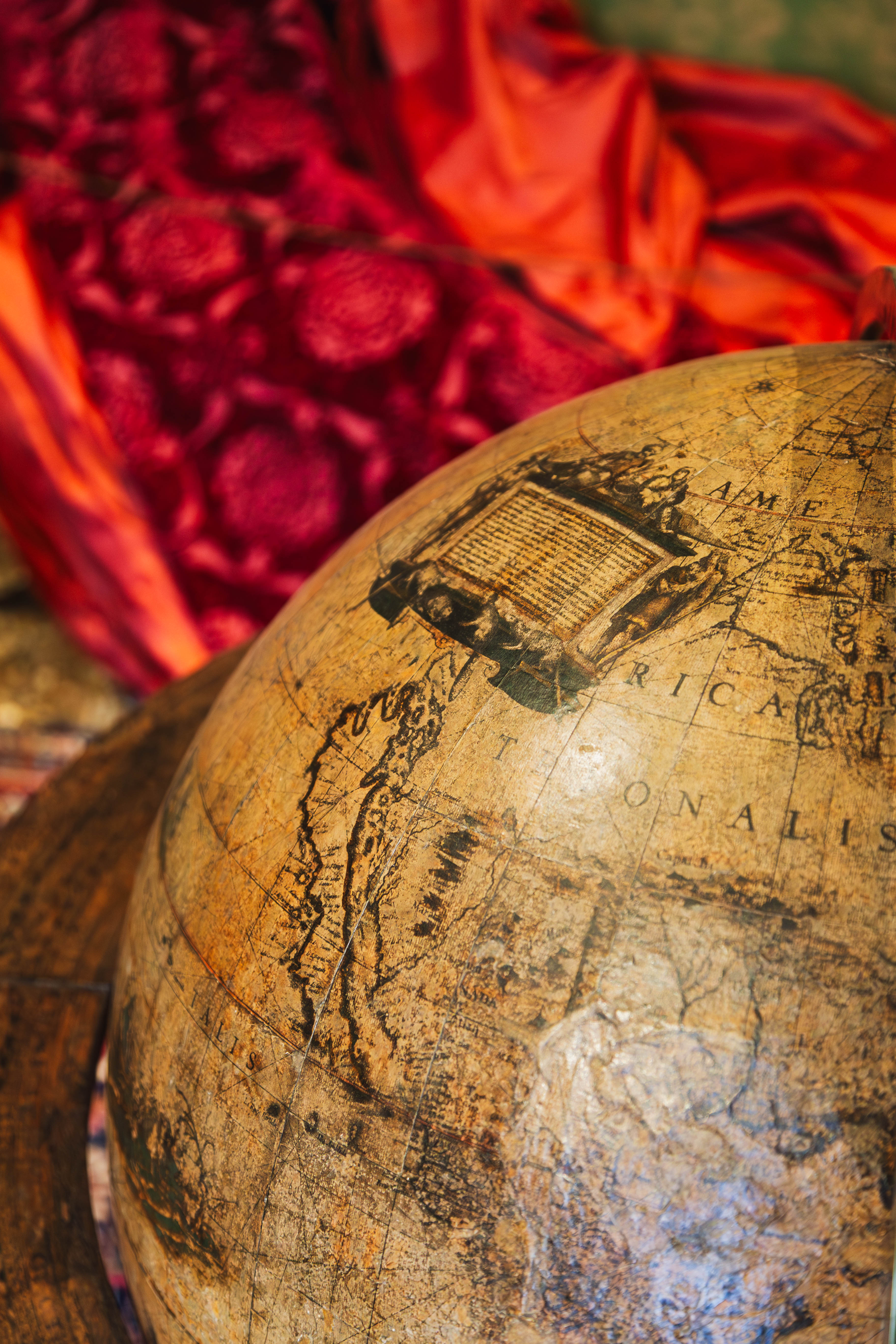
The Libro del Sarto (The Tailor’s Book), a sixteenth-century manuscript of Milanese origin, documents the role of drawing in the development of patterns; the Isulario by Gerolamo Baseglio, known as Marafon, dating from 1645, belongs to the Venetian cartographic tradition. These testimonies are ideally joined by the Theatrum Orbis Terrarum by Abraham Ortelius, published in 1570: just as the atlas gathered different maps into a common structure, Quadreria Futura brings together eleven stories that offer as many viewpoints on the city.
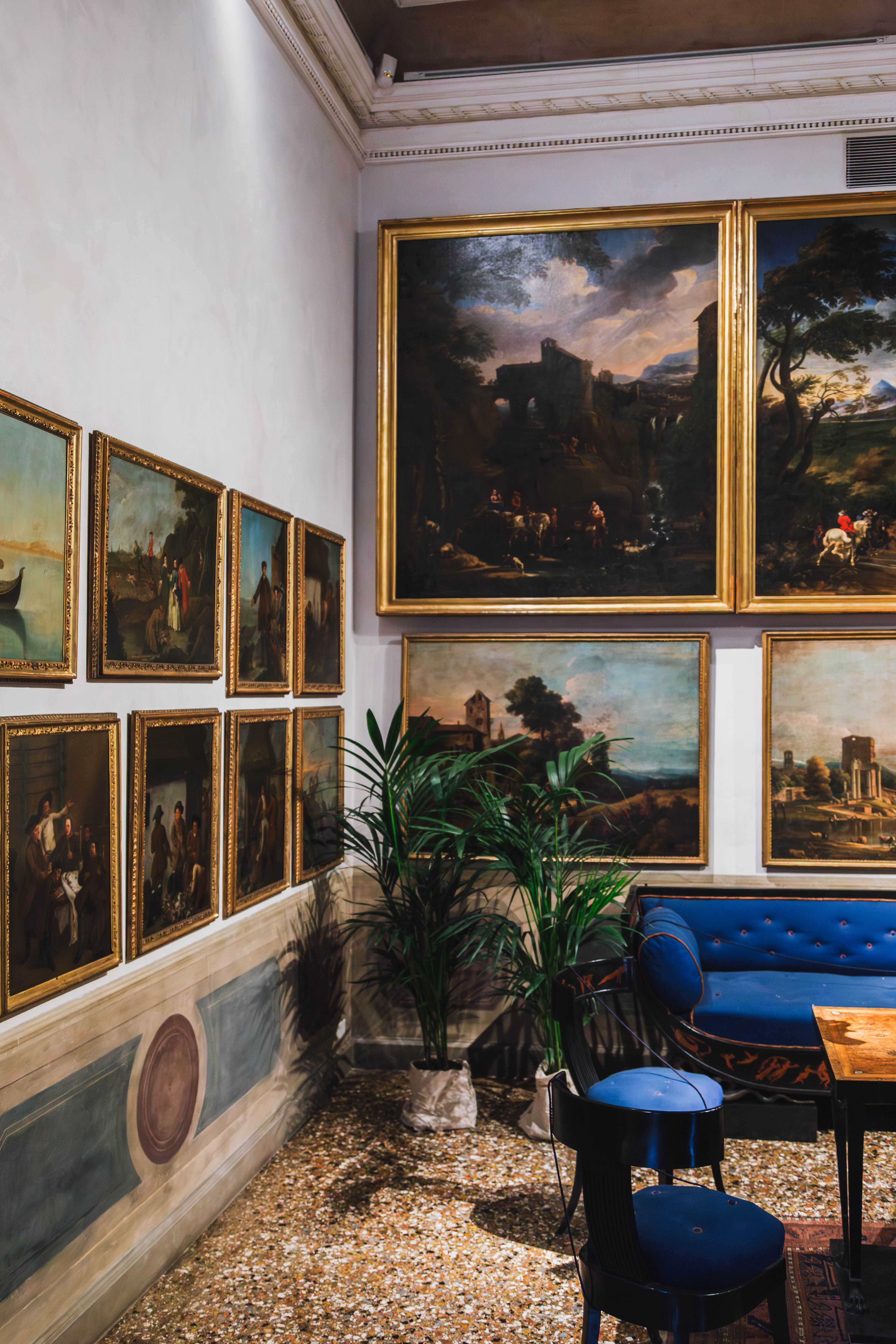
The dialogue between heritage and contemporary creation also characterizes The Dreamer, the exhibition with which the Querini has reimagined the display of its collection. Historical works stand alongside interventions by six contemporary artists and references to Luchino Visconti’s film Senso, in a journey dedicated to Giovanni Querini, his sister Caterina, and the family history. Bevilacqua, Fortuny, and Rubelli fabrics line the rooms, making Venetian craftsmanship an integral component of the installation.
Quadreria Futura participates in the reflection proposed by Radar Venezia on the city as a campus of knowledge, where workshops, ateliers, archives, and cultural institutions are places where skills meet and are transmitted. This is a theme that Sara Sozzani Maino, creative director of the Fondazione Sozzani, takes up in her contribution: “To preserve also means to share: making knowledge, stories, and skills accessible, especially to the new generations, so that they can know, reinterpret, and evolve them.”
Jacopo Ascari says: “It is an honor to exhibit in a library, a special place where knowledge intertwines, ideas cross-pollinate and meet, giving life to new visions, new perspectives, and new possibilities. A place where culture is not only preserved but continues to generate thought, dialogue, and beauty. For the Querini, I imagined and designed a linear architecture of knowledge, a succession of squares in which artisans promulgate a form of expertise and something profoundly new. An ideal city where cross-pollination is a tribute to the Venice of the future.”
Arranged together, the books suggest a reading of Venice through places, trades, and relationships. It is the principle of the quadreria that Cristiana Collu, director of the Fondazione Querini Stampalia, describes as “images that, when brought together, generate relationships that none, on its own, could produce.” She adds: “It is from this dense tangle of experiences, imaginaries, and possibilities that the encounter between the Querini Stampalia and Quadreria Futura moves, to try to rekindle the gaze and bring back into play what we believe we know, with awe and wonder, ready to see otherwise and to pass on, without hesitation, the baton of hope stubbornly always a little further ahead.”
Quadreria Futura Venezia
Fondazione Querini Stampalia
Campo Santa Maria Formosa, Castello 5252, Venice
Exhibition: from October 20 to 24, 2026
Presentation: Friday, October 23 at 6:30 PM with Jacopo Ascari, Susanna Testa, and some of the craftspeople involved.

Discover the Radar Venezia 2026 program
Participation in Radar Venezia 2026 events is free, with mandatory registration on the dedicated page.
The full program of Radar Venezia 2026 is available online with times, addresses, and information on accreditation procedures.
For information and press accreditation requests only, please write to press@veneziadavivere.com.
Radar Venezia is conceived and organized by Venezia da Vivere and is part of the official Grand Events program of the City of Venice, with the support of Vela Spa.
It is realized in partnership with Ca’ Foscari University of Venice, Iuav University of Venice, Fondazione Querini Stampalia, The Home of The Human Safety Net, Designskolen Kolding, Orsoni Venezia 1888, and ITS Marco Polo Academy.
It is under the patronage of the City of Venice, Città in Festa, Culture Sector, Tavolo Veneto della Moda, and Fondazione Cologni dei Mestieri d’Arte.
Radar Venezia is a project born around the idea of connection between Venetian creative entities and collaborates with Venice Design Week and Venice Cocktail Week.
The image for the 2026 edition is designed by artist and illustrator Jacopo Ascari.
Photos by Settimo Cannatella.

