
In the most hidden Venice, the oldest craft atelier in the city has been opened for four centuries and it is dedicated to the production of fine art fabrics.
Tessitura Luigi Bevilacqua has been carrying on one of the oldest traditions of Venice since 1700: brocades, damasks, lampas, satins and velvets are produced with the ancient frames of the 18th century, strictly using manual and artisan processing of the raw material.
Appreciated all over the world, the Bevilacqua fabrics embellish the rooms of the White House in Washington, the Swedish Royal Palace, the Casa Rosada in Argentina, the Royal Palace of Kuwait and many other noble residences. The company, still led by the Bevilacqua family in Santa Croce, can tell a story that is intertwined with the one of the city.


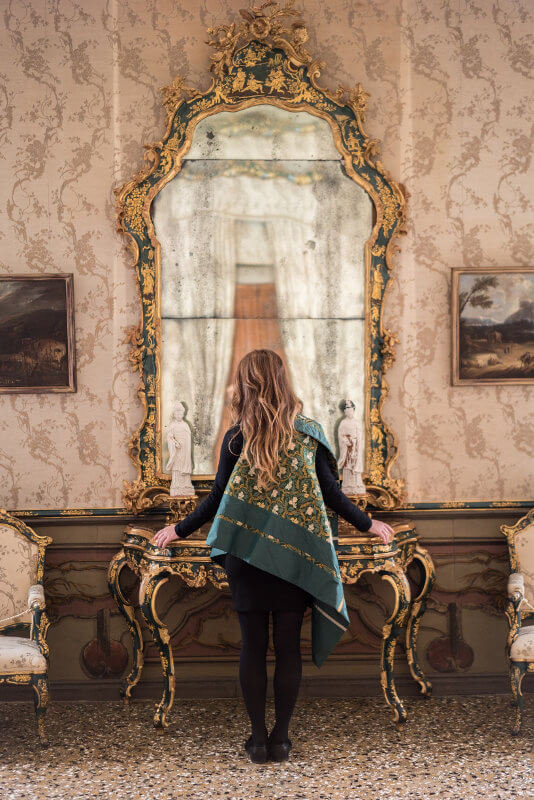
Directed by two brothers Rodolfo and Alberto Bevilacqua, the company’s very strong historical legacy is also due to a production that has never compromised with quality. The Bevilacqua creations enrich private homes and public buildings and they are used by the most famous international fashion designers and fashion houses as part of their collections.
Between the sacred and the profane, Bevilacqua is also a pontifical supplier, as the fabrics made with his Venetian frames adorn the basilicas of San Pietro in the Vatican and San Paolo fuori le Mura in Rome, the Apostolic Chamber and the Vatican Picture Gallery, while in Venice they colour the Basilica of San Marco and the churches of the Madonna dell’Orto, of San Zaccaria and of Santa Maria del Giglio.
Recently awarded with the title of ‘Historical Company’ of Italy, Tessitura Luigi Bevilacqua was officially founded in 1875 by Luigi Bevilacqua and his partner Giovanni Battista Genoglio, although the name of the weavers’ family had been already known all over Venice since the 18th century.
The first historical site of the textile business was a building in Fondamenta San Lorenzo, in the popular Castello district, soon abandoned to move to the more spacious premises of Palazzo Labia, in Lista di Spagna.

Together with the staff, the looms were also relocated to the new premises; these are unique weaving masterpieces and they are still used today for the production. These devices have a particular story that deserves to be told because it illustrates the close relationship between the Company Bevilacqua and Venice.
The activity of Tessitura Luigi Bevilacqua represented for Venice one of the most common and rewarding activities of the past.
During the Renaissance and in particular in the 1500s, the Venetian fabric sector was employing 1,200 weavers, while many more were the people involved in spinning, also in their own houses.
An active and fermenting world that placed Venice among the world capitals for this craft at least until 1800 and the advent of Napoleon Bonaparte: to protect the French production, he began a series of protectionist policies that seriously and definitively damaged the Lagoon city and its textile sector
For a long time the machines used in the production were left in a state of semi-abandonment, including the looms of the historic Silk School, closed by Napoleon himself. Luigi Bevilacqua (and Genoglio) had the great idea to fix them and use them for their new born textile manufacturing business together with the Jacquard machines, a technologically advanced tool that had recently been introduced.


With the new looms the production of Tessitura Bevilacqua could soon improve and be internationally appreciated, especially thanks to one of Luigi’s sons, Cesare, who by marrying the Countess of Sweden Glenny Charlotte Von Redlick had the opportunity to introduce the Venetian weaving art to the Scandinavian country: not only a series of important collaborations were created but also new ideas for furnishing fabrics, as for instance the ‘Decò soprarizzo’ velvet designed by the Swedish architect Carl G. Bergsten between 1932 and 1934.
Coming back to the present day, the four generations that have successfully lead Tessiture Bevilacqua, have not lost sight of the specificity of the Venetian production
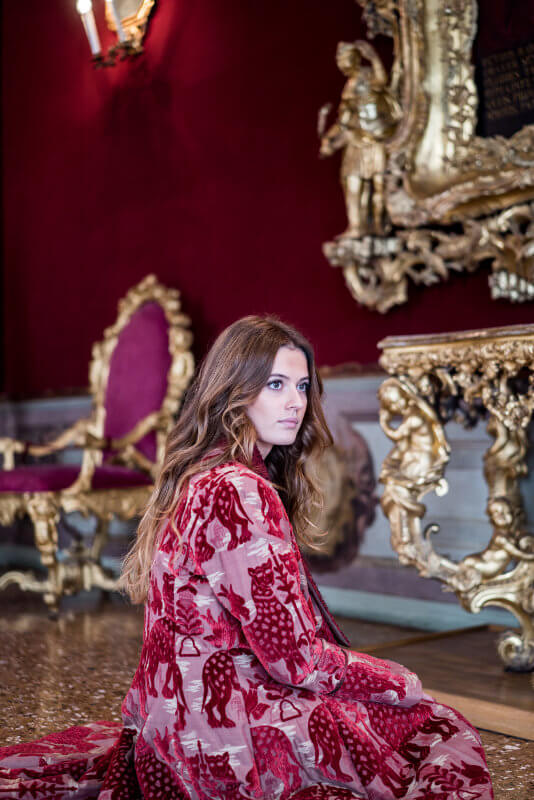
The velvets (handmade, animal and multicoloured), broccatelles, damasks, lampases, satins and accessories such as cushions and centrepieces have the same quality as ever, because they are always made with the same techniques and on the same looms; using patterns from different centuries and areas of the world.
The historical archive has more than 3500 drawings on perforated cardboard, all original and belonging to Tessitura Luigi Bevilacqua, while in the bookshop and in the shop, located in the modern Santa Croce headquarters, we can find exclusive contemporary creations on sale. Tessitura Luigi Bevilacqua
L’archivio storico conta più di 3500 disegni su cartoni perforati, tutti originali e appartenenti alla Tessitura Luigi Bevilacqua, mentre nel bookshop e nel negozio, entrambi ospitati nella moderna sede di Santa Croce, sono in vendita esclusivi creazioni contemporanee. Tessitura Luigi Bevilacqua
The photos are by Riccardo Rizzetto, @riccardorizz, for Venezia da Vivere.
Tessitura Luigi Bevilacqua
Santa Croce 1320
Phone. 041 721566
bevilacqua@luigi-bevilacqua.com
www.luigi-bevilacqua.com
Opening hours
From Monday to Friday: from 9.30am to 1.00 pm and from 2.30 pm to 5.00 pm. Other times by appointment only.
How to get there
Tessitura Luigi Bevilacqua is in the Santa Croce sestiere, at number 1320. The atelier is about a ten minute walk from the train station and Piazzale Roma bus terminal. Those wishing to use the public navigation services can use lines 1 and 2 and get off at the “Riva de Biasio” stop.

