
Telemachus – The Quest for Self is the new exhibition by Fondation Valmont: four artists explore the theme of identity, navigating between artistic heritage and family memory
The father-son relationship materializes in a physical and symbolic confrontation: TELEMACHUS – The Quest for Self is the second chapter of the trilogy inspired by Homer’s Odyssey, presented by Fondation Valmont at Palazzo Bonvicini until November 22.
Four artists – Jakub Flejšar, Pavel Roučka, Maxence Guillon, and Didier Guillon – investigate the theme of identity through site-specific works that occupy the palace rooms entirely, transforming them into spaces for reflection and intergenerational dialogue.
The Heritage Rooms
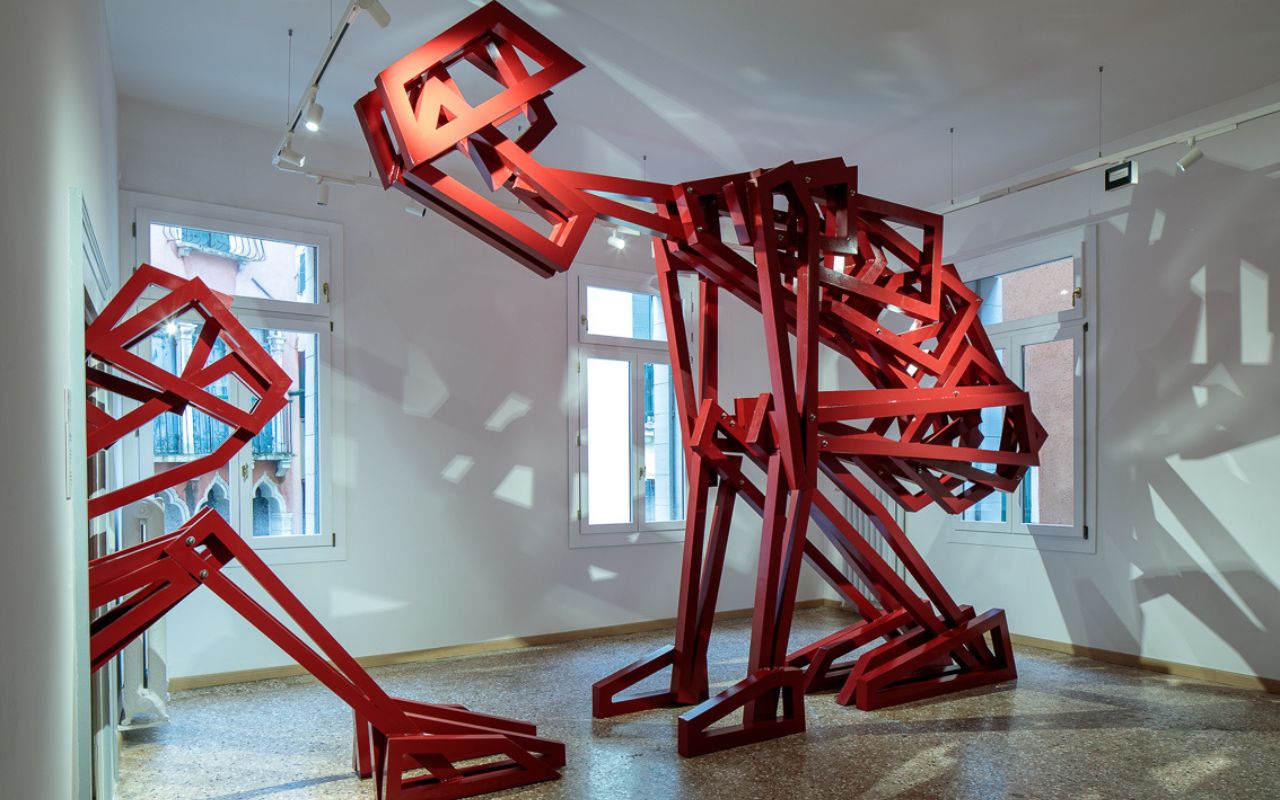
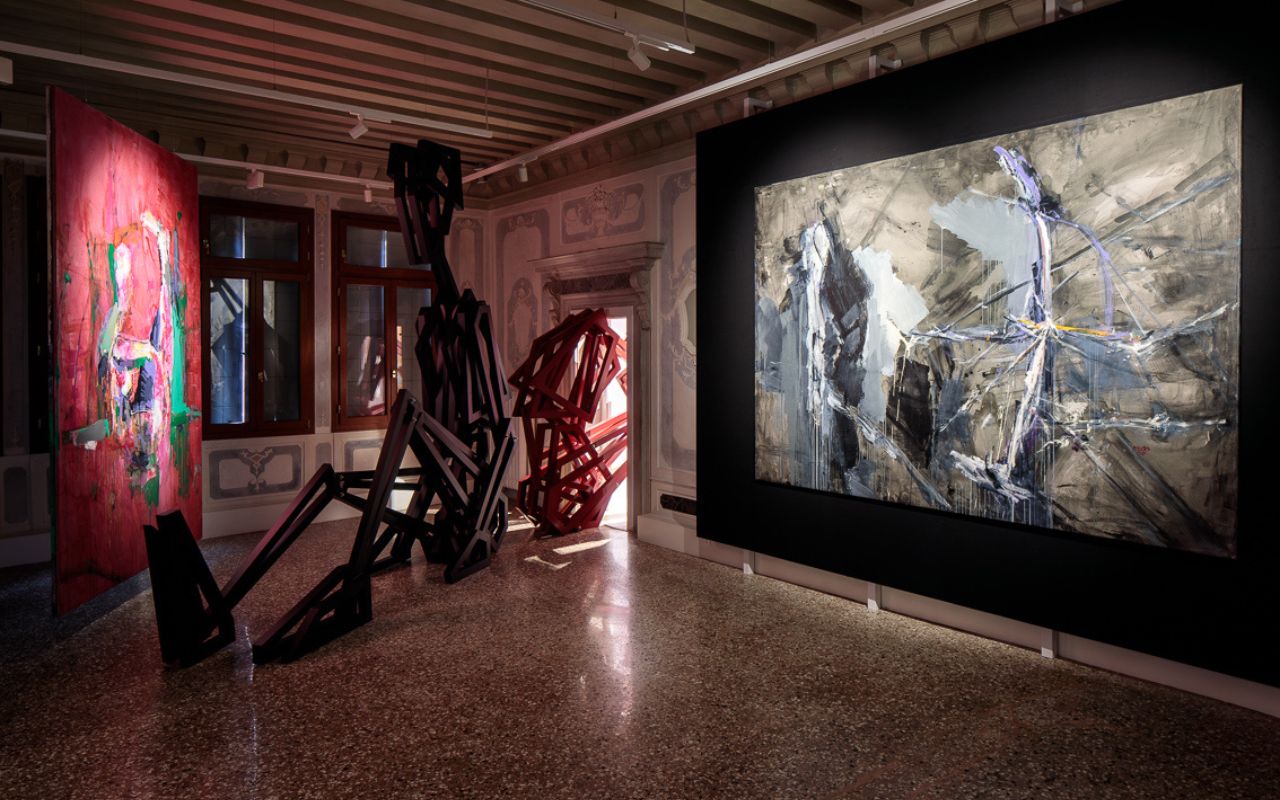
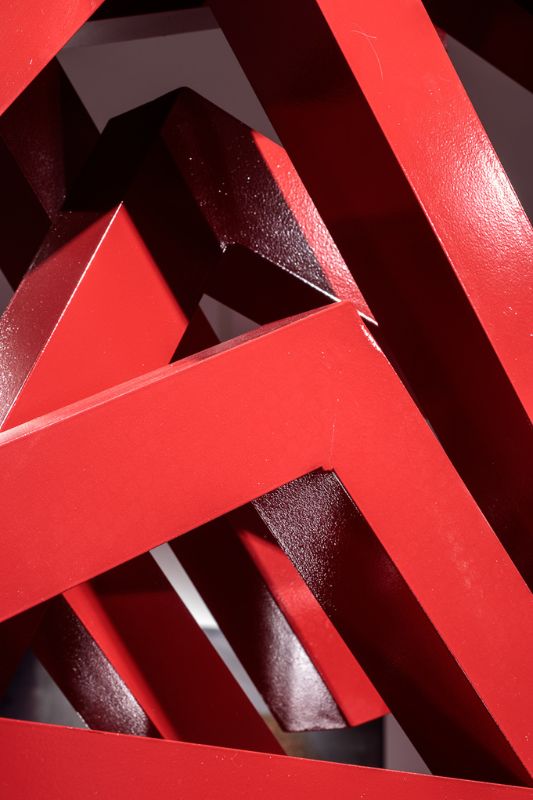
In the first room, a monumental red steel sculpture spans two rooms of Palazzo Bonvicini. A seated man, a giant, his gaze elsewhere: it is the self-portrait of Jakub Flejšar. The figure cuts through the space like a silent blade, giving form to the confrontation with the paintings of Pavel Roučka. The works chase, contradict, and recognize each other. The sculpture turns its back on Roučka’s gestural paintings (second room), marking a symbolic distance: the son seeks a different direction for himself, while the father asserts a heritage made of dense matter, repeated gestures, and emotional layers.
In the third room, Maxence Guillon presents The Virtuous Circle, a life-size sculpture resembling a Roman gladiator at the center of a digital arena. Opposite is the televised presence of his father, Didier Guillon, watching in silence: constant, absent, judging. The audience is invited to sit at the center of this circular space, symbolically assuming the father’s point of view, where the generational confrontation unfolds through the gaze.
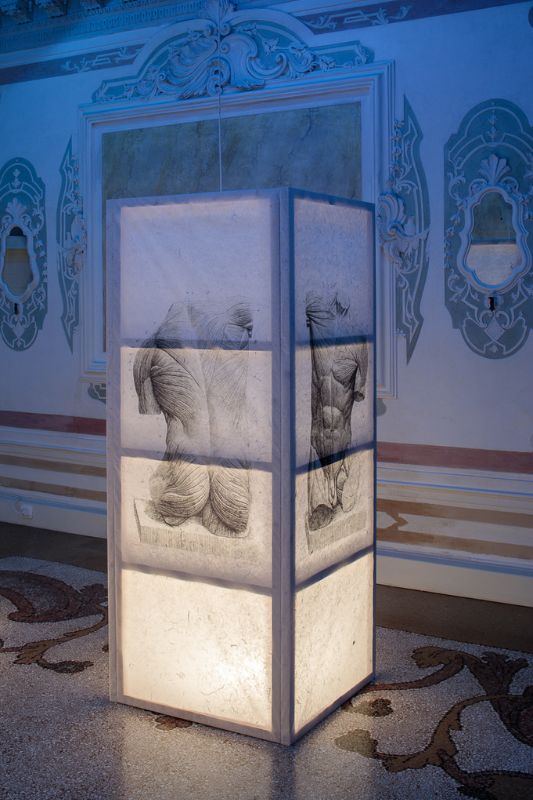
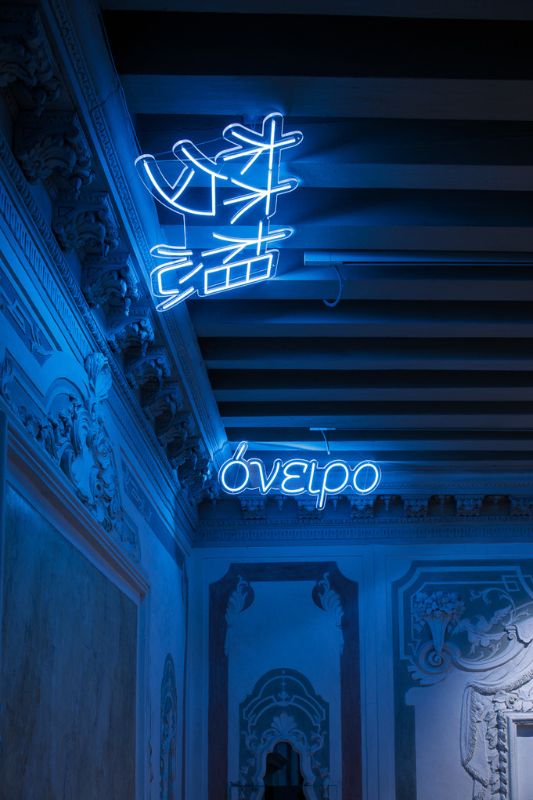
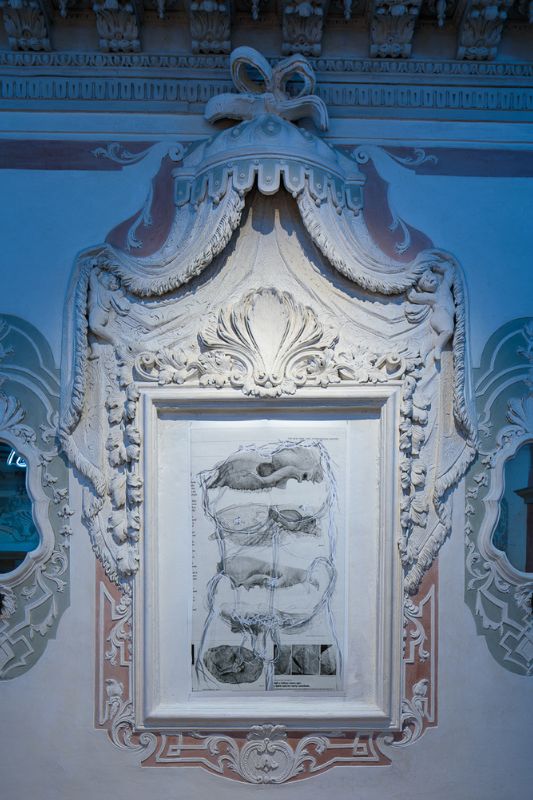
The (fourth) Room of Dreams brings together the anatomical drawings of Alphonse Lami, a distant relative of Didier Guillon, printed on Japanese paper totems. On the ceiling, the word “dream” shines in blue neon in ten different languages to imagine the future starting from the heritage of the past.
During the exhibition period, the Room of Dreams welcomes a limited number of visitors each month (by reservation at info@fondationvalmont.com) for a guided meditation session designed as a space to slow down, practice self-care, and establish a deep connection with the works. A space intended to counter the frantic pace of museum visits: “In Venice, people stay in front of a work for eight seconds,” observes Didier Guillon. “Here, no phones, no distractions: just thirty minutes of silence, music, yoga, and a coach’s voice to release stress and remain present.” The initiative is part of the Art of Longevity project, which Valmont is pursuing in Venice by integrating meditation, art, and physical well-being.
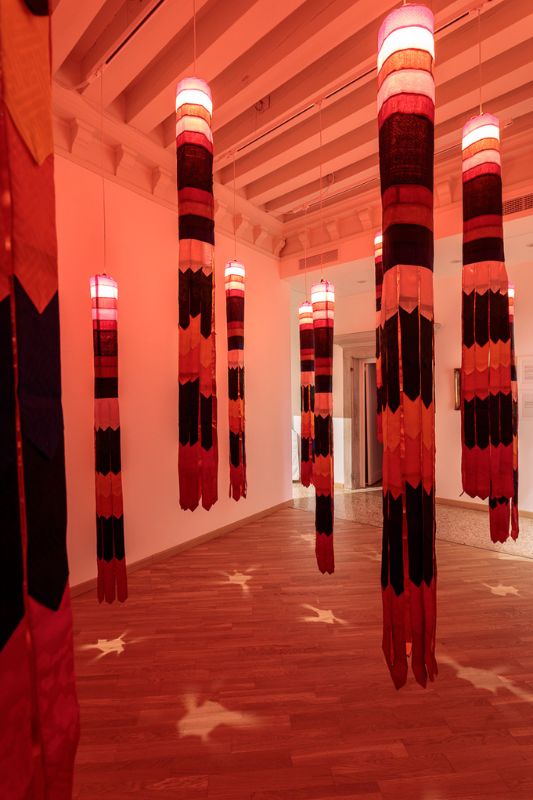
Room 5, defined as the “final song” of the trilogy, introduces the theme of the 2026 exhibition with an installation of suspended textile lamps, handmade in Bhutan, each representing a different form of female freedom, anticipating the figure of Penelope as the symbolic axis of the next chapter, where weaving returns as a political gesture and a form of resistance.
Inside the residence, in The Intimate Cinema room, Fondation Valmont presents its seventh film dedicated to the seventh art: every Friday, starting from May 9, Wong Kar Wai‘s masterpiece, In the Mood for Love, will be screened for free.
Palazzo Bonvicini
The palace that now houses Fondation Valmont is a 16th-century Renaissance building, once the home of the Bonvicini family, which still preserves original frescoes and Venetian terrazzo floors.
Next to the Foundation is the Résidence Bonvicini, conceived by Didier Guillon as a place where art and hospitality coexist. The project, launched in 2019, required years of research into materials, furnishings, color palettes, and artworks. The result is a harmonious composition of different styles, built with attention to every detail and free of Baroque elements, where the exposed beams, lightened by a pale shade, contribute to creating a bright and airy environment.
The three suites — Murano, Burano, and Torcello — house artworks and Venetian artisanal details such as Murano glass handles by Leonardo Cimolin, the Ma’ Segno screen and Cocal shelves by Lunardelli Venezia, and a colorful glass mosaic created by the historic Orsoni Venezia 1888 furnace.
TELEMACHUS. The Quest for Self
Free admission until November 22
Palazzo Bonvicini – Calle de Ca’ Bonvicini, 2161/A
Find out more on the official Fondation Valmont website.
Article by Lucia Pecoraro.
Photos courtesy of Fondation Valmont.

