
Enhancing the creative heritage that refugees bring with them in their flight, a contribution that enormously enriches the communities that welcome them: this is the Rothko in Lampedusa project
Spreading CreActivity
November 22, 2019
Organized by UNHCR
Ugo and Olga Levi Foundation – Palazzo Giustinian Lolin
The project organized by UNHCR, the UN Refugee Agency, and curated by Luca Berta and Francesca Giubilei on the occasion of the 58th International Art Exhibition of Venice concludes with a round table at Palazzo Giustinian Lolin.
The title Rothko in Lampedusa alludes to the ideal link between one of the greatest artists of the 20th century and Lampedusa, today a symbol, more than a place, where the anonymous mass fleeing conflict and persecution reaches our shores.
The project stems from the desire to propose an alternative narrative to the prevailing one, in which refugees are considered not as a mass or a depersonalized burden, but in their full potential as unique individuals, bringing enrichment to society as a whole.
“Through art, people in flight keep their humanity and dignity alive and rekindle the hope of rebuilding their country. At the same time, they contribute to laying the foundations for a better future in the communities that host them, one of coexistence and enrichment through diversity,” stated Carlotta Sami, UNHCR Spokeswoman for Southern Europe.
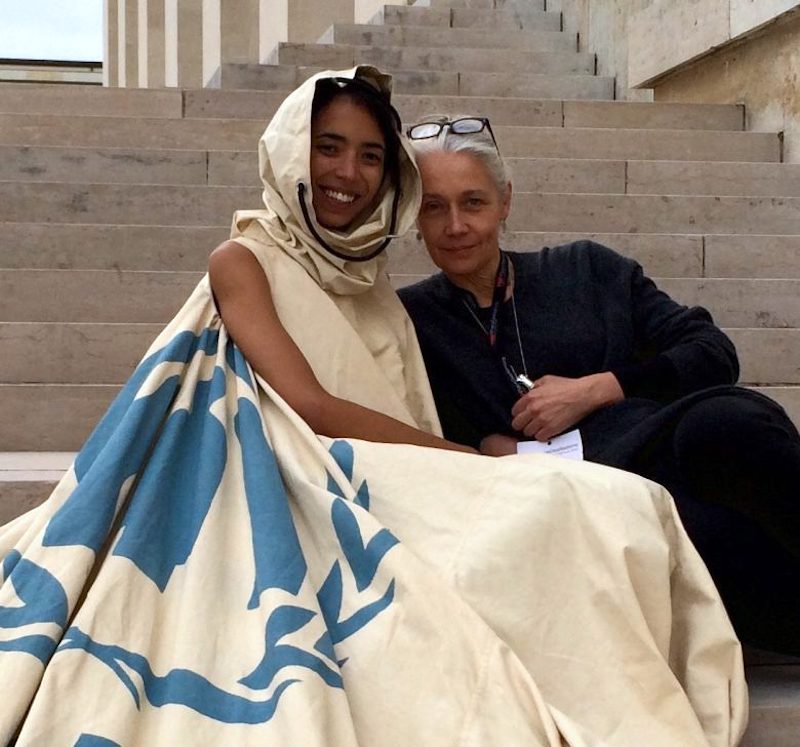
On the occasion of the Biennale preview on May 9, model Bianca Balti was the protagonist of the performance-installation Dress For Our Time organized in collaboration with the London College of Fashion of the University of the Arts London.
The model wore a tent used by a refugee family in the Za’atari camp in northern Jordan, on the border with Syria, near Al Mafraq, to highlight the short circuit of thought that risks making us forget a daily tragedy that is instead literally sewn onto those who are living it.
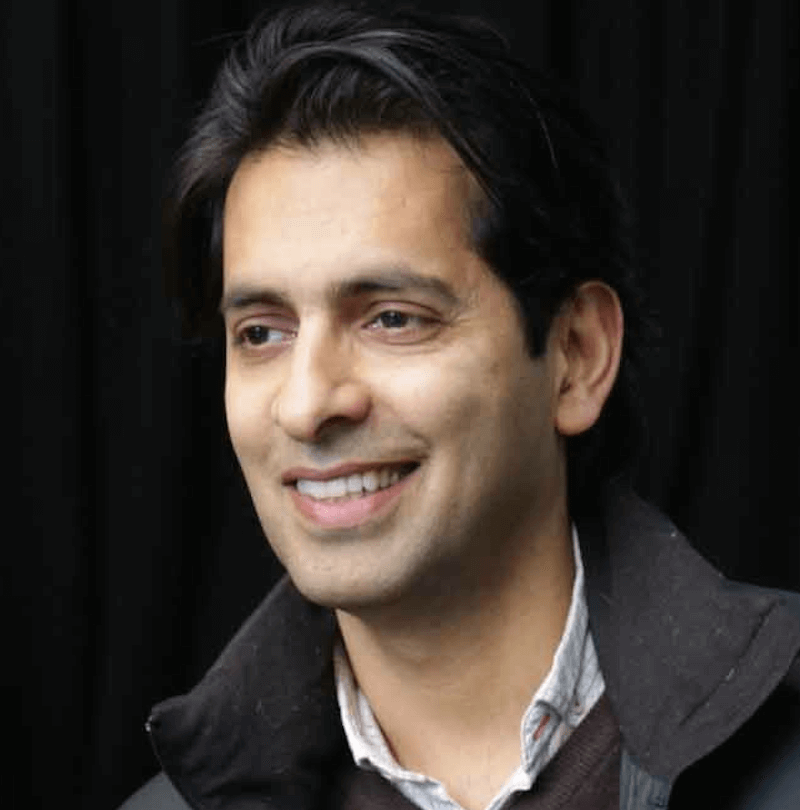
The outreach continued with the documentary Torn featuring UNHCR Goodwill Ambassador Alessandro Gassmann during Art Night Venice and the AtWork educational workshop organized by the Moleskine Foundation and led by Simon Njami for 25 refugees and asylum seekers from the national integration project network (SIPROIMI), followed by an exhibition of the notebooks created by the participants at Palazzo Querini.
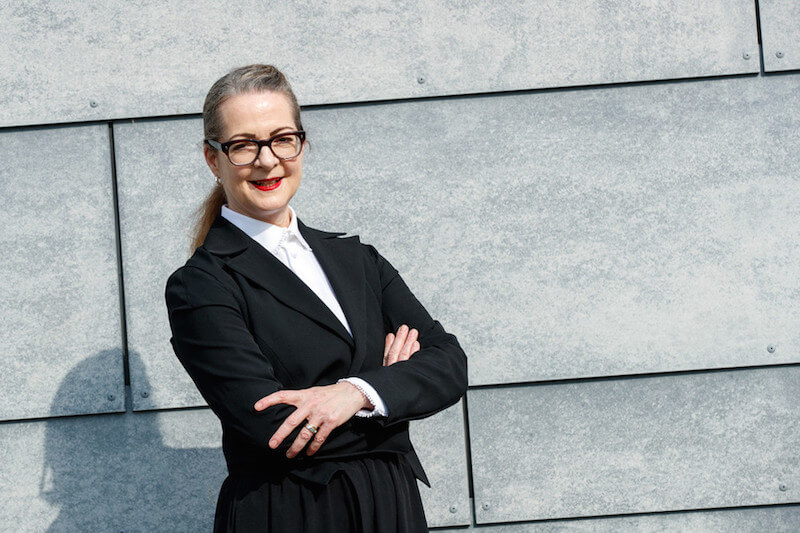
The last event on the calendar is the talk Spreading CreActivity on November 22 with Prof. Helen Storey of the London College of Fashion, creator of the Dress For Our Time project, a panel to reflect on the role of creativity for women and men living as refugees.


By analyzing trends, new production techniques, and human rights, we will seek to understand how the development of creative activities can become a tool for emancipation and freedom for those forced to flee.
Moderators:
Frances Corner (Warden of Goldsmiths, University of London)
Pratap Rughani (Professor, London College of Communication, University of the Arts London).
Speakers:
Lina Abirafeh (Executive Director, The Arab Institute for Women)
Sue Clayton (Film director, writer and composer – Goldsmiths, University of London)
Carlotta Sami (UNHCR Spokeswoman for Southern Europe)
Helen Storey (Social artist & designer – London College of Fashion)
Matteo Ward (CEO & CMO WRÅD)


Program:
Spreading CreActivity
November 22, 2019
Organized by UNHCR
Ugo and Olga Levi Foundation – Palazzo Giustinian Lolin
6:00 PM – Presentation and opening of the conference
6:15 PM – THINK TANK I “Dress For Our Time”, conversation: Pratap Rughani, Helen Storey, Matteo Ward
6:45 PM: break
7:00 PM – THINK TANK II “From displacement to empowerment: how can we empower women and girls to create new futures?” Conversation: Frances Corner, Sue Clayton, Carlotta Sami, Lina Abirafeh
7:45 PM: Question time
Mark Rothko is a paradigmatic example of a 20th-century refugee who fled pogroms and forced conscription into the Imperial army. Racial, religious, and political persecution is a fate and condition he shares with many refugees. Rothko fled Latvia and was welcomed into the United States, where he was able to express his talent, giving his work and genius to all of humanity. But what would 20th-century culture have lost without Rothko?
What do we lose today by considering the refugees arriving in Europe as an indistinct mass, forgetting the humanity, flair, and genius that could lead to the Rothko of the 21st century? There are many elements to the project and questions that curators Luca Berta and Francesca Giubilei have chosen to answer, starting from the exhibition hosted at Palazzo Querini, an 18th-century palace made available by the Ugo and Olga Levi Foundation. Where the work of eight famous and established artists was presented (Ai Weiwei, Adel Abdessemed, Christian Boltanski, Richard Mosse, Abu Bakarr Mansaray, Nalini Malani, Dinh Q. Lê, and Artur Żmijewski); alongside them, five emerging artists tell their stories, starting precisely from the missed opportunity to cultivate their talent and make their voices heard. Majid Adin (Iranian animator, refugee in England), Rasha Deeb (Kurdish-Iraqi sculptor, refugee in Germany), Hassan Yare (Somali cartoonist, refugee in Kenya), Mohamed Keita (Ivorian photographer, refugee in Italy), and Bnar Sardar Sidiq (Iraqi photographer, refugee in England). Their works and stories speak to us of shipwrecks, the search for peace, the terror of feeling lost at sea, the alienating life in refugee camps, the stereotypes that dehumanize those living in a situation of clear disadvantage in their refugee status, and how they have made these themes a cornerstone of their artistic careers.
Thanks to their works, these artists—despite not knowing each other and having very different life experiences—will lead the visitor along a path that offers a new perspective on such a topical subject. A look not only from the outside but also from the inside, as for once it will also integrate the point of view of those living the refugee condition firsthand.
Spreading CreActivity
Friday, November 22, 6:00 PM
Ugo and Olga Levi Foundation
Palazzo Giustinian Lolin
San Marco 2893
Photos were provided by curators Luca Berta and Francesca Giubilei for Venezia da Vivere.

