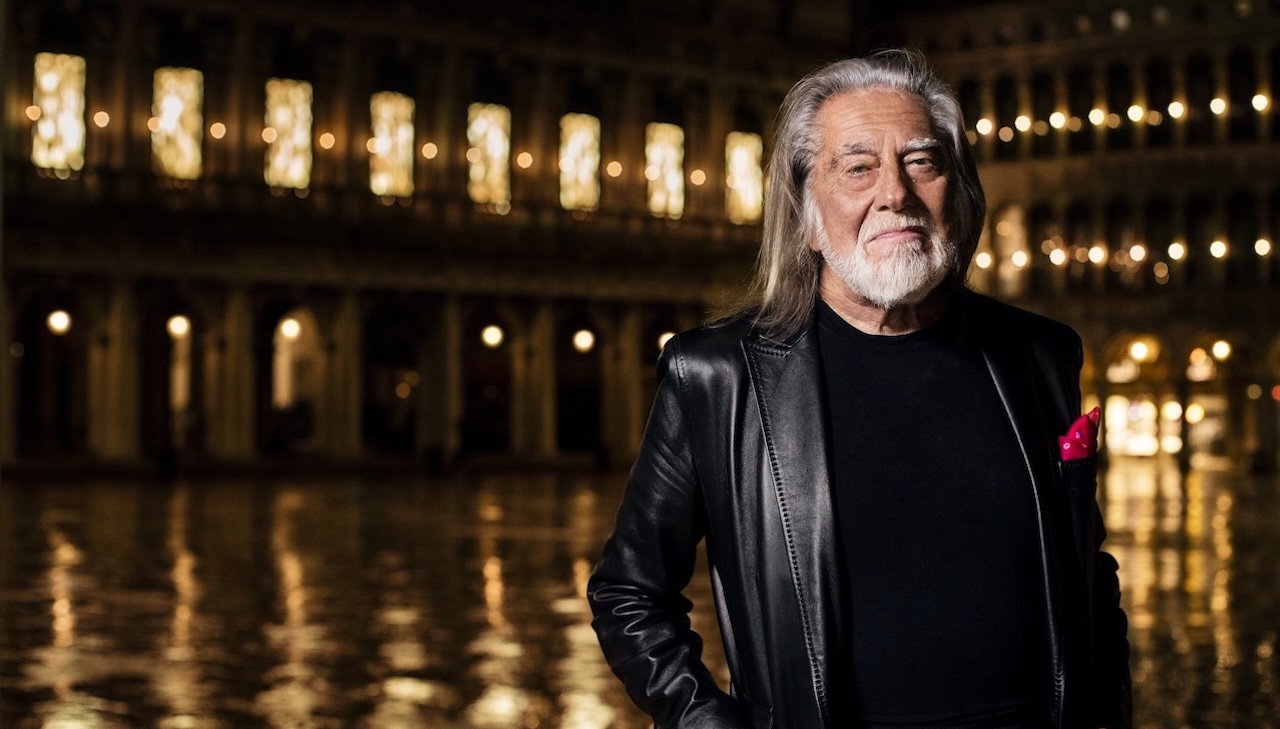
For us and Venezia da Vivere, it is difficult to say goodbye to Fabrizio Plessi, who passed away on August 23, 2026, at the age of 86. Fabrizio was the great master of video art, an artist, but he was also a friend.
We thank him for his work, in which water, fire, light, and technology became a way to interpret the contemporary city, a subject of research, and a place from which to continue questioning the present.
We thank him for being a Master to so many people, artists, and friends. For the joyful moments, and for everything he leaves us with.


The Golden Age in St. Mark’s Square
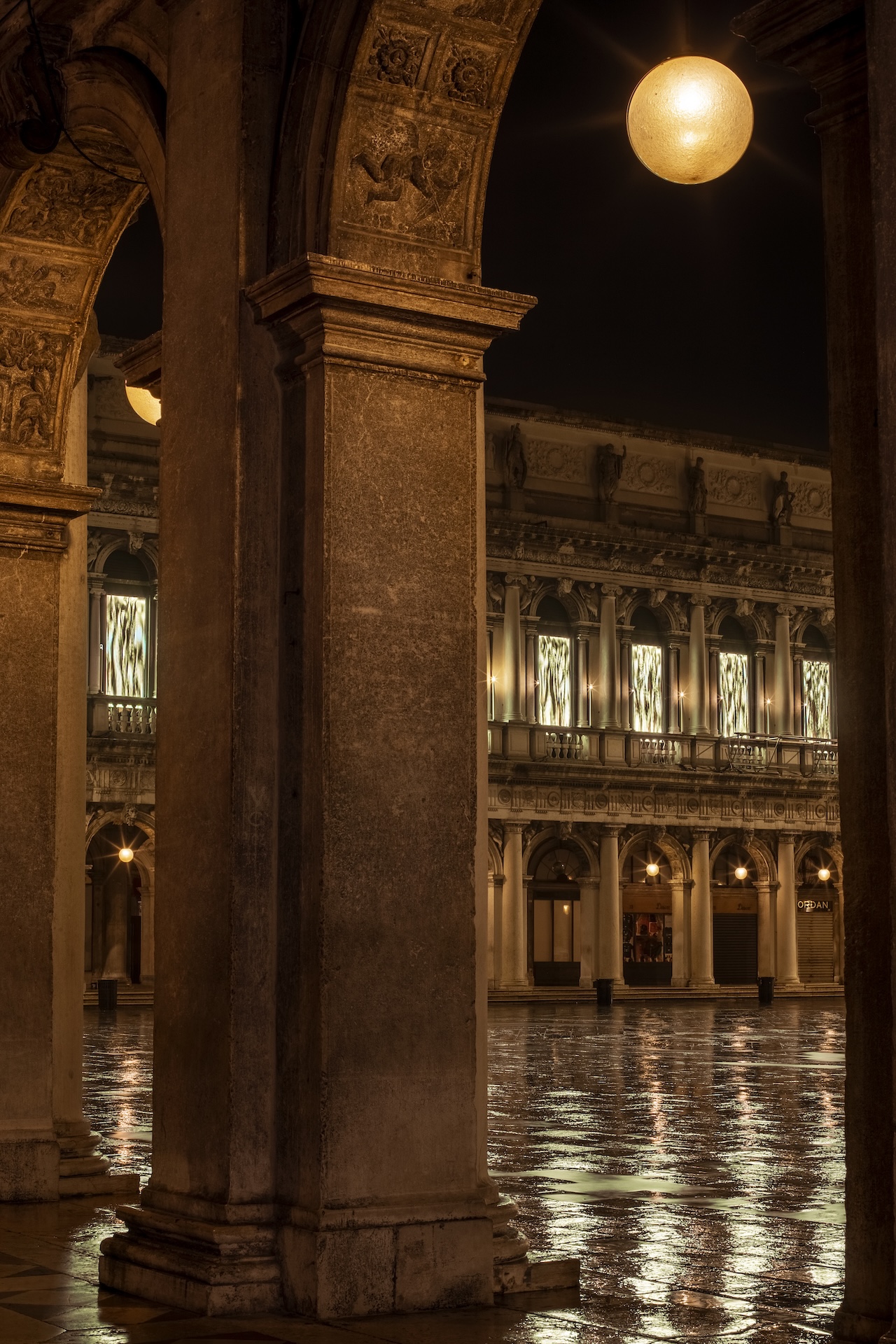
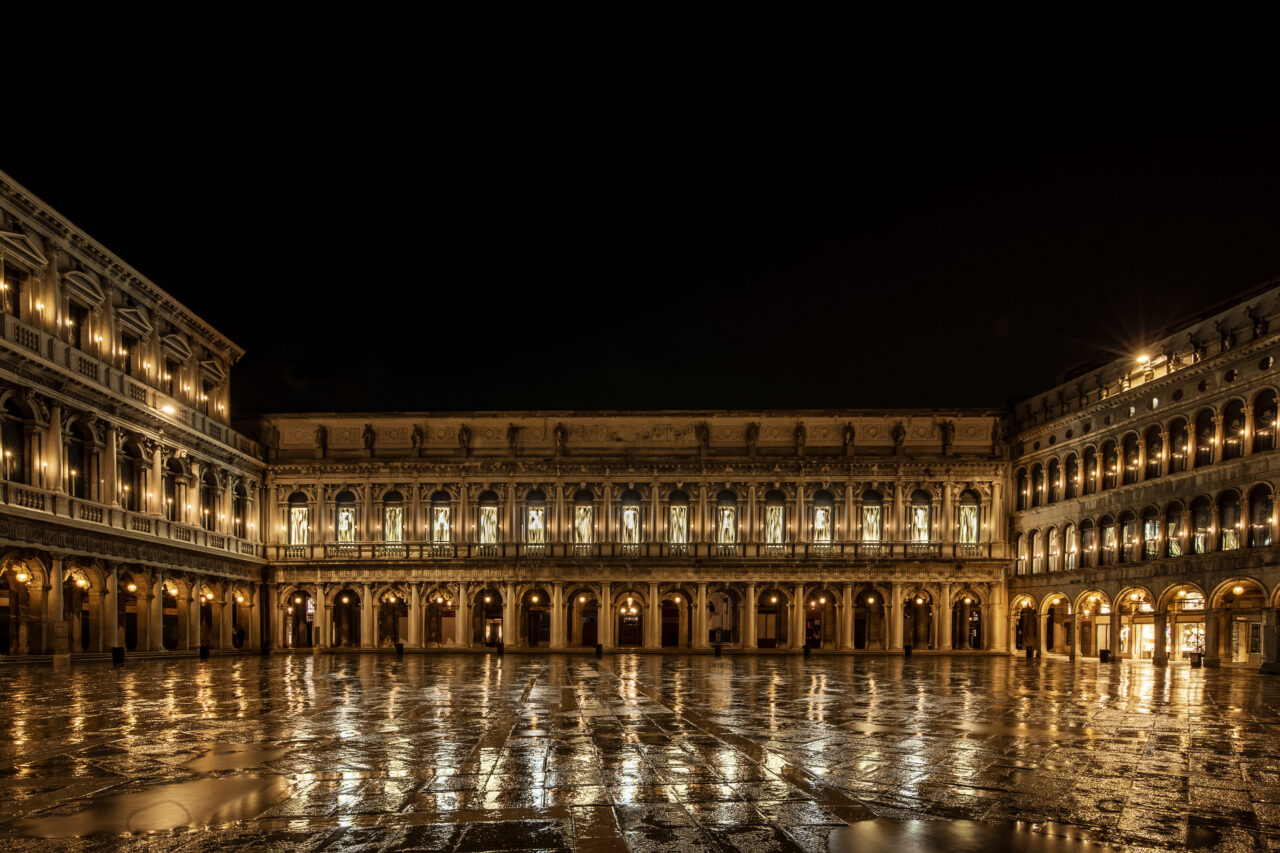
Rivers of gold in St. Mark’s Square, sounds of water. The grand installation created for Fabrizio Plessi’s eightieth birthday with the support of Dior, transformed fifteen windows of the Napoleonic Wing of the Correr Museum into a flow of golden light that reflected on the pavement of St. Mark’s Square, enveloped by the music of Michael Nyman.
The installation featured the words “Pax Tibi,” the beginning of the phrase every Venetian knows: “Pax Tibi, Marce, evangelista meus,” meaning “Peace to you, Mark, my evangelist,” which we find engraved in the book held by the winged lion in times of peace.
The Golden Age is a suspended and circular time. It was September 2020, in a Venice that was starting over after the months of the pandemic. We wrote then of a work capable of speaking about Venice with a “concrete sense of the present,” of a city aware of its own capacity for regeneration.
Read more about Fabrizio Plessi’s The Golden Age in St. Mark’s Square
Fabrizio Plessi at the Academy of Fine Arts
The relationship with Venice runs through all of Plessi’s research. Here he was trained, here he taught painting at the Academy of Fine Arts, and here he lived and worked for most of his life.
In 2022, the Academy dedicated Fabrizio Plessi. Trilogy to him, a journey through his theatrical work with Frédéric Flamand. At Magazzino del Sale 3, three large video projections, conceived as the pages of an open digital book, retraced three works created by Plessi with the director and choreographer Frédéric Flamand: The Fall of Icarus (1989), Titanic (1992), and Ex-Machina (1994). The exhibition also included a selection of the artist’s studies and drawings.
Fabrizio Plessi, the turbulence of glass and the oldest furnace
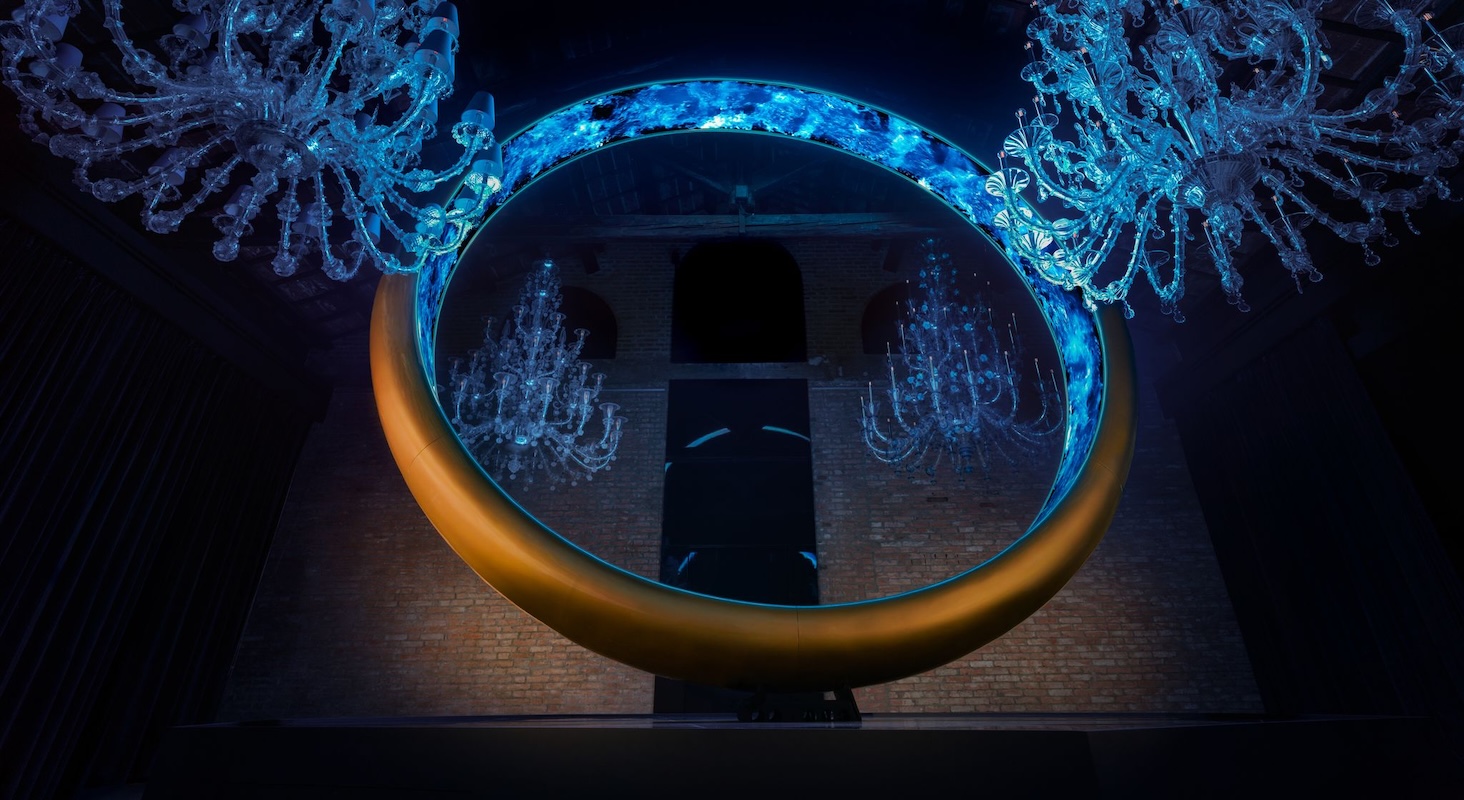
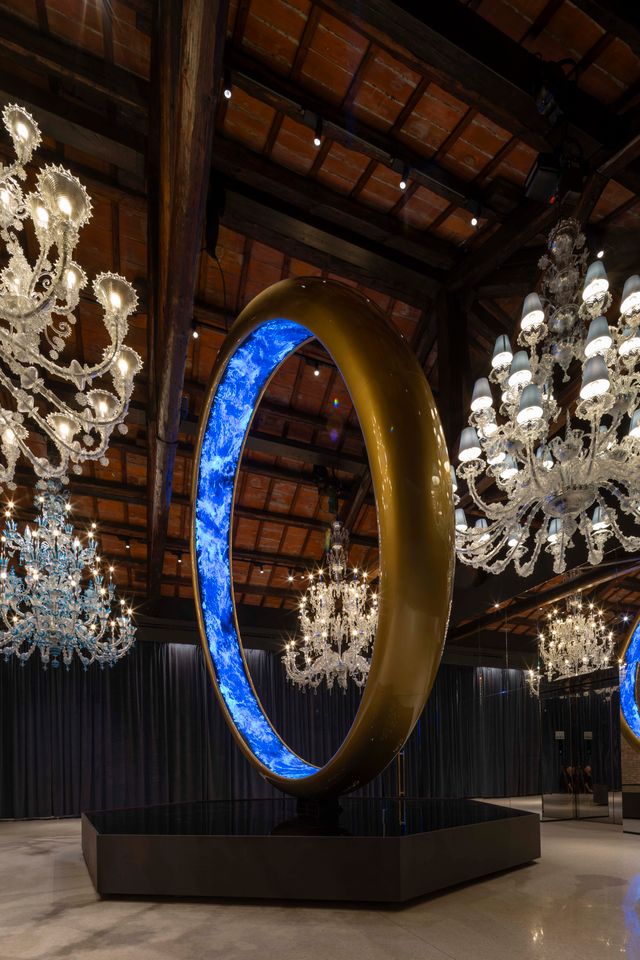
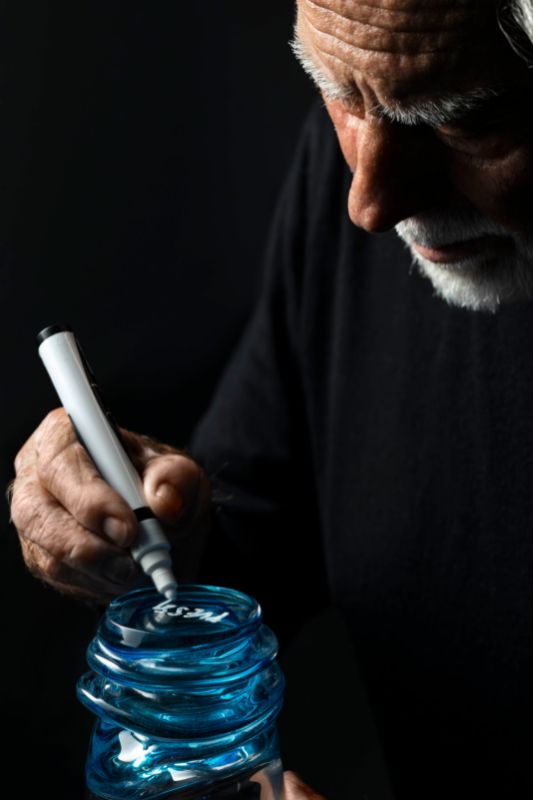
This year we featured the Master through Perdersi in un bicchier d’acqua, the first exhibition dedicated to Fabrizio Plessi’s encounter with Murano glass.
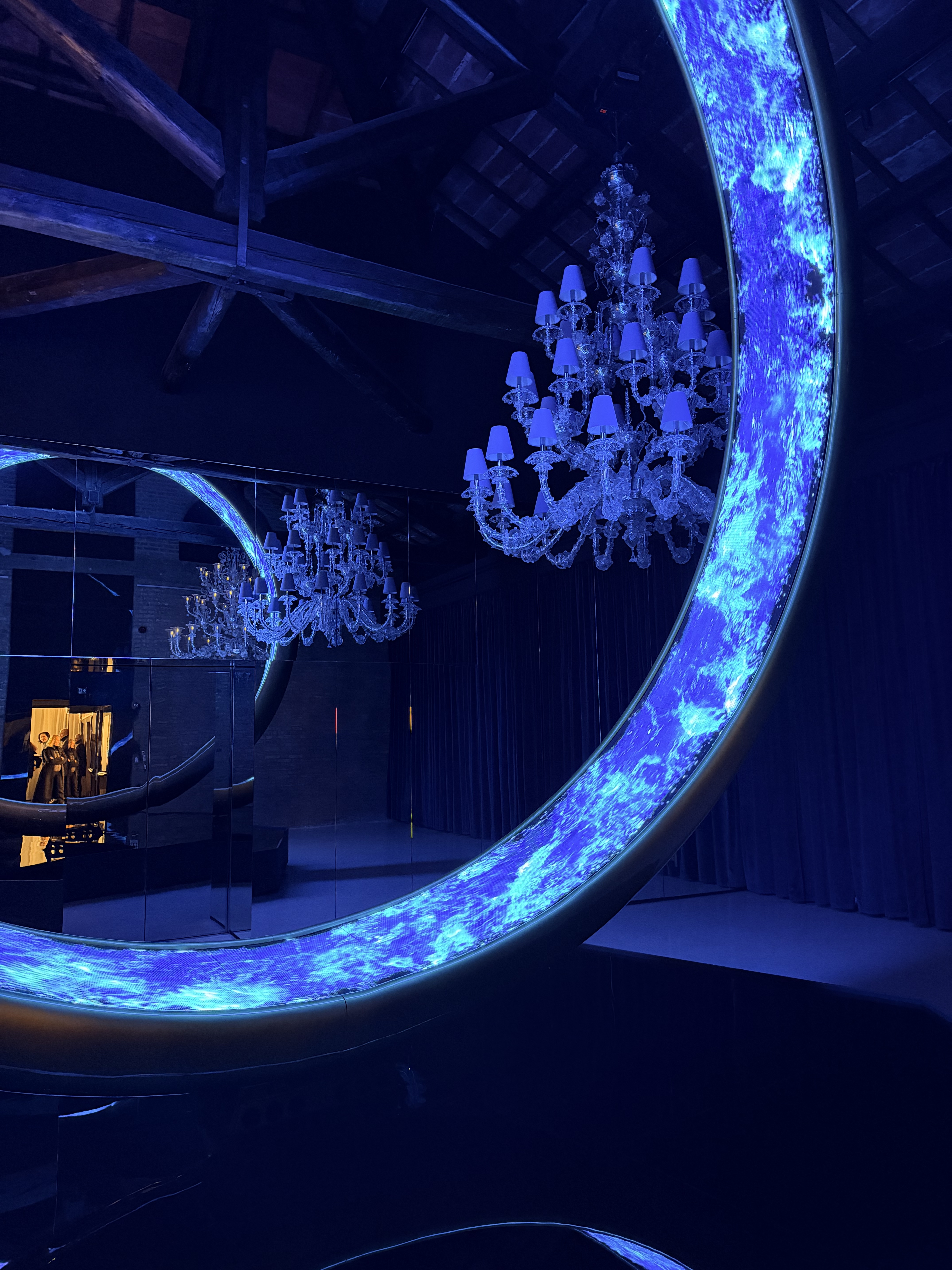
In the Water Room of the Barovier&Toso Gallery, a monumental ring-shaped installation displayed flowing blue waterfalls in continuous motion, set among four historic Barovier&Toso chandeliers. Water, a central element in Plessi’s research, met the fire of the Murano furnaces and glass.
Barovier&Toso, founded in 1295 and considered the oldest glassworks in the world, made this dialogue between the artist and Murano glass possible. Even turbulence, a hallmark of Plessi’s work, became tangible matter.
Goodbye, Fabrizio.
The photos of The Golden Age are courtesy of the Fondazione Musei Civici di Venezia. The images of the installation Perdersi in un bicchier d’acqua are from the Barovier&Toso Gallery. The final photo is by Laura Scarpa.

