
Our guide to collateral events at the Venice Biennale
You can also discover Venice through the side-events to the Venice Biennale Viva Arte Viva directed by Christine Macel, running until November 26th throughout the city. The events release the exhibition from the official Arsenale and Giardini offices, allowing visitors to discover galleries, palaces, cloisters, gardens, boat yards and churches, consecrated and deconsecrated.
A unique opportunity for those seeking to discover a hidden Venice and want to experience the Venetian life of the past and the present, between art and culture.
Castello
You can find the most ancient and real Venice in San Pietro di Castello, by the Shipyards in Fondamenta Quintavalle number 40, where the National Participation of Catalonia offers Catalonia in Venice 2017. The unseen Venice of Antoni Abad, a touching and Venetian experience aboard of a ‘sampierota’, the typical boat of the lagoon.
Free tours with a Venetian rower and guided by blind people allow you to explore the city experiencing new aspects. Created specifically as part of the project ‘Museum for all’, the BlindWiki app allows blind people to share impressions of the city and to listen to them, and can be used by everyone via mobile phone. You can book at +39 342 5005393 or on the website www.llull.cat.
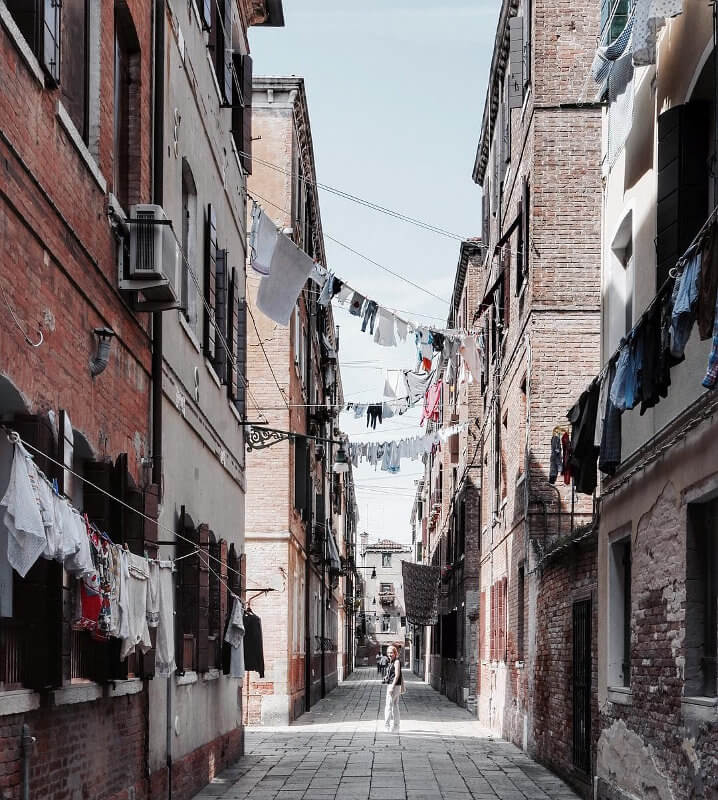
The most authentic district of the city unveils with dozens of side events of the Venice Biennale in the most hidden places, all to be discovered: Wales, represented by James Richards, finds its voice with Cymru yn Fenis – Wales in Venice in Santa Maria Ausiliatrice, in Fondamenta San Gioacchin, situated at the end of the popular Via Garibaldi. A non-linguistic path guides the emotions in the perception of the work of the young Welsh artist in the pilgrim monastery built at the beginning of the year 1000.
Cannaregio
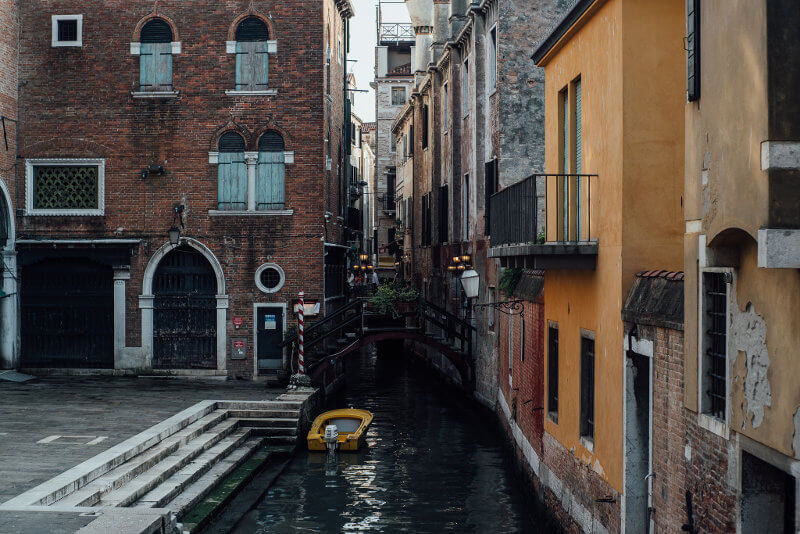
When poetry is present: projected on the altar of the thirteenth-century Church of Santa Caterina, the video Spite Your Face by Rachel Maclean is a dark Venetian tale, the Scottish expression for the Venice Biennale. The church has an ancient history dating back to the thirteenth century when the friars of the Order of Penance of Jesus Christ began its construction, which was never finished. Centuries later the Augustinian nuns dedicated it to Santa Caterina of Alessandria, a very important Saint of the Serenissima Republic of Venice.
Palazzo Soranzo Van Axel is one of the most significant examples of the Venetian Gothic style. It dates back to the fifteenth century; it belonged to Marco Nicolò Soranzo – procurator of San Marco – and later to the Venier and Sanudo families and finally in 1652 it became the property of the Van Axel, rich merchants from Holland. Man as Bird. Images of Journeys will be displayed until 5 September in Cannaregio 6099, Fondamenta Sanudo.
Dorsoduro
Among the various places to be marked on the map, the area that goes from the Accademia to Punta della Dogana is etremly rich in exhibitions and hidden treasures. Everyone knows Damien Hirst and Treasures from the Wreck of the Unbelievable at Punta della Dogana and Palazzo Grassi, while the splendid Abbey of San Gregorio, which hosts the exhibition of 40 works made out of glass and bones by the Belgian artist Jan Fabre, is to be discovered.
The abbey has a history that goes back thousands of years: built in 989 at the dawn of the history of Venice, it preserves a fourteenth-century Gothic cloister with architrave columns and an energy similar to that of the nearby Chiesa della Salute: from the corner windows of the first floor on the San Basin Marco, Canaletto used to paint his spectacular Venetian views. Jan Fabre. Glass and Bones Sculptures 1977/2017 is open until November 26, Dorsoduro 172.
With its pentafora in polychrome marble on the Grand Canal, the frescoes by Giandomenico Tiepolo and its luxurious garden on the Canal Grande, Palazzo Contarini Polignac in Dorsoduro 874 (near the Accademia), is one of the most important buildings of the early 16th century in Venice; house to the patron Winnaretta Singer princess of Polignac, who made it a lively intellectual parlour frequented by important public figures such as Igor Stravinsky and Ezra Pound. This year it is hosting the Future Generation Art Prize until August 13th.
In the same area you can find the spectacular, more than twenty meters high column: ‘The Golden Tower’ by James Lee Byars in Campo San Vio, where you can find Palazzo Barbarigo, famous for its glass-filled facade, and the Church of Saint George. Not far is the Peggy Guggenheim Collection with the retrospective Mark Tobey. Streamlined light that highlights the international soul of modernism in the mid-twentieth century.
A hidden gem in the heart of Venice: it is Palazzo Trevisan degli Ulivi, home to the Pro Helvetia Swiss Cultural Foundation and to exhibitions, concerts and conferences. The gothic style palace with the olive tree garden dates back to the fifteenth century and overlooks the Giudecca canal on one side and Campo Sant’Agnese on the other. Salon Suisse: you can visit Ataraxia until November 25th. Campo Sant ‘Agnese, Dorsoduro 810.
Among the side-events of the Venice Biennale you can not miss the retrospective Philip Guston and The Poets exhibitions at the Gallerie dell’Accademia, one of the most impressive and precious collections of Venetian and Venetian paintings in the world. It is located in the monumental premises of the Great School of Santa Maria della Carità, which include the church and the monastery of the Lateran Canons, created by Andrea Palladio like the oval staircase, unique work in the world.
The museum preserves and exhibits the Byzantine and Gothic Trecento, the Renaissance artists, Bellini, Carpaccio, Giorgione, Veronese, Tintoretto, Tiziano, Tiepolo, the eighteenth century vedutists, Canaletto, Guardi, Bellotto, Longhi, but also sculptures and drawings, including the Vitruvian Man by Leonardo Da Vinci.
Campo Santo Stefano and its surroundings
Fondaco Marcello is a new space for the contemporary art in Venice and it has always hosted some of the most interesting side-events of the Venice Biennale: a 17th century warehouse overlooking the Grand Canal; stone columns supporte its monumental wooden trusses; it is an example of functional architecture of 400 square meters which recalls the interior of the Corderie dell’Arsenale, and hosts the great exhibition Fernando Zobel Contrapuntos, in San Marco 3415, Calle del Traghetto.
The labyrinthine palace built by the Pisani family, which has now become the Venice College of Music, hosts the performances of eight artists represented by the Rush Philanthropic Art Foundation of New York. Body and Soul. Performance Art: past and present. Until November 26th, Palazzo Pisani, Piano Nobile, Campiello Pisani, San Marco 2810
San Polo
The exhibition ‘The Court of Redonda’ tells the phantasmagoric story of the small kingdom of Redonda, a fantastic and truly existing nation, where kings and aristocracy are writers and living public figures such as Francis Ford Coppola (Duke of Megalópolis) and Umberto Eco (duke of island of the day before). A fun opportunity to visit Palazzo Dandolo Paolucci in San Tomà, built in the seventeenth century. Until 26th November, Ca ‘Dandolo, San Polo 2879.
Piazza San Marco e Rialto
The Correr Museum has several itineraries to understand the richness of Art and History of Venice: the Napoleonic Wing, nineteenth-century seat of kings and emperors, where the sumptuous Neoclassical Halls host works by the greatest sculptor of the time, Antonio Canova (1757- 1822); the Procuratie Nuove, designed by the architect Vincenzo Scamozzi (1552-1616), where the major magistracies of the Serenissima resided and that now illustrate aspects of the Venetian Civilization, daily life, maritime enterprises and city festivals; the collections of ancient art on the second floor, with the gallery that collects important masterpieces of Venetian art from its origins to the sixteenth century.
For the side-events of the Venice Biennale ‘The Home of My Eyes’ by the Iranian visual artist Shirin Neshat is now exhibiting, she won the Golden Lion at the 1999 Biennale of Art with an unforgettable video on gender stereotypes.
The videos of the French artist Pierre Huyghe animate the Espace Vuitton in Calle del Ridotto 1353 and since July the Italian design has been protagonist at the Fondazione Bevilacqua La Masa with the exhibition Alberto Biasi, Sara Campesan, Bruno Munari and other friends of Verification 8 + 1 from 28 July to 8 October at the Galleria di Piazza San Marco, 71 / c.
Going towards Rialto Ca’ Faccanon you can find the fifteenth century palace in the Mercerie in San Marco 5016, one of the few examples of a Gothic palace with a perforated loggia in the noble floor that overlooks the Grand Canal. This year it hosts one of the most fascinating collateral events of the Biennale di Venezia: the collective www.m-o-d-u-s.it edited by Martina Cavallarin.
Riva Schiavoni
Connected to the Doge’s Palace by the Bridge of Sighs, the Palazzo delle Prigioni, built between 1563 and 1614 by several architects including Antonio da Ponte, is a famous prison that also hosted Nicolò Tommaseo and Daniele Manin, accused by the Austrians of plotting a revolution, both freed in 1848 and chosen to form the temporary government of Venice. Doing Time. Palace of the Prisons, Castle 4209.
The sixteenth century Palazzo Bollani, hidden among the other buildings, has stones set on the external façade, which inspired John Ruskin for Le Pietre di Venezia. Ryszard Winiarski. Event-Information-Image Palazzo Bollani, Castello, 3647.

Island of San Giorgio Maggiore
Spectacular is the work of Michelangelo Pistoletto on the island of San Giorgio Maggiore, also known as the island of cypresses, known already since the ninth century. The Benedictine convent houses the relics of numerous Saints of the Christendom such as Cosmas and Damian, the patriarch Eustachio, Paul the martyr and the remains of St. Stephen. In 1565 Andrea Palladio restored the church with a project that challenged Piazza San Marco from the other side of the dock. Michelangelo Pistoletto, until November 26, Basilica of San Giorgio, Island of San Giorgio Maggiore.
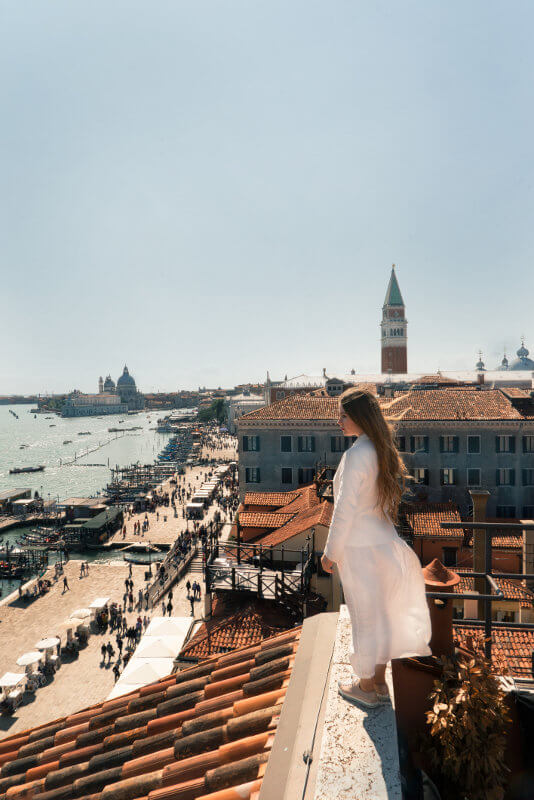
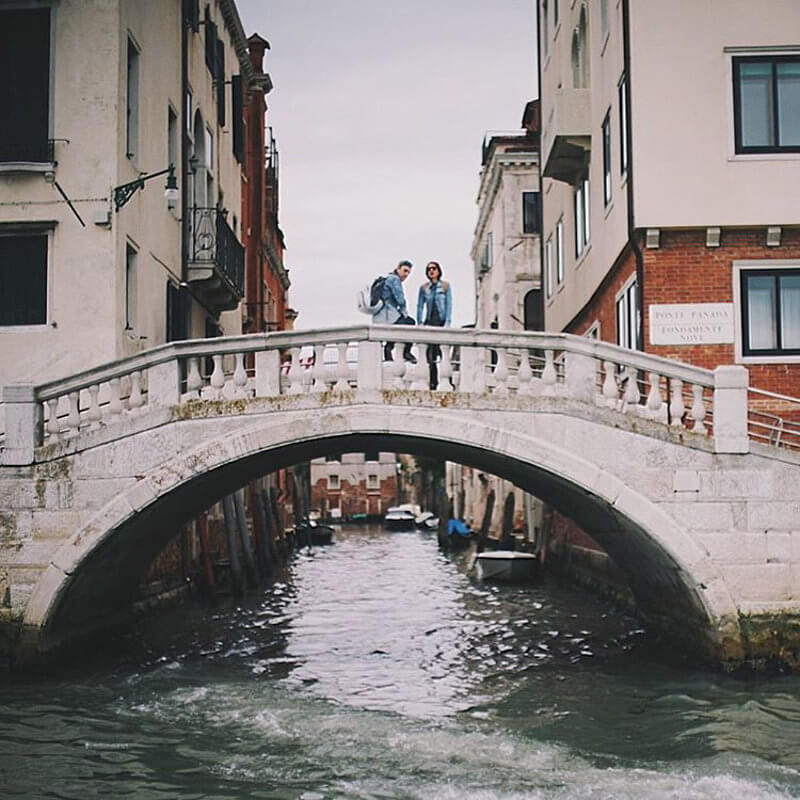
The photos are by Paola Franqui, @monaris, Dave Krugman, @ dave.krugman, Inna Shnayder, @ inna.shnayder, Ekaterina Mishchenkova, @katia_mi, Lorenzo Cinotti, @celestalis, for Venezia da Vivere.
Guide to collateral events at the Venice Biennale
VIVA ARTE VIVA 57. Esposizione Internazionale d’Arte Contemporanea – La Biennale di Venezia
+39 041 5218711
Timetables
Gardens from 10.00 to 18.00,
Arsenal from 10.00am to 6.00pm (and from 10.00am to 8.00pm only on Fridays and Saturdays from May 13th to September 30th) Closed on Mondays (except on Monday 15 May, 14 August, 4 September, 30 October and 20 November)
Castello
Catalonia in Venice 2017. La Venezia che non si vede, San Pietro di Castello, Cantieri Navali, Fondamenta Quintavalle 40. Prenotazioni gratuite +39 342 5005393
Cymru yn Fenis – Wales in Venice, Santa Maria Ausiliatrice, Fondamenta San Gioacchin
Cannaregio
Spite Your Face – Rachel Maclean, Fondamenta di Santa Caterina 4090/4091
Man as Bird. Images of Journeys Palazzo Soranzo Van Axel, Fondamenta Sanudo 6099
Dorsoduro
Damien Hirst, Treasures from the Wreck of the Unbelievable, Punta della Dogana
Jan Fabre. Glass and Bones Sculptures 1977/2017, Abbazia di San Gregorio
Future Generation Art Prize, Palazzo Contarini Polignac
James Lee Byars, The Golden Tower, Campo San Vio
Mark Tobey. Luce filante, Collezione Peggy Guggenheim
Salon Suisse: Ataraxia, Campo Sant’Agnese
Philip Guston and the Poets, Gallerie dell’Accademia
Campo Santo Stefano
Fernando Zobel Contrapuntos, Calle del Traghetto, San Marco 3415
Body and Soul. Performance Art: past and Present, Palazzo Pisani, San Marco 2810
San Polo
The Court of Redonda , Ca’ Dandolo, San Polo 2879
San Marco
The Home of My Eyes, Shirin Neshat. Museo Correr, Piazza San Marco
Pierre Huyghe, Espace Vuitton, Calle del Ridotto 1353
Dal 28 luglio Alberto Biasi, Sara Campesan, Bruno Munari e altri amici di Verifica 8+1, Fondazione Bevilacqua La Masa, Galleria di Piazza San Marco, 71/c
m-o-d-u-s Ca’ Faccanon, San Marco (Rialto Mercerie 5016)
Riva Schiavoni
Doing Time. Palazzo delle Prigioni, Castello 4209
Ryszard Winiarski. Event-Information-Image, Palazzo Bollani, Castello, 3647
Isola di San Giorgio
Michelangelo Pistoletto, Basilica di San Giorgio, isola di San Giorgio Maggiore

