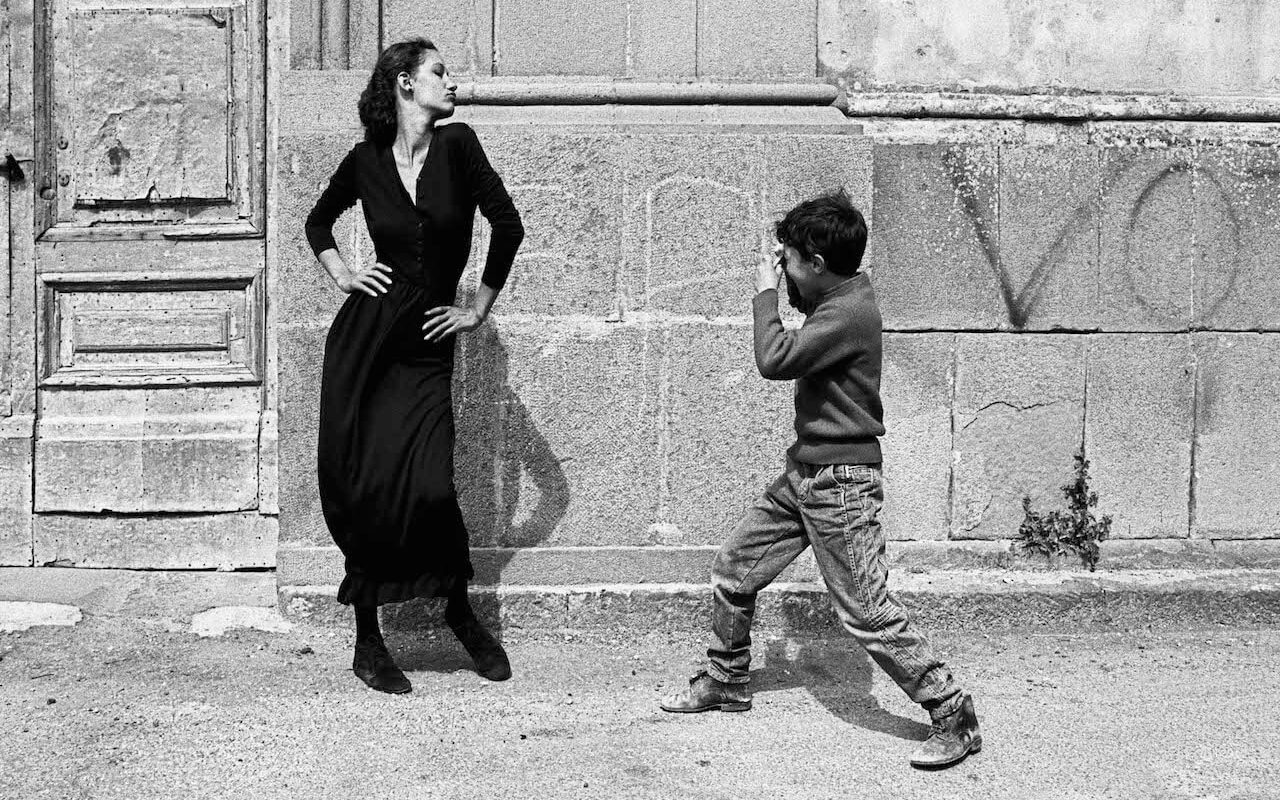
From August 31, 2019 to February 2, 2020, Casa dei Tre Oci in Venice hosts the retrospective of Ferdinando Scianna.
The new exhibition organized by Casa dei Tre Oci presents black and white images that chronicle over 50 years in the career of one of the most significant authors of contemporary photography: Ferdinando Scianna. Curated by Denis Curti, Paola Bergna and Alberto Bianda, organized by Civita Mostre and Musei e Civita Tre Venezie and promoted by Fondazione di Venezia.
The exhibition offers visitors the opportunity to share the different stages of this journey–narrative–memory made of remembrance-return to origins, of contact with the realities of the world and its rapid changes.
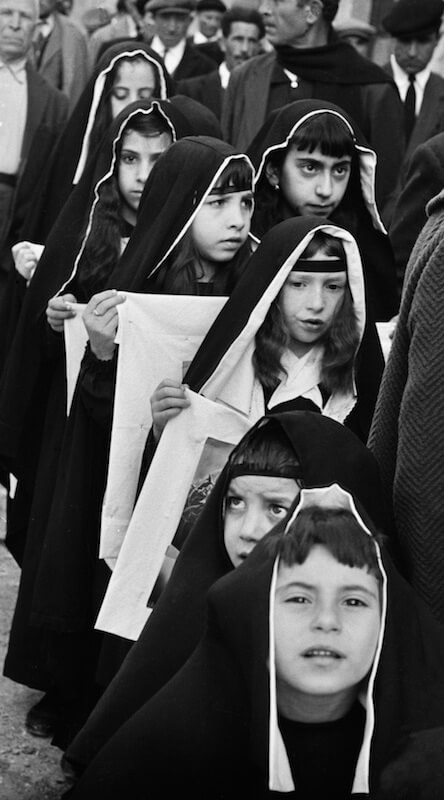
Ferdinando Scianna’s journey begins in Bagheria, Sicily, in 1943. It was in his hometown that he began dedicating himself to photography at a very young age, in the early 1960s, documenting through images the culture and traditions of his native land. Still a student, he met Leonardo Sciascia and with him, at 21 years old, published his first book, “Feste religiose a Palermo“, with which he immediately won the Prix Nadar.
In 1967 he moved to Milan, where he began his career as a photojournalist. From there he moved to Paris, where in 1982 Henri Cartier-Bresson introduced him to Magnum Photos.
Reporter, landscape photographer, portraitist, anthropologist and then fashion photographer: Ferdinando Scianna became famous—among non-specialists—for the extraordinary “fashion” images created for the Dolce & Gabbana catalog in 1987, beginning one of the most successful collaborations in fashion history. Scianna was asked to create a catalog featuring the splendid model Marpessa in the context of his Sicily. Scianna masterfully blended the visual registers of the fashion world with the experience of a photojournalist, creating an original result that broke the glossy monotony of fashion photography.
“As a photographer—Scianna himself stated, speaking of his work—I consider myself a reporter. As a reporter, my fundamental reference is that of my master par excellence, Henri Cartier-Bresson, for whom the photographer must aspire to be an invisible witness, who never intervenes to modify the world and the moments of reality that he reads and interprets. I have always made a clear distinction between found images and constructed ones. I have always considered myself to belong to the side of photographers who find images, those that tell stories and tell you about yourself, as in a mirror. Even fashion photographs I have always found in the chance encounters with the world.”
The exhibition is divided into seven sections that represent all the chapters of the career of this “islander” who began photographing Sicily at 17 and then, like many others, left the island to seek his fortune elsewhere. Never managing to do anything but cast his gaze on the rest of the world except as a Sicilian.
His long artistic journey unfolds through various themes—current events, war, travel, popular religiosity—all linked by a single common thread: the constant search for form in the chaos of life.
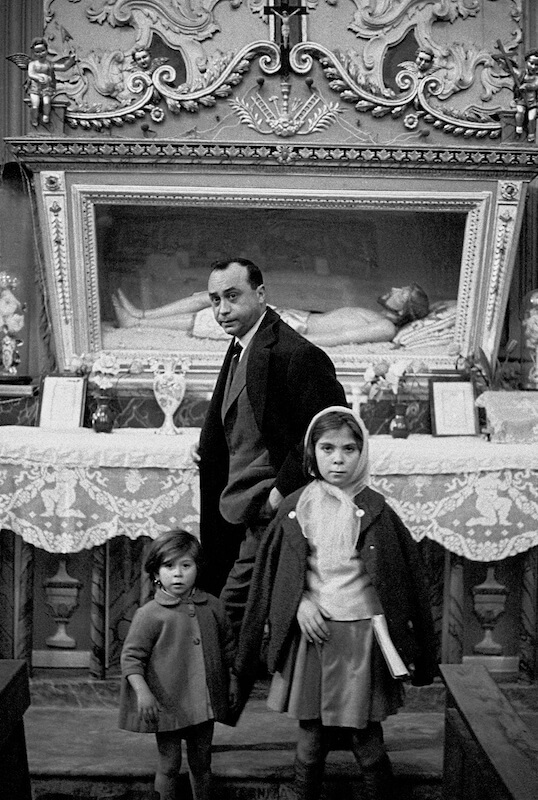
In over 50 years of narratives, there is certainly no shortage of evocative subjects: from the religious festivals of Bagheria to the Bolivian Andes, the experience in the world of fashion, the reportages, the landscapes, his thematic obsessions such as mirrors, animals, objects and finally the portraits of his friends, masters of the art and culture world.
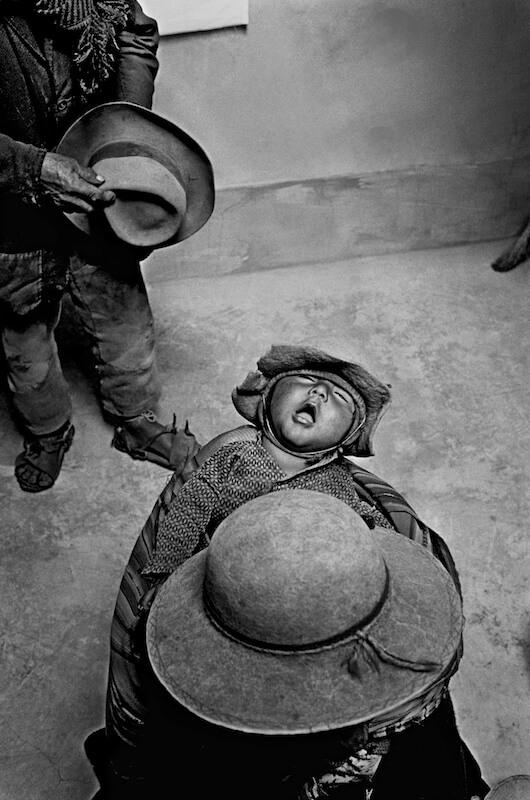
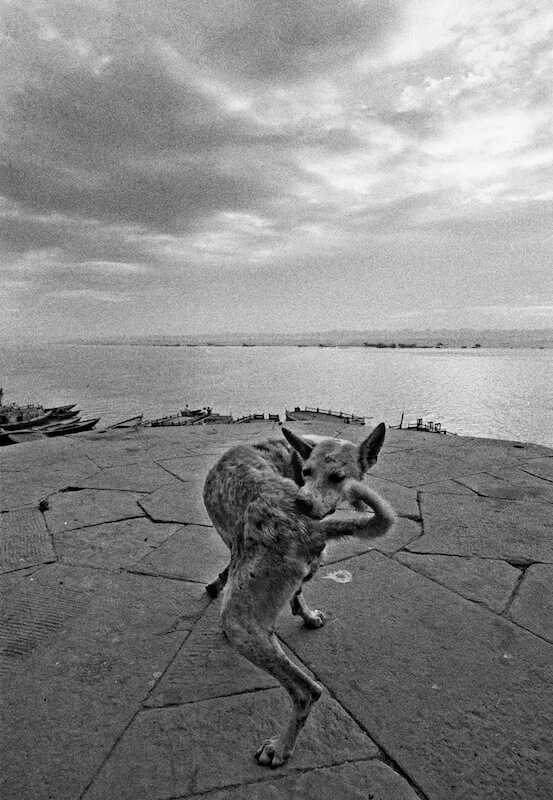
“I am no longer certain, I once was, that one can improve the world with a photograph. I remain convinced, however, that bad photographs make it worse” Ferdinando Scianna.
For the occasion, a series of fashion images that Scianna created in Venice will be exhibited as testimony to his strong bond with the lagoon city.
“The exhibition—says Emanuela Bassetti—is also a way to consolidate the strong bond between Ferdinando Scianna and Venice, testified by the series of fashion images that the Sicilian photographer shot among the calli and campi of the city.”
Giving a strongly “personal” touch to the exhibition, indicating the author’s desire to “stand beside” the visitor, is the availability of an audio guide with Scianna himself narrating in first person his way of understanding photography, what he defines as: “my relationship with the world through photography.”
The exhibition unfolds across the three floors of Casa dei Tre Oci, in a space where the protagonist is the light from the San Marco basin, starting from the Sicilian experiences and then developing through various sections that capture glimpses of social life, religiosity and conflicts, places, ordinary people and illustrious figures, children, animals, fashion and models, or objects.
“I have always considered myself to belong—Scianna stated—to the side of photographers who find images, those that tell stories and tell you about yourself, like a mirror. Even fashion photographs I have always found in the chance encounters with the world.”
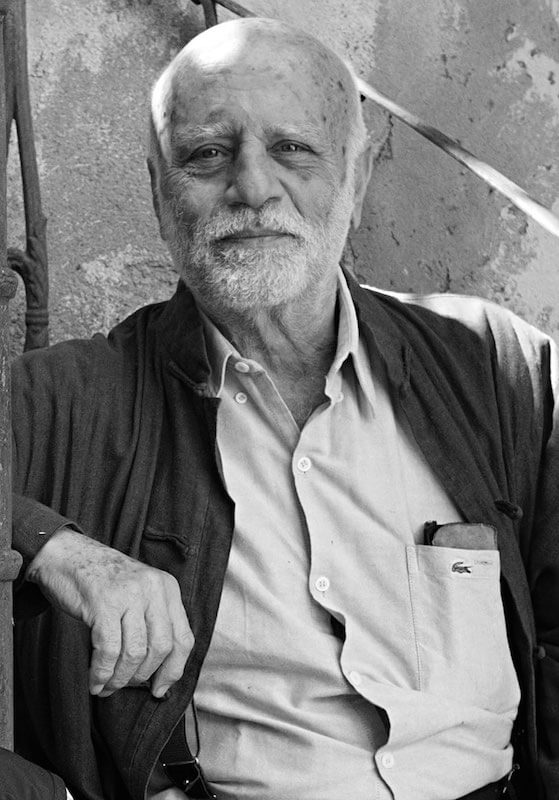
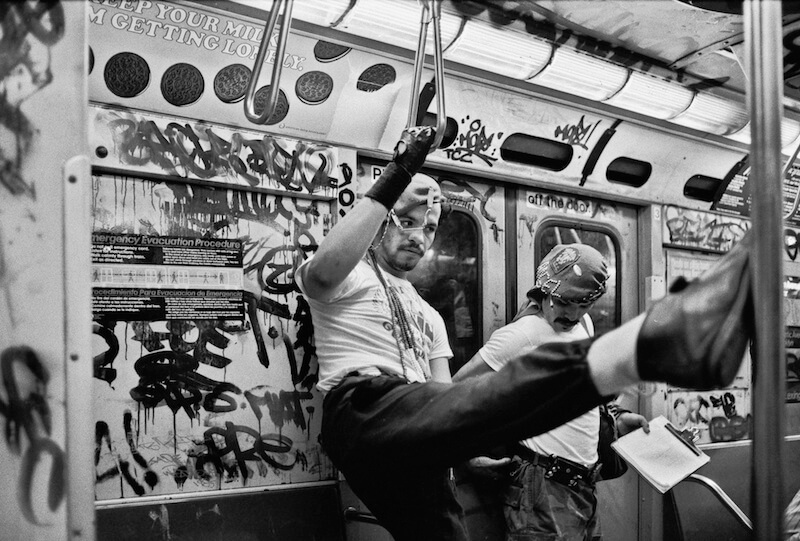
Casa dei Tre Oci, a splendid example of early 20th-century Venetian architecture, was designed by the artist Mario De Maria (Marius Pictor) and built in 1913 on the island of Giudecca, in the center of the San Marco basin, facing Piazza San Marco and the Doge’s Palace.
The building constitutes one of the principal examples of neo-Gothic architecture in Venice, so much so that it was declared in 2007 by the Regional Directorate for Cultural Heritage and Landscape of Veneto a property of historical and artistic interest.
After a period of decline on the island of Giudecca following a long phase of deindustrialization, in 2012 Casa dei Tre Oci became an exhibition space open to the public.
The entire island is currently experiencing a moment of great expansion; the strong interest in creativity and the recovery of old industrial centers in recent years have fostered artistic and urban development, contributing to bringing a breath of internationality and innovation to the entire city.
The photographs have been provided by Casa dei Tre Oci for Venezia da Vivere.
Venice Fashion Week
From October 17 to 26, by presenting the Venice Fashion Week map—2019 edition—at the Casa dei Tre Oci ticket office, you will be entitled to a special reduced admission of 9 euros to the Ferdinando Scianna exhibition.
Take advantage of it!
Hashtags
#treoci; #ferdinandosciannatreoci #sciannatreoci #viaggioraccontomemoria
Casa dei Tre Oci
Fondamenta delle Zitelle, 43, Giudecca, Venice
+39 041 24 12 332
info@treoci.org
Opening Hours
Daily 10 AM–7 PM (closed on Tuesdays)
Special openings: November 1, December 8, December 26, January 1, January 6, January 7
How to Reach Us
Vaporetto – Zitelle Stop
From Piazzale Roma and the Railway Station line 4.1 – 2
From San Zaccaria line 2 – 4.2

