
Venetian designer Francesca Torsello interviews five master glassmakers about the Murano of today and tomorrow. A project on the occasion of Homo Faber in Città and The Venice Glass Week
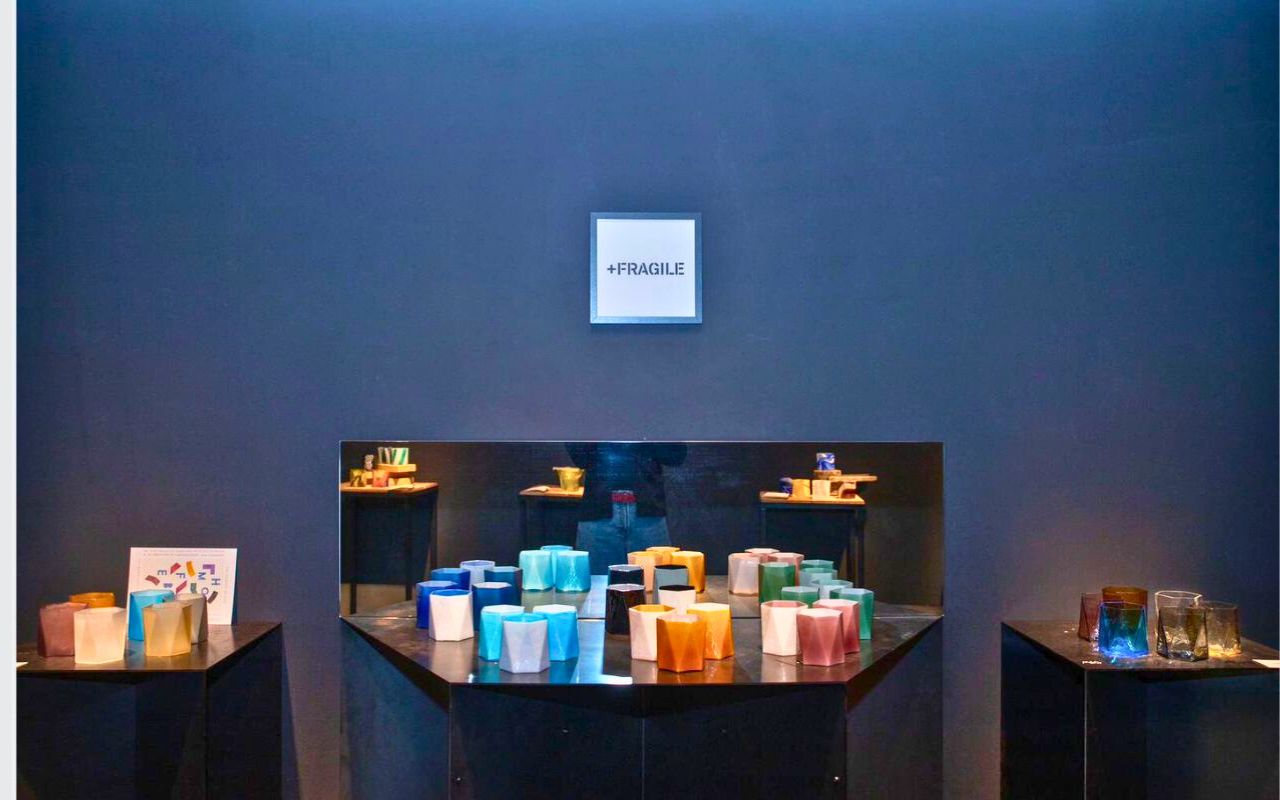
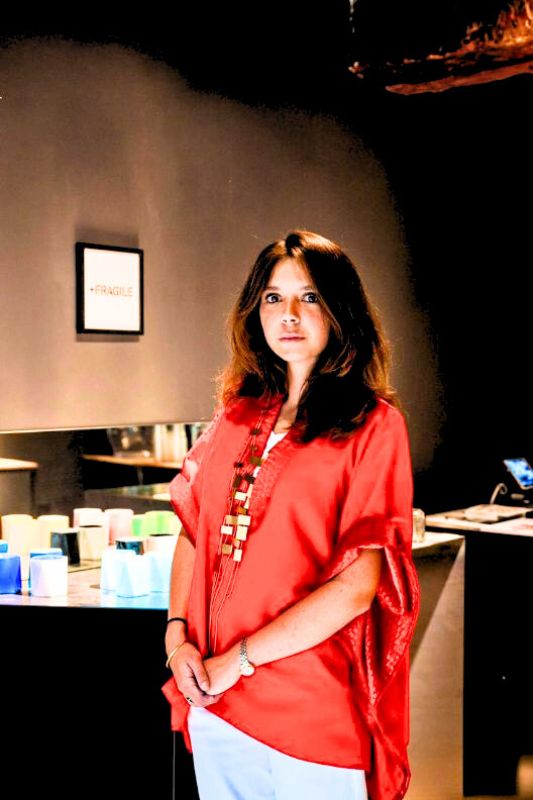
The +Fragile project, created on the occasion of The Venice Glass Week and Homo Faber in Città, aims to place the artisan at center stage.
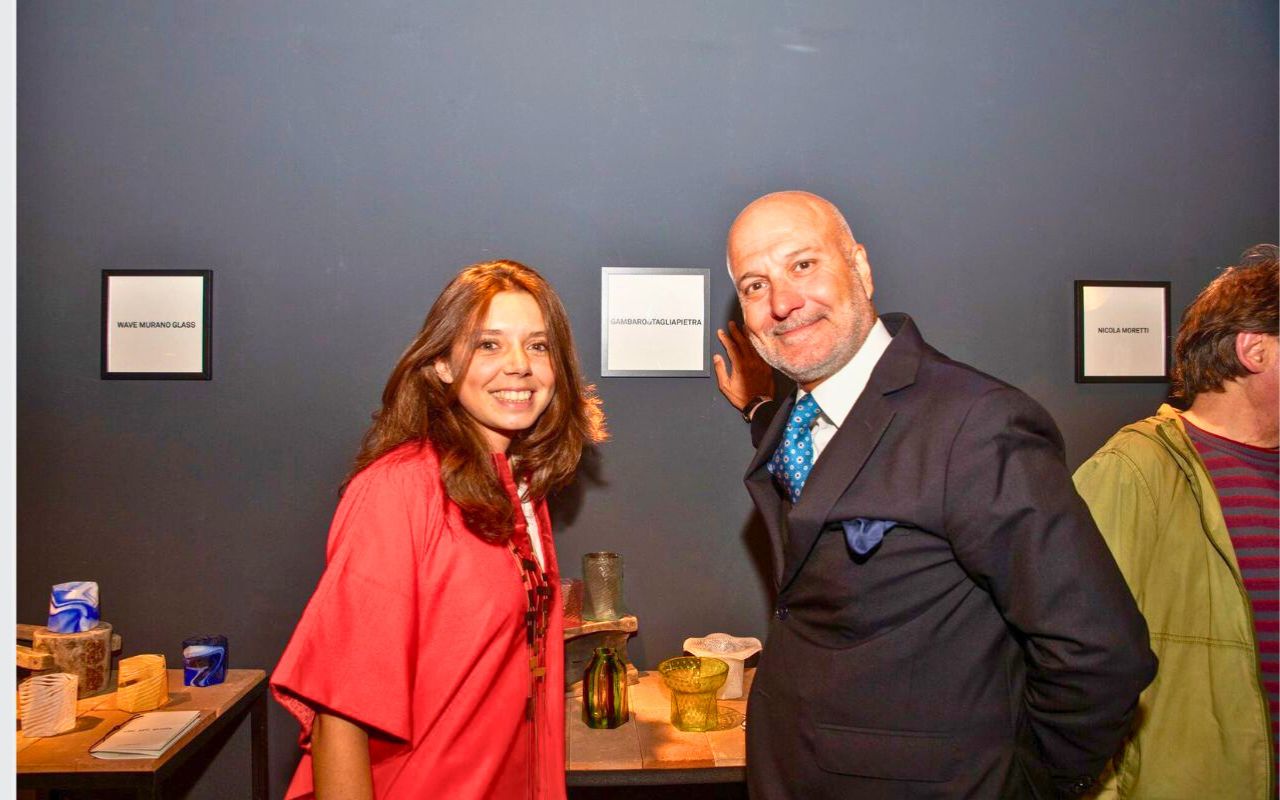
Francesca Torsello dialogues with masters Luciano Gambaro, Roberto Beltrami, Gabriel Urban, Nicola Moretti, and Davide Salvadore about what Murano is today and what the Murano of tomorrow could be.

Gambaro & Tagliapietra
Luciano Gambaro of Gambaro & Tagliapietra emphasizes the importance of the human factor in artisanal work. Murano has a future, but to survive it is essential to invest in innovation while maintaining the great tradition of glass.
Francesca: What does it mean to work with Murano glass today?
Luciano: Let us start with a consideration: most of us do not perform a job, but carry forward a tradition and a great passion. Generations of masters or entrepreneurs who carry forward a centuries-old tradition and culture. Therefore, in many of us there is a love that can sometimes be an obstacle or a problem from an entrepreneurial point of view, as it makes us less rational.
That said, I believe that doing this work means being the antithesis of what is on everyone’s lips today and goes by the name of Artificial Intelligence. In our work, the human factor is, and will always remain, predominant, and no machine and no software can replace it. Despite the well-known problems, I believe Murano has a future—the important thing is that we and future generations must invest in innovation and design, naturally starting from the great tradition of Murano artistic glass.
Francesca: What are the limitations that hinder you artisans?
The limitations are numerous, starting with the fact that we carry out our activity on an island in the Venetian Lagoon. A study conducted in 2015 by the Chamber of Commerce showed that having a business in Murano or on an island in the Venetian lagoon, rather than on the mainland, meant bearing at least 40% more in production costs. This alone is a significant obstacle. If we then add the fact that we require large quantities of gas, specialized labor, generational turnover, ever-increasing attention to environmental aspects, etc.
All this can help you understand how problematic it is to carry out our activity. This is why, for example, we have been demanding for years the protection and safeguarding of the product produced and consequently of the production chain. The origin of the product must be protected to preserve the production system.
Francesca: How do you imagine a Murano of the future?
I have a very clear and distinct vision of what Murano can be in the future. A fragmented production system, yes, but with many small qualified factories with masters increasingly oriented toward high-quality products, where serial production will certainly be lacking or diminished in favor of a much more precious and appreciated custom-made work of a unique and exclusive product. With the era of large factories and mass production over, Murano glass will focus much more on what is actually its true soul, its true identity: being a high-end product precious to those with great spending capacity. For this reason, in my opinion, we need to make a great effort toward change and innovation, both of the product and of the image itself. It will certainly not be easy, but with determination and good ideas we can succeed.

Wave Murano Glass
Roberto Beltrami, founder of WAVE Murano Glass, highlights the need to maintain a balance between tradition and innovation. His greatest challenge is training a new generation of glassmakers, a slow and demanding process, but crucial for the island’s future.
Francesca: What does it mean to work with Murano glass today?
Roberto: Working with glass in Murano today means walking very carefully on the line between being heirs to a very great tradition, but at the same time managing to keep an eye toward the future and not becoming fossilized in the uses and customs of tradition, but always innovating while still keeping one’s roots in the tradition of Murano glass art.
This is because unfortunately the world has changed, while tradition has clearly remained the same and, unfortunately, tradition as it is cannot survive as an economic model of craftsmanship in Murano today. Therefore, one must change while holding tight to one’s roots.
Francesca: What are the limitations that hinder you artisans?
The limitations are clearly technical and economic and are connected. It would be wonderful to have immense capital to make large investments, but the first fundamental resource of companies in any sector is human capital. And unfortunately, as much as we at Wave Murano Glass are training—our mission is also to train a new generation of glassmakers who know how to live and work in the modern world, as we said before—firmly grounded in our Murano glass traditions, the limitation is above all the time it takes to train this new generation. This is the greatest limitation, being able to quickly train as many people as possible, because there is no longer generational turnover, and so we had to start doing it internally from scratch, and a few people are growing, learning, but it will take several more years before they are at a level where they can in turn teach and thus make this process faster, even exponentially faster. Then, clearly, one must also find a way to sustain the work of these artisans we are training. Therefore, continue to invest in the commercial side to make the brand known, maintaining a high level of quality, excellent service, and doing all these things. The limitations are the difficulties one encounters in having a company in today’s modern world, especially in Italy, and the training of personnel in an artisanal trade where there are no schools—there is only the foresight of those who want to teach this craft in the most effective way possible. There is no right or wrong in teaching, there is only more effective and less effective.
Francesca: How do you imagine a Murano of the future?
Well, perhaps the answer to the third question is precisely overcoming the limitations of question number two, and therefore continuing to grow as an entity to increasingly support what I like to call a renaissance of Murano glass, which we are trying to bring to the island with our reality.

Moleria Miki Glass
Gabriel Urban of Moleria Miki Glass speaks of how Murano glass has become a passion for those who work with it today, unlike the past, when it was more an economic necessity. He imagines a freer Murano full of artists, a sort of “mecca” for those seeking something unique.
Francesca: What does it mean to work with Murano glass today?
Gabriel: Nowadays, working with Murano glass is an art, it is a passion, unlike in past years, with the boom of Murano glass, when obviously in Murano one went to work in the furnaces more out of necessity than passion. So let us say that by now it is a job that has transformed into a true passion. Obviously there are still people who had started out of necessity, who are finishing their working cycle. Precisely for this reason, now whoever decides to do this work I believe does it more for an artistic calling than an economic necessity.
Francesca: What are the limitations that hinder you artisans?
If we speak of technical and economic aspects, in the case of a sector like ours—post-production of glass through grinding—a major problem is the disposal of all materials for production, not to mention the ecological impact. Another obstacle is the people/colleagues on the island. We are talking about the issue of lowering prices due to competition. The majority of artisans and sellers try to gain primacy by lowering the price of Murano glass. This leads to a chain reaction in lowering the quality of products.
Francesca: How do you imagine a Murano of the future?
In the future I imagine a much freer Murano full of artists. I imagine a spiritual reality. Custom work and uniqueness are increasingly in vogue in the luxury world. Working with Murano glass for me is art. Master glassmakers who manage to shape molten glass and create marvelous sculptures. In my opinion, this work could transform Murano into a mecca, a destination for people who are truly seeking something different, something new and no longer the usual little vases, aquariums, etc. Working in the furnace, I breathe a spiritual energy. I hope and believe that Murano will become a seat and source of energy for many people and also for many artists who see glass as a way to break free from the limits of the ordinary and move toward the surreal, creating truly unprecedented works. I truly imagine a beautiful future for Murano, creating different jobs and creating furnaces with different productions. The number of furnaces on the island will probably decrease further, but the few that survive will create few pieces per year but significant ones with strong impact at the global level.

Nicola Moretti
Nicola Moretti, always an experimenter, tells of how he abandoned serial production to focus on unique pieces and custom work. His vision of Murano’s future is linked to quality and experimentation, carrying forward family traditions and technological innovation.
Francesca: What does it mean to work with Murano glass today?
Nicola: Normally as Murano natives one settles into productions and so there are factories that continue their whole lives always making the same soup and go on like that. I, on the other hand, have always done the opposite. I have always experimented a great deal. In fact, many acquaintances, friends, when they have something, some problem, all come here to ask for something. I, for example, am now doing something with a start-up here in Murano and the start-up has patented a 3D glass printing system. We have been working for years on glass recycling and therefore on recycling materials, but also glass for windows, for instance. So we have done many interesting, beautiful things, even with satisfaction. It is something that has never been done. And so personally I have always experimented a lot, it is also the most fun part of the work. And if you ask me “has it been profitable for you?” The answer is no, I would have earned more making shoes, but I would not have done all the things that gave me satisfaction.
Francesca: But do you think that by bringing this technological innovation to the Murano territory, the market can understand it, comprehend it as made in Murano?
No, I do not know that. The most atypical works I have done, I conducted them with the experience of many years, but in my opinion they could also be done elsewhere. We did it, but it is not Murano, it is something else. The material we patented with Matteo Silverio is not perceived as glass, but if it works and succeeds it becomes something beautiful. Enormous.
How do you see the Murano of tomorrow?
A lot of work has moved. For years we have eliminated serial production. We make small series of glasses that we sell to internet sites or to some shop in Venice. But I do not make series that I sell to shops and make a pre-established production, I work mainly with architects and designers and make unique pieces. In recent years I have been dealing with work in the luxury world, precisely because custom is synonymous with luxury. I am doing beautiful interesting things, they can be chandeliers, tables, walls and so my work is very varied and I combine various techniques. So I, from the furnace, can prepare objects, murrine, things that can then be used for many other types of work. We are atypical, for being from Murano. We are few who work with glass fusion. Then we always carry forward the murrine which would be family traditions. I wonder, when someone says this does not seem like Murano, what does that mean today? That is, what is Murano? The golden horse? Murano in my opinion now is the highest quality, because then many other things you can find in a thousand other companies. And that is what we have done, we removed ourselves from seriality. But, with commitment and effort, because you raise the bar considerably: when you start doing custom work or something, someone comes to you and also expects quality work, seriousness, confidentiality and everything, which sometimes exists.

Davide Salvadore
Davide Salvadore expresses a bitter but determined vision of working in Murano. For him, the island’s future is uncertain, but possible, provided a leader capable of guiding a renaissance of artistic glass can be found.
Francesca: What does it mean to work in Murano today?
Davide: Everyone tells me I have done so much for my children. That I have left them a ready-made job. I feel I have given them a sentence. Because the life we lead is horrible. Working with glass in Murano means being continuously harassed and sabotaged. By bureaucracy, by the Murano natives themselves, by sellers. Those who produce glass here in Murano are massacred by the market. Another issue is the machinery they introduce for—in theory—the protection of workers and the elimination of all minerals and natural oxides as they are considered harmful. This implies that glass compositions change, for the worse, compared to the past.
Francesca: Why can you small producers not, like Venini or Barovier, detach yourselves from the tourist panorama that dominates the Murano territory and ruins the authentic perception of Murano craftsmanship?
We enter a field that in my opinion does not touch the practical terms of working in Murano, but rather the artistic and qualitative ones. And there is a lot of quality artistic glass around the world. And the real problem is that in Murano there are no longer artists like Pino Signoretto. And from here arises the issue of what art is for me, what I consider art. For me a master must have qualities and abilities already written. After which the division between masters and artists occurs. For me the artist must know how to do what he thinks. And I believe that in Murano there is space both for artists and for designers. The important thing is to assume awareness of one’s abilities as artisans and glass workers.
Francesca: How do you see the future of Murano? An optimistic vision
The glass market has always fluctuated. Centuries ago the furnaces operated seasonally, and in the dead seasons the glassmakers did other jobs. There were periods of wealth and periods of real hunger. With Salviati, in the 1800s, after a moment of crisis, the glass world was positively revolutionized. Well, my hope is that cyclically Murano returns to its origins and that the Murano natives regain their desire. The only way, however, to ensure that young people see a light in Murano and not a place to escape from, is to have a guide to follow who conveys confidence. A leader is missing, as Chihuly can be in the United States.
Francesca: I wonder if Murano cannot return to being an island where production takes place on a large scale…
Consider that the Conterie company was a furnace with 1,800 workers. Incredible furnaces. They produced tubes for making neon and special glass beads to absorb nuclear waste. They closed because clearly China surpassed the Italian and indeed Murano “industrial” market. To return to semi-mass production of quality, perhaps, as I said before, a leader would be needed. It would be wonderful. Almost nothing is produced in Venice anymore and that is what gives it life.
Photos © Lucrezia Ceselin.
Interviews by Francesca Torsello +Fragile.

