
In Venice, the Civic Museums are open between Christmas and New Year’s. Discover them all with the guide for those who want to dedicate the holiday season to art
The Civic Museums of Venice are open during the Christmas holidays with extended hours, including December 25 and 26 and January 1, 2026. Here are the exhibitions, newly inaugurated displays, and permanent collections, viewable in the coming months with schedules and practical details, with our guide for those who want to dedicate the holidays to art.
Special openings
All Civic Museums of Venice are open every day from December 22 to January 6, including December 25 and 26 and January 1. Doge’s Palace and Museo Correr extend opening hours until 9:00 PM (last entry 8:00 PM) on December 25, 26 and January 1, as well as every Friday and Saturday from December 19 to January 3.
On December 25 and January 1, Doge’s Palace and the Museum of Natural History open at 10:00 AM.
Info: www.visitmuve.it
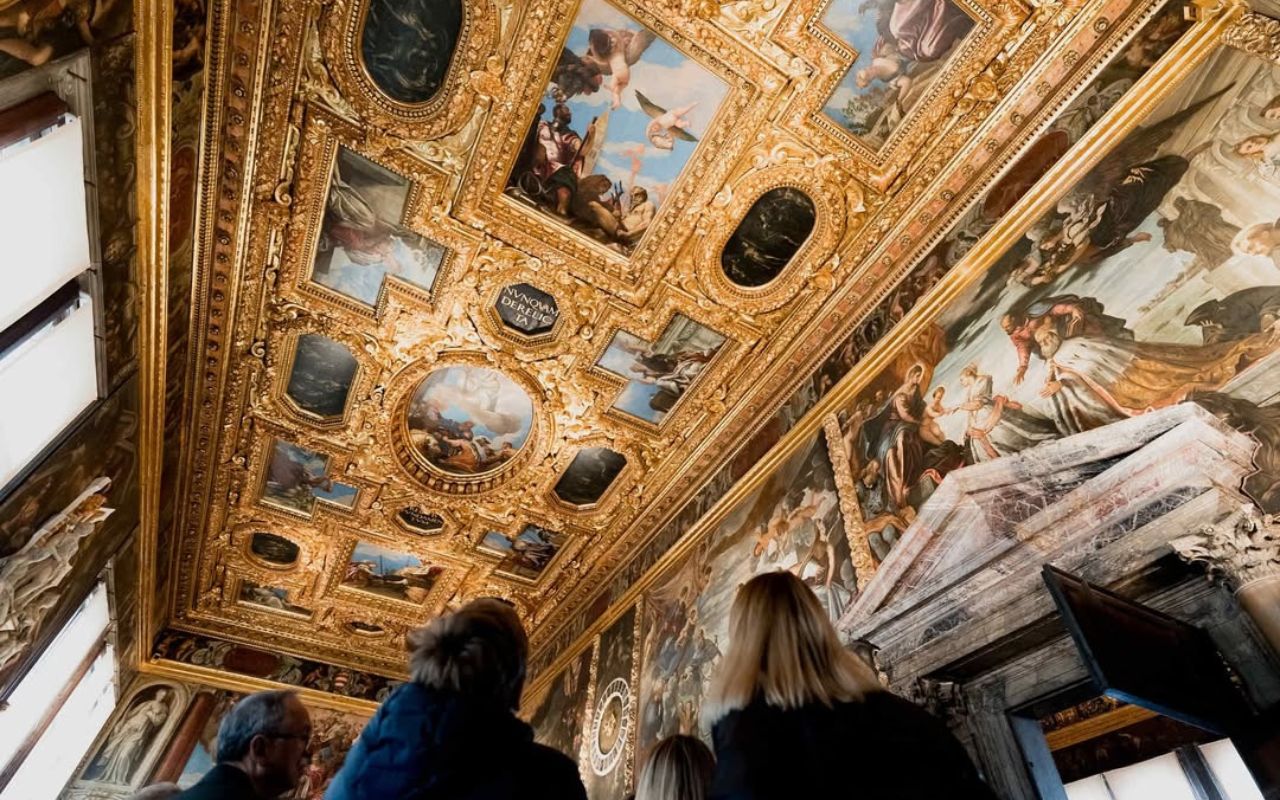
DOGE’S PALACE
Address: Piazza San Marco 1
Ticket: St. Mark’s Square Museums (includes Doge’s Palace, Museo Correr, Archaeological Museum and Marciana Library) – Full €30, Reduced €15
Link: palazzoducale.visitmuve.it
Doge’s Palace hosts until January 18 the exhibition Democracy through Law. From the Most Serene Republic to the Venice Commission of the Council of Europe as part of the celebrations for the thirty-fifth anniversary of the European Commission. The exhibition traces the history of law and democracy, with Venice as a model city of government.
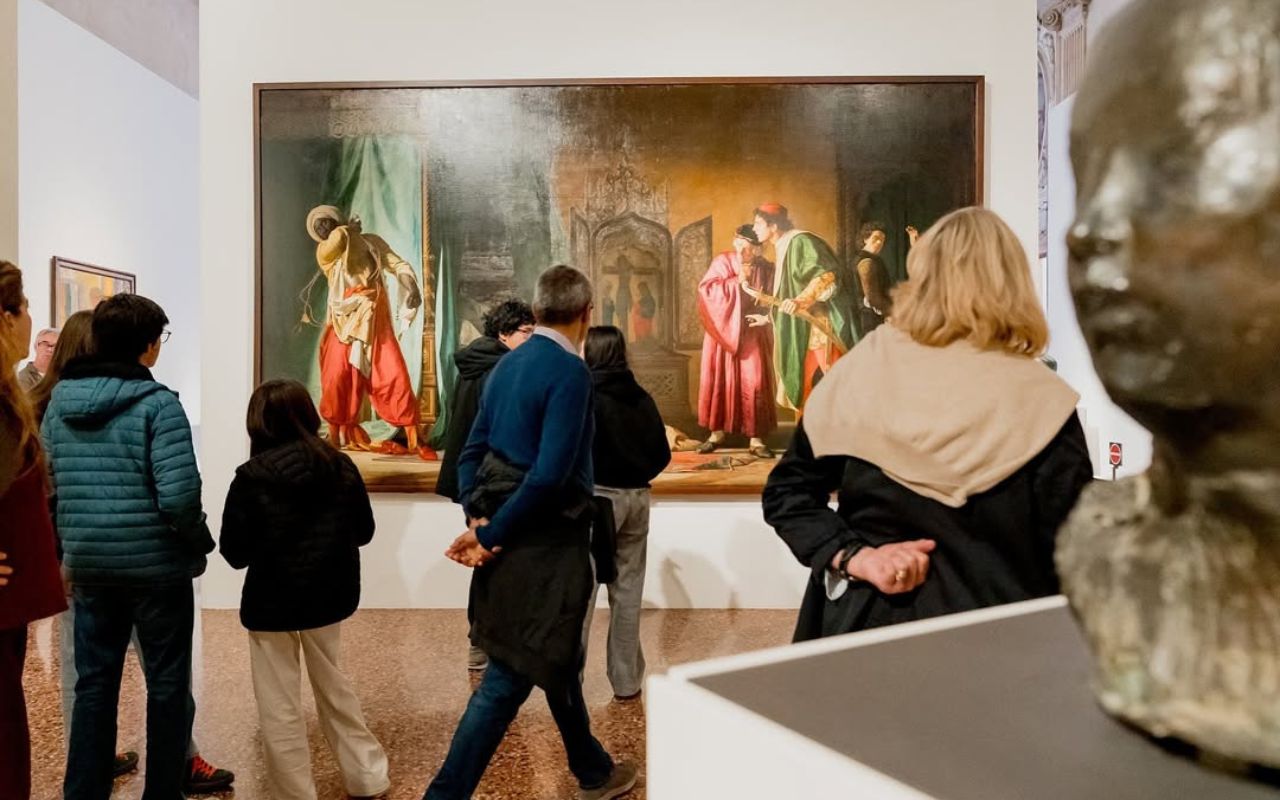
In the Picture Gallery – Hall of the Magistrate of Laws until April 14, 2026, the fourth edition of the series Guests at the Palace presents to the public a rare example of Francesco Guardi’s portraiture (Venice, 1712-1793), from I.P.A.V. – Venetian Public Assistance Institutions: The Portrait of Lazzaro Zen. The work tells a different and significant fragment of Venetian history: the story of Alì, renamed Lazzaro Zen.
The visit to Doge’s Palace includes: the Doge’s Apartment with the state rooms, the Institutional Halls with the Hall of the Great Council and Tintoretto’s monumental Paradise, the Armory with collections of weapons and armor from the 15th to 18th centuries, the Picture Gallery with masterpieces of Venetian painting, the Prisons and the Bridge of Sighs, the Opera Museum with original capitals and sculptures.
Special hours: December 25, 26 and January 1 until 9:00 PM (last entry 8:00 PM), plus every Friday and Saturday from December 19 to January 3.

MUSEO CORRER
Address: Piazza San Marco 52 entrance from the Napoleonic Wing
Ticket: St. Mark’s Square Museums – Full €30, Reduced €15
Link: correr.visitmuve.it
The ticket includes the National Archaeological Museum and the Monumental Halls of the Marciana National Library
Museo Correr presents two exhibitions:
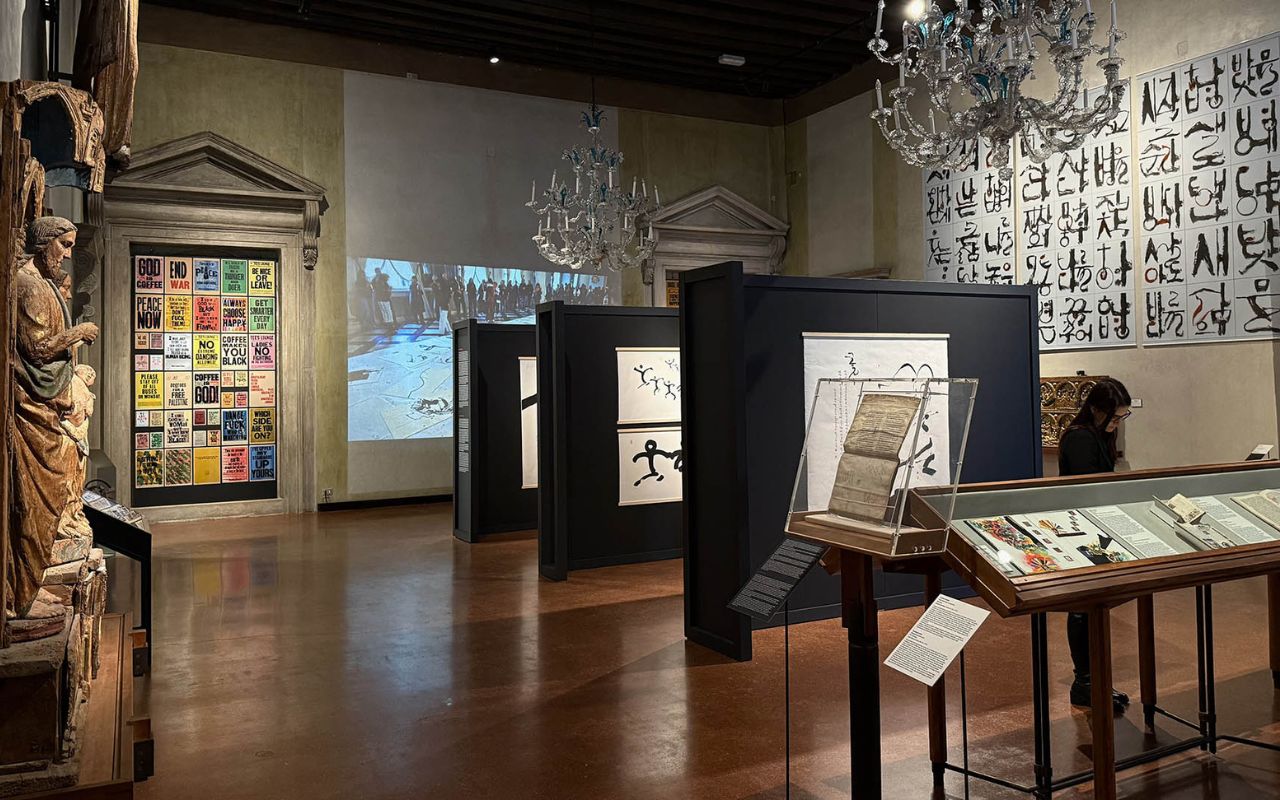
- CHARACTERS. Calligraphy and Typography: South Korea and the United States at the Museum Library in the Hall of the Four Doors (until January 11, 2026)
Curated by Monica Viero and Monica Dengo, the exhibition is part of the East West Calligraphy series and brings together four contemporary artists from South Korea and the United States – Kim Doo Kyung, Kang Byung-In, Thomas Ingmire and Amos Paul Kennedy Jr. – on the theme of phonetic scripts: the Korean alphabet Hangeul and the Latin alphabet. - CANOVIAN DIALOGUES. Karen LaMonte. Nocturnes on the first floor, Canova Rooms (until February 28, 2026).
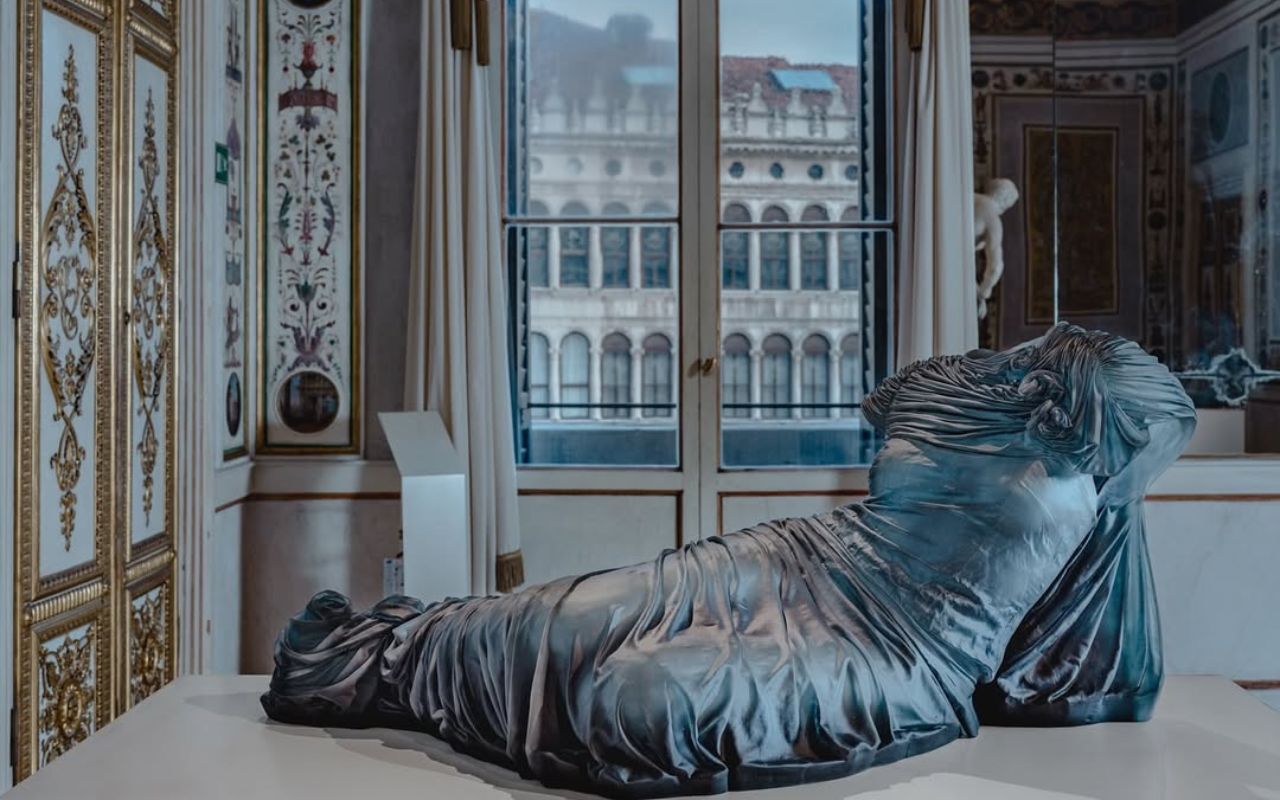
Karen LaMonte presents four glass sculptures from the Nocturnes series. The American artist regularly works with various materials (glass, ceramics, bronze, marble) and since 1990 has investigated the absence of the body through clothing as a trace of a vanished presence. To create the works, she manually traces every fold of the fabric with precision, then casts the result in glass. The dialogue with Canova contrasts two opposing visions: if the neoclassical sculptor gave life to matter, LaMonte evokes a possible form of life through the absence of the body.
The “classic” museum route begins with the Neoclassical Rooms featuring the sumptuous Ballroom and the Canova collection with the sculptures Orpheus and Eurydice and Daedalus and Icarus. This is followed by sections on institutions, daily life and naval power of the Serenissima, the Picture Gallery with works by Lorenzo Veneziano, Bellini, Carpaccio, Antonello da Messina, Lorenzo Lotto in the arrangement by Carlo Scarpa.
Special hours: December 25, 26 and January 1 until 9:00 PM (last entry 8:00 PM), plus every Friday and Saturday from December 19 to January 3.
CA’ REZZONICO – MUSEUM OF 18TH CENTURY VENICE
Address: Dorsoduro 3136
Ticket: Full €14, Reduced €8
Link: carezzonico.visitmuve.it
- Neoclassical Taste. The Cicognara Album (until January 12, 2026)
81 sheets with drawings by masters of Italian and European Neoclassicism collected by Count Leopoldo Cicognara between the late 18th and early 19th centuries. The album brings together works by Vincenzo Camuccini, Andrea Appiani, Giuseppe Bossi, Francesco Hayez and six drawings by Antonio Canova, a close friend of the collector, as well as contributions by French artists such as François-Marius Granet and Louis Léopold Robert.
The sheets display all the graphic techniques of the period (pencil, pen, colored chalks, watercolors) and range from views, portraits, landscapes, genre scenes and sacred and profane compositions.
The album was kept in a case decorated with bronze friezes and cameos, with a miniature depicting a view of Venice at the center.
First presented to the public in 1978, it returns on full display after nearly fifty years thanks to restoration by the Venice International Foundation.
Special openings: also open Tuesday, December 24 and Wednesday, December 31.
CA’ PESARO – INTERNATIONAL GALLERY OF MODERN ART
Address: Santa Croce 2076
Ticket: Full €14, Reduced €8 (includes Museum of Oriental Art)
Link: capesaro.visitmuve.it
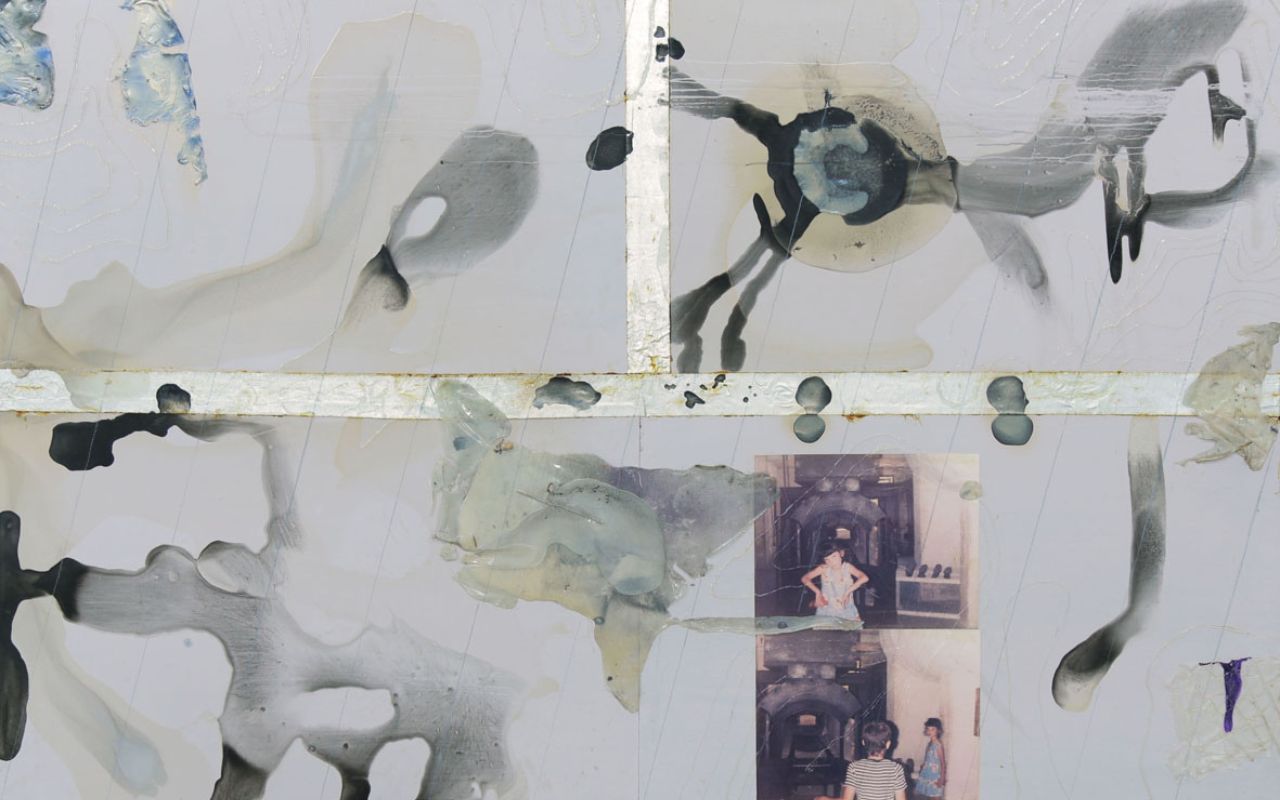
- GASTONE NOVELLI (1925-1968) in eight exhibition spaces on the second floor (until March 1, 2026).
Ca’ Pesaro celebrates the centenary of Gastone Novelli’s birth with a retrospective that brings together approximately sixty works from 1957 to the works of ethical and political content prepared for his personal room at the 1968 Biennale. - TERRY ATKINSON. The Artist Is an Engine of Meanings in the Dom Pérignon Rooms on the second floor (until March 1, 2026).
Terry Atkinson, English artist and co-founder of Art & Language in 1968 together with David Bainbridge, Michael Baldwin and Harold Hurrell. The group challenged established practices of the art system, bringing together nearly fifty artists between 1968 and 1982, when Atkinson left the movement due to ideological differences. For sixty years, the artist born in 1939 in Thurnscoe (Yorkshire) has linked the dynamics of history to questions of aesthetics, investigating the language of art through the relationship between images, symbols and texts. His works recently entered the collections of the Tate Gallery in London. - GIANNI FABBRI. Views on Life, Art and the World in the Longhena Salon (until January 25, 2026).
The Longhena Salon project, a collaboration between MUVE and Iuav University of Venice inaugurated in 2016, dedicates a chapter to Gianni Fabbri, Venetian professor and architect born in 1939.
The exhibition in Ca’ Pesaro’s project room traces the evolution of his design thinking through works that blend the history of architecture with imaginary worlds constructed through pastiche, collage and quotations.
PALAZZO MOCENIGO – MUSEUM OF TEXTILES AND COSTUME
Address: Santa Croce 1992
Ticket: Full €8, Reduced €5.50
Link: mocenigo.visitmuve.it
Note: Photography of the garments on display is not permitted
- The Male Kimono. Threads of Life, Tales of Style (until April 4, 2026)
An extraordinary selection of Japanese men’s kimonos from the first half of the 20th century, a period when Japan reasserted its identity by assuming a decisive role in the international geopolitical scenario.
Men’s everyday garments appear sober on the outside and reveal elaborate decorations on the inside, normally hidden from view and accessible only in private contexts.
The woven or painted images tell the story of Japanese culture through references to literature, the art of war, the natural world and the philosophical-religious realm, while illustrations related to sports, current events and technological innovations celebrate modernity, creating an unexpected dialogue with the West.
The exhibition is organized into nine thematic sections with loans from the Museum of Oriental Art in Venice, a section dedicated to decorative and textile techniques, and specific educational offerings.
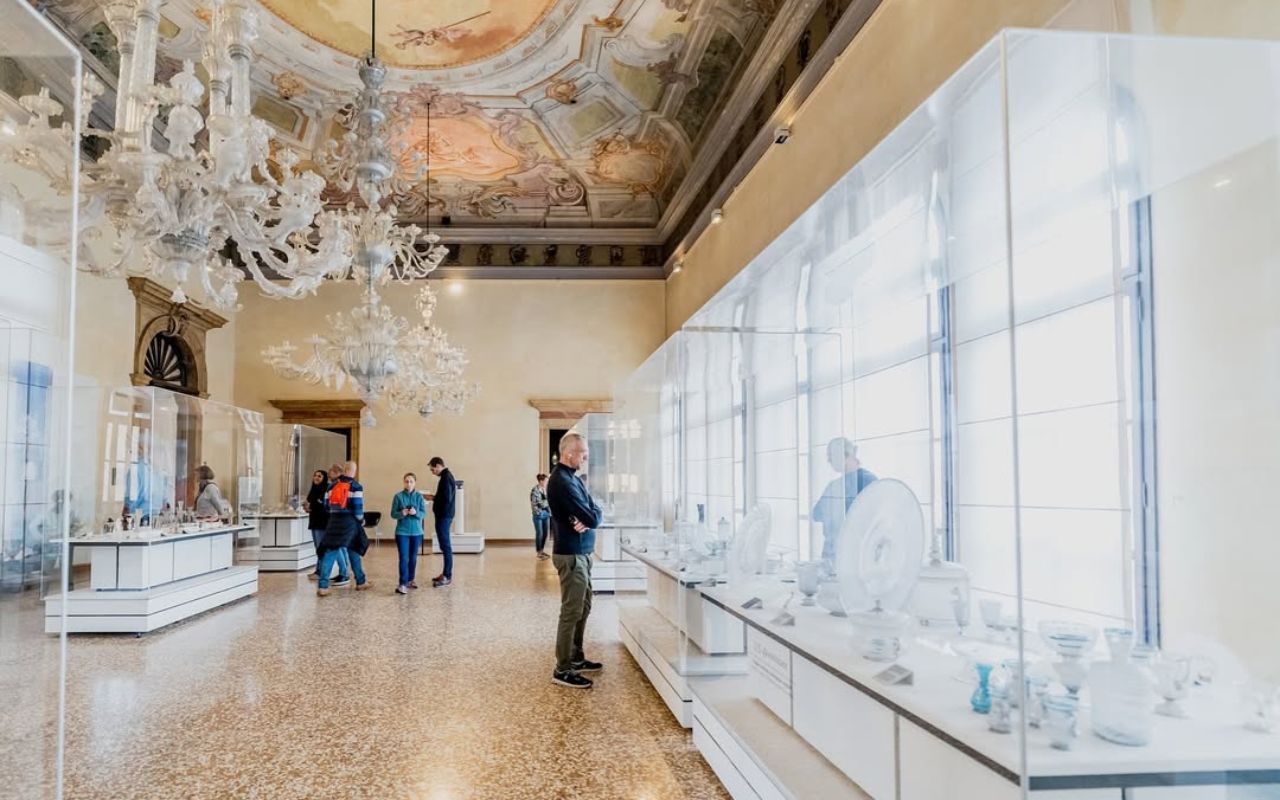
GLASS MUSEUM
Address: Fondamenta Giustinian 8, Murano
Ticket: Full €12, Reduced €7.50
Link: museovetro.visitmuve.it
Open daily, 10 AM to 5 PM
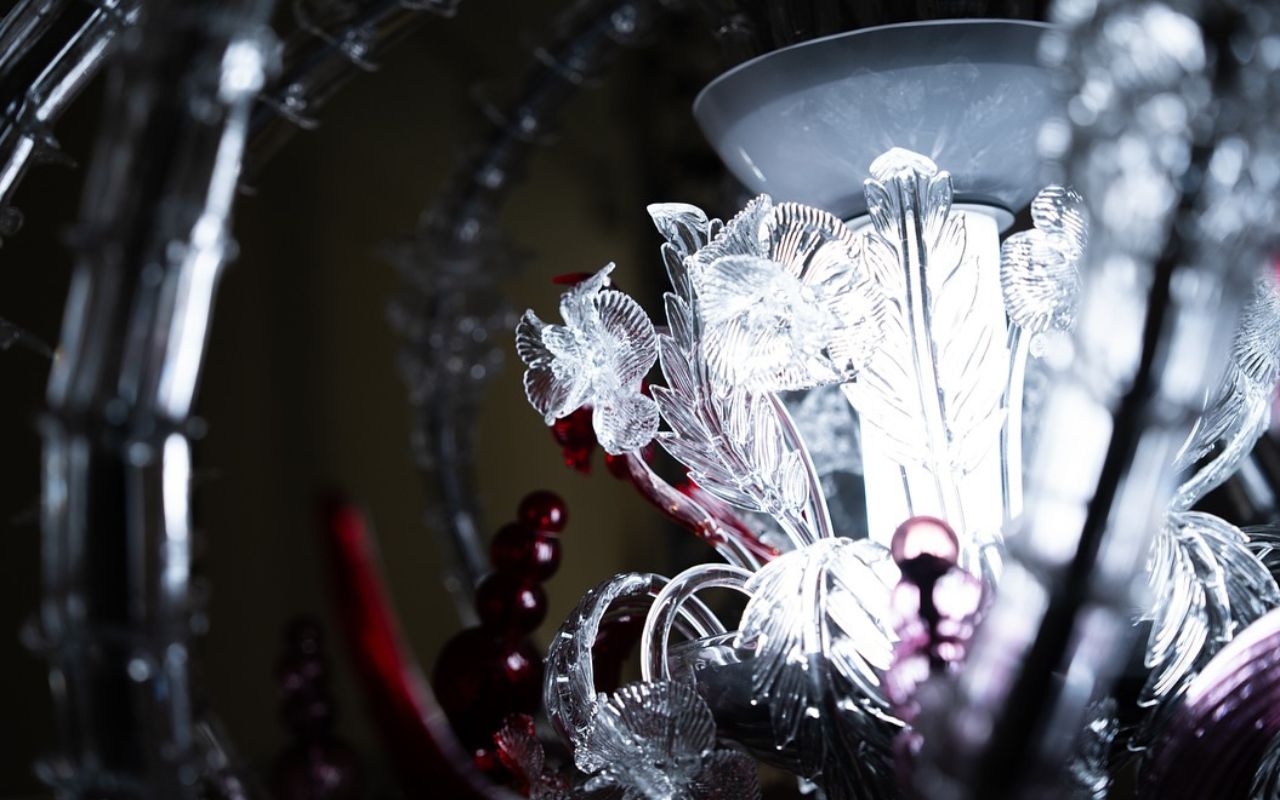
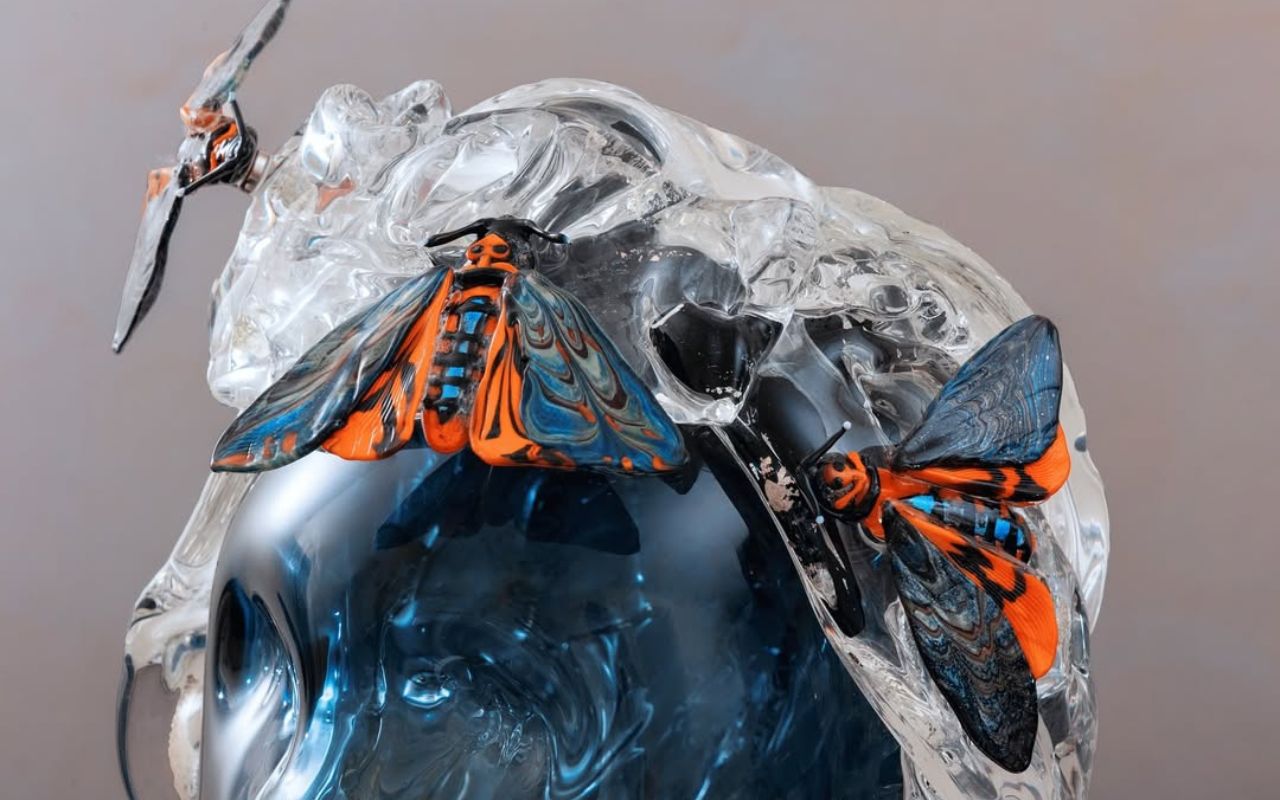
- TRUE CASANOVA (until May 3, 2026)
Eleven glass works and installations created by Murano masters interpreting the figure of Giacomo Casanova on the three-hundredth anniversary of his birth.
Conceived by the Consorzio Promovetro Murano and curated by architect Matteo Silverio, the exhibition creates an immersive journey organized around key themes (Magic, Alchemy, Illusion, Game, Theater, Journey, Deception, Pleasure, Escape and Memory) and interprets the various aspects of Casanova’s personality.
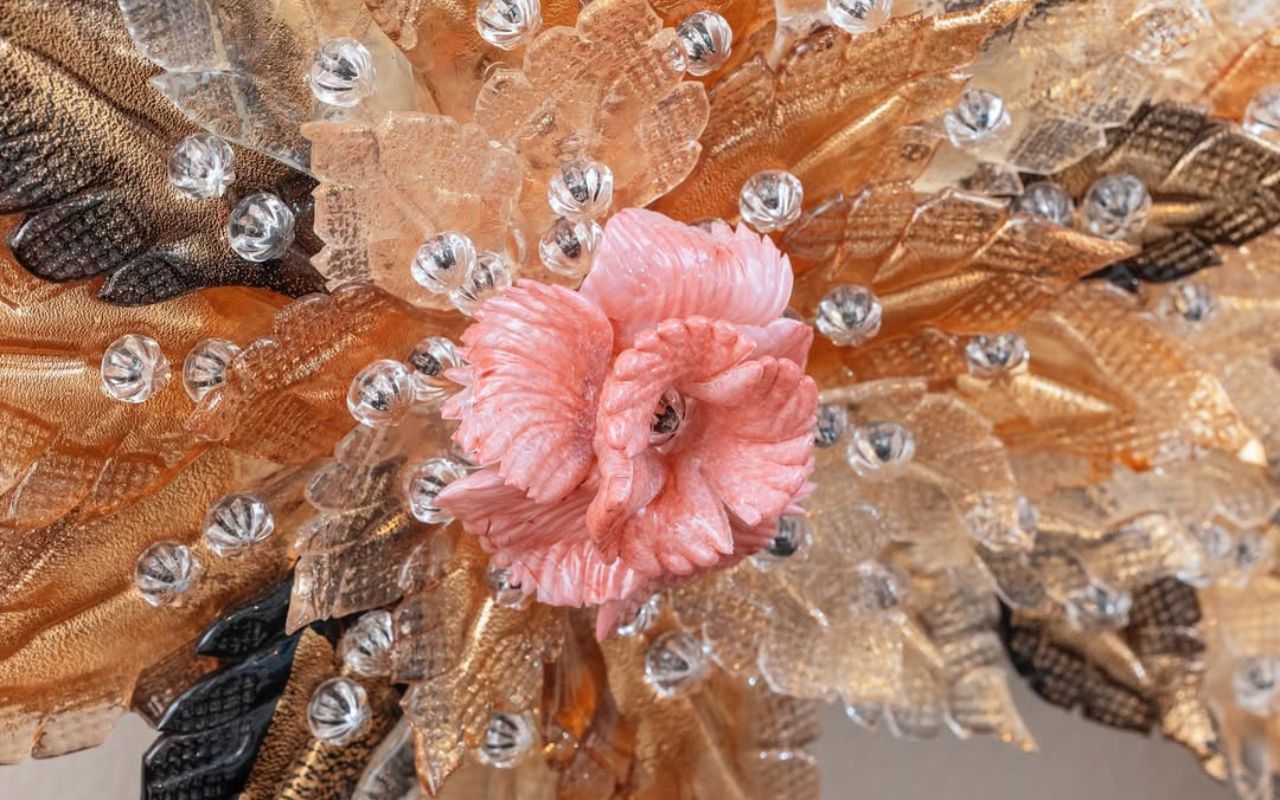
The exhibition showcases traditional Murano glass techniques (avventurina, filigree, reticello, murrine, glass fusion) alongside contemporary experimentation. Some elements are made with recycled glass in collaboration with CoReVe – Glass Recovery Consortium.
An interactive chatbot, the Maga de Muran’ (a character actually encountered by Casanova), accompanies visitors via QR code on WhatsApp to discover the works, techniques and curiosities of the exhibition. - Your Pearl for Venice 2025 in Room Five – Venetian Beads Room (until January 6, 2026).
On display are the finalist works of the Fourth International Competition dedicated to the Art of Traditional Venetian Glass Beads. The competition, organized by the Committee for the Safeguarding of the Art of Venetian Glass Beads in collaboration with the International Society of Glass Beadmakers and the Association des Perliers d’Art de France, promotes the sharing of traditional knowledge inscribed on the UNESCO Representative List of the Intangible Cultural Heritage of Humanity since December 2020.
FORTUNY MUSEUM
Address: Campo San Beneto, San Marco 3958
Ticket: Full €12, Reduced €7.50
Link: fortuny.visitmuve.it
Palazzo Fortuny presents “Antonio Beato. Egypt, Mediterranean, Middle East” (October 15, 2025 – January 12, 2026) dedicated to the pioneering Venetian photographer, and “Eva Jospin. Selva” (extended until January 13, 2026), an artificial forest created with paper and embroidery.
- Antonio Beato. Return to Venice (until January 12, 2026).
Antonio Beato, Venetian photographer, lived forty years in Egypt where he documented temples, monuments and landscapes. His photographs, sold in albums to European travelers and collectors, marked the advent of documentary photography in the 19th century. The exhibition presents prints from the archives of the Civic Museums Foundation and from international collections. Also on display are Mariano Fortuny’s notebooks, who at the beginning of the 20th century visited the same Egyptian sites, photographing and drawing them.
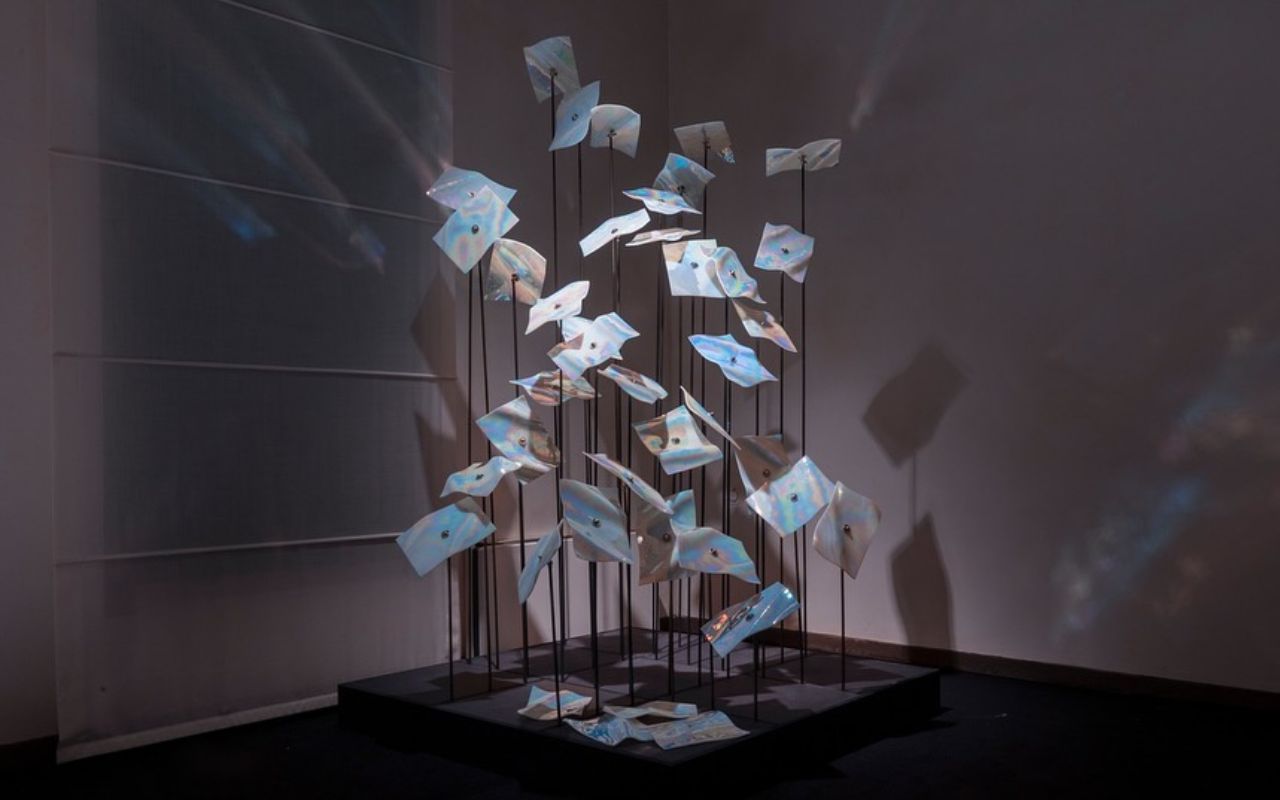
- Antonio Scaccabarozzi. Diafanés (until April 6, 2026).
Sheets of colored plastic suspended in space, transparent membranes that change color with light, forms viewed from front and back: Antonio Scaccabarozzi (1936-2008), a protagonist of Italian conceptual art, meets Mariano Fortuny through the theme of transparency: polyethylene works that dialogue with the pleated fabrics and light research of the master of the house.
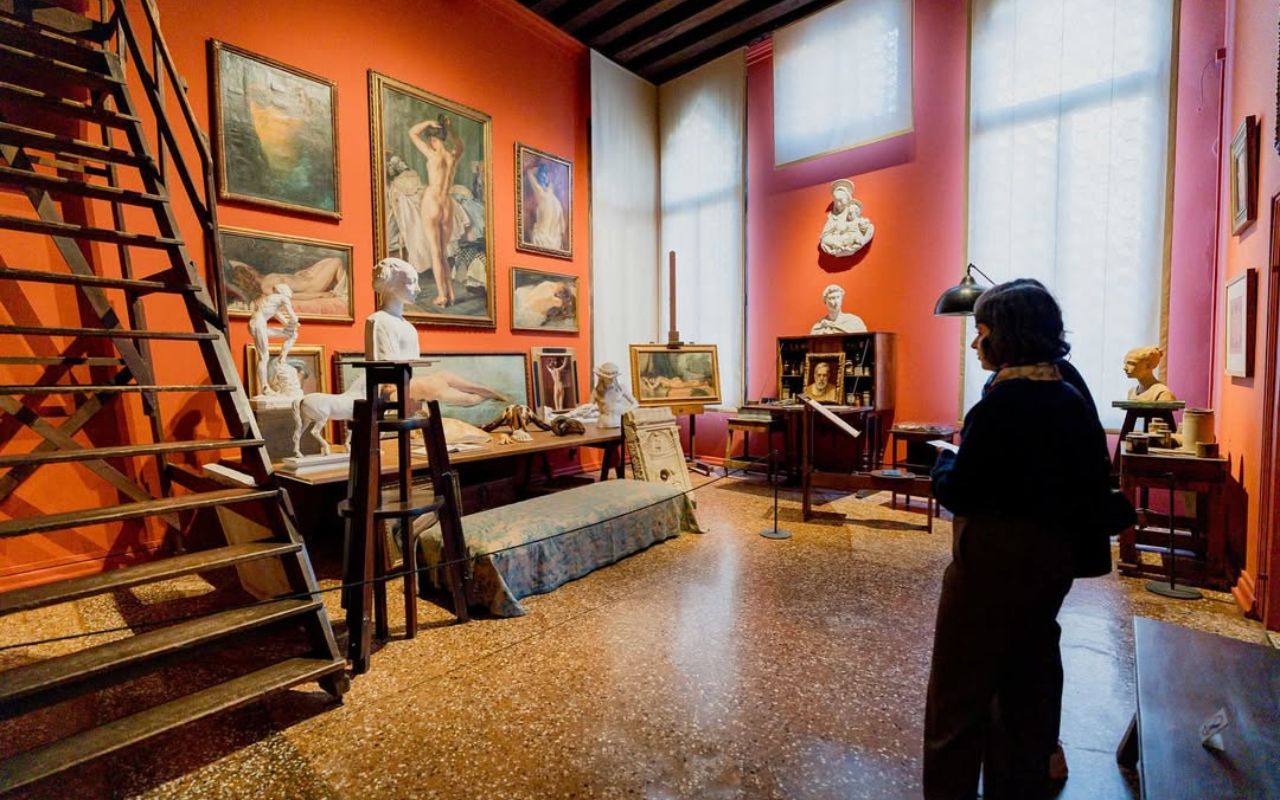
The Gothic palace preserves Mariano Fortuny’s atelier with fabrics, stage designs, lamps and photographs that testify to the work of the Spanish artist active in Venice between 1899 and 1949.
Special openings: also open Tuesday, December 24 and Wednesday, December 31.
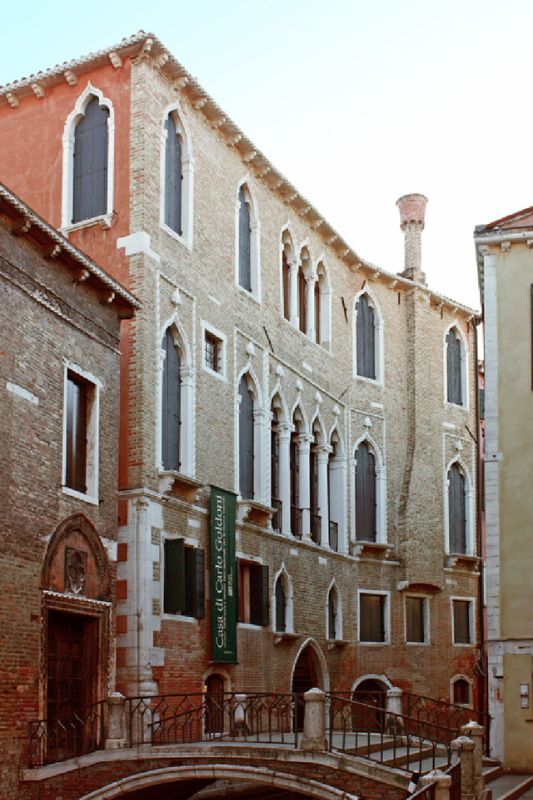
CARLO GOLDONI’S HOUSE
Address: San Polo 2794
Ticket: Full €8, Reduced €5.50
Link: carlogoldoni.visitmuve.it
- The Vendramin Collection (until January 25, 2026).
The archive of the Teatro San Luca (now Teatro Goldoni) built in 1622 by the Vendramin family with: original contracts between Goldoni and impresario Francesco Vendramin, autograph letters from the playwright, documents on theater restorations, contracts with 18th-century actors such as Antonio Sacchi and Giuseppe Imer, inventories, lawsuits, lists of box owners.
The museum is located in the birthplace of the great playwright, with the Library of Theatrical Studies, documents, historical editions of works and reconstructions of 18th-century interiors.
This museum is closed on December 25 and January 1, 2026.
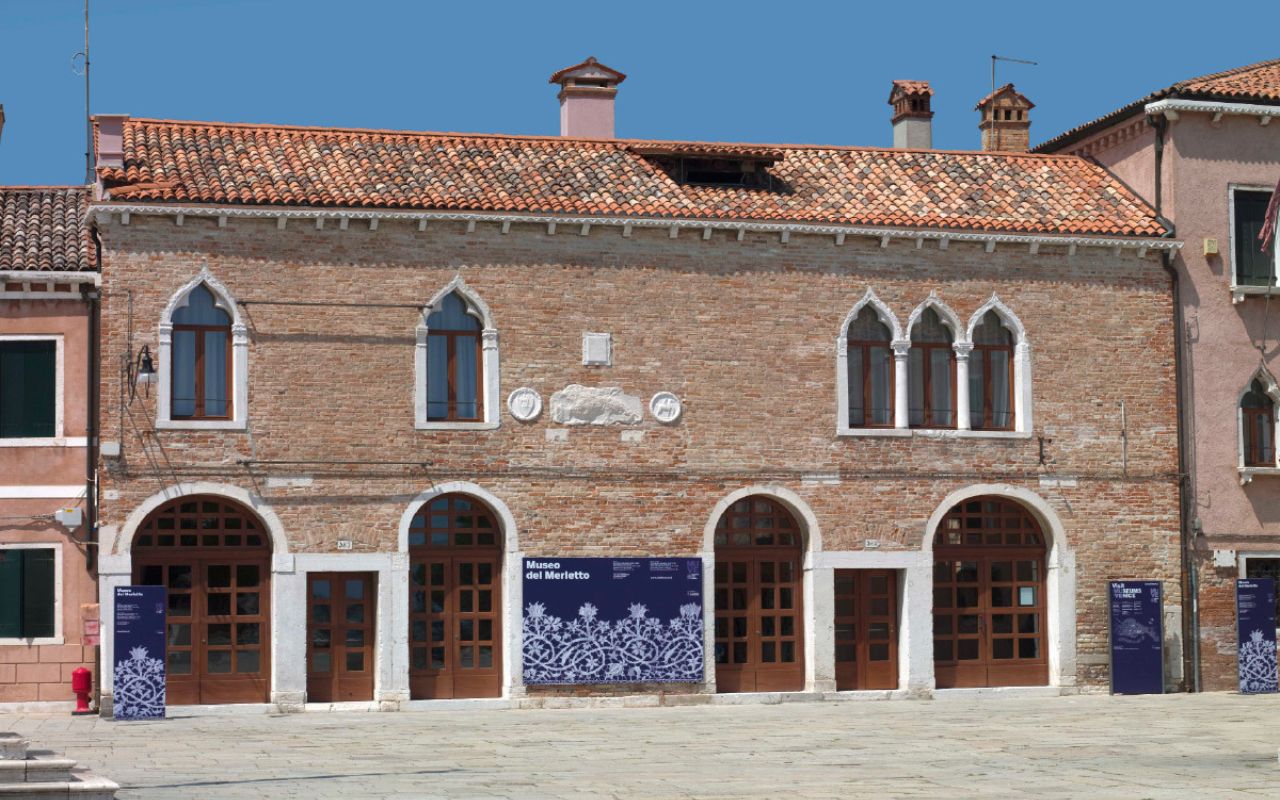
LACE MUSEUM
Address: Piazza Galuppi 187, Burano
Ticket: Full €6, Reduced €4
Link: museomerletto.visitmuve.it
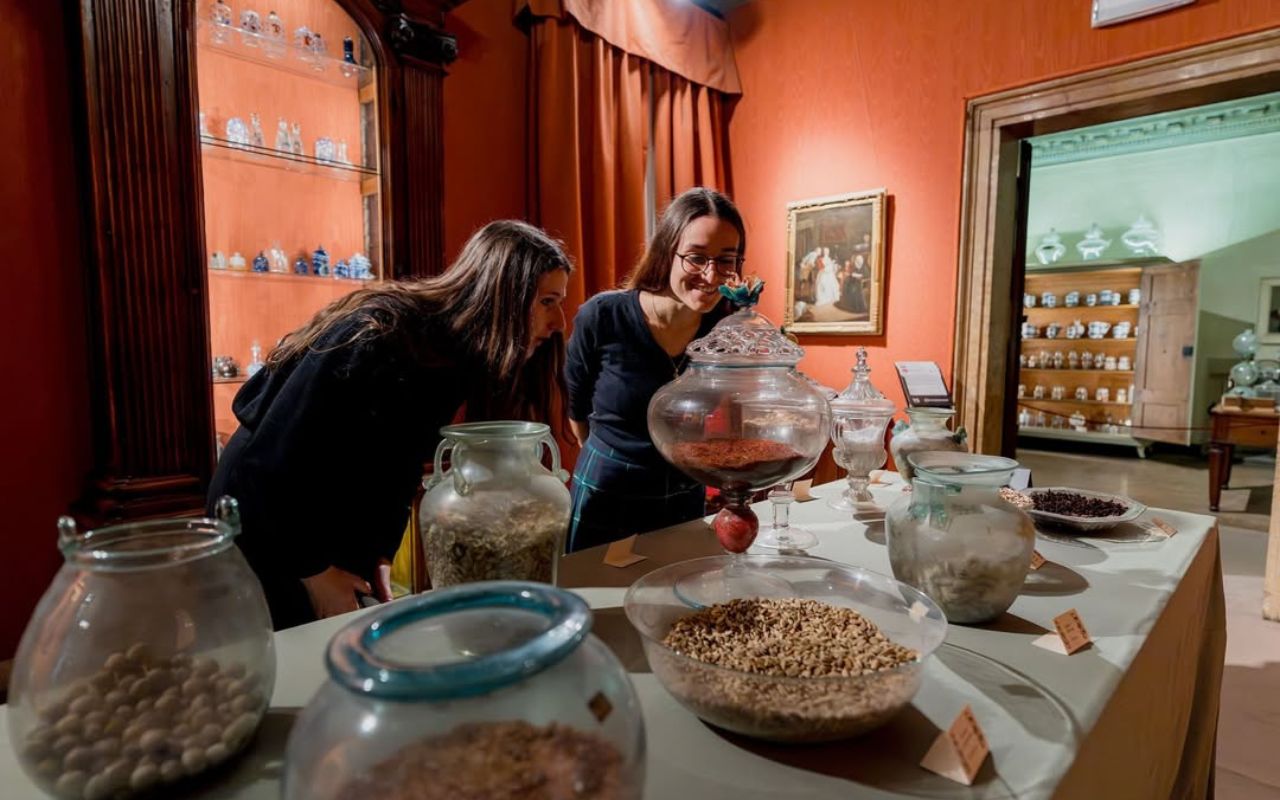
Over one hundred unique pieces of Venetian lace from the 16th to 20th centuries, preserved in the spaces of the Lace School founded in 1872 by Countess Andriana Marcello. The collection represents the evolution of the technique: punto in aria from the 16th century with geometric designs, punto a rosette from the 17th century, up to the works of the School that closed in 1970.
The archive preserves drawings, photographs and teaching models.
MUSEUM OF NATURAL HISTORY “GIANCARLO LIGABUE”
Address: Salizada del Fontego dei Turchi, Santa Croce 1730, 30135 Venice
Ticket: Full €10, Reduced €7.50
Link: msn.visitmuve.it
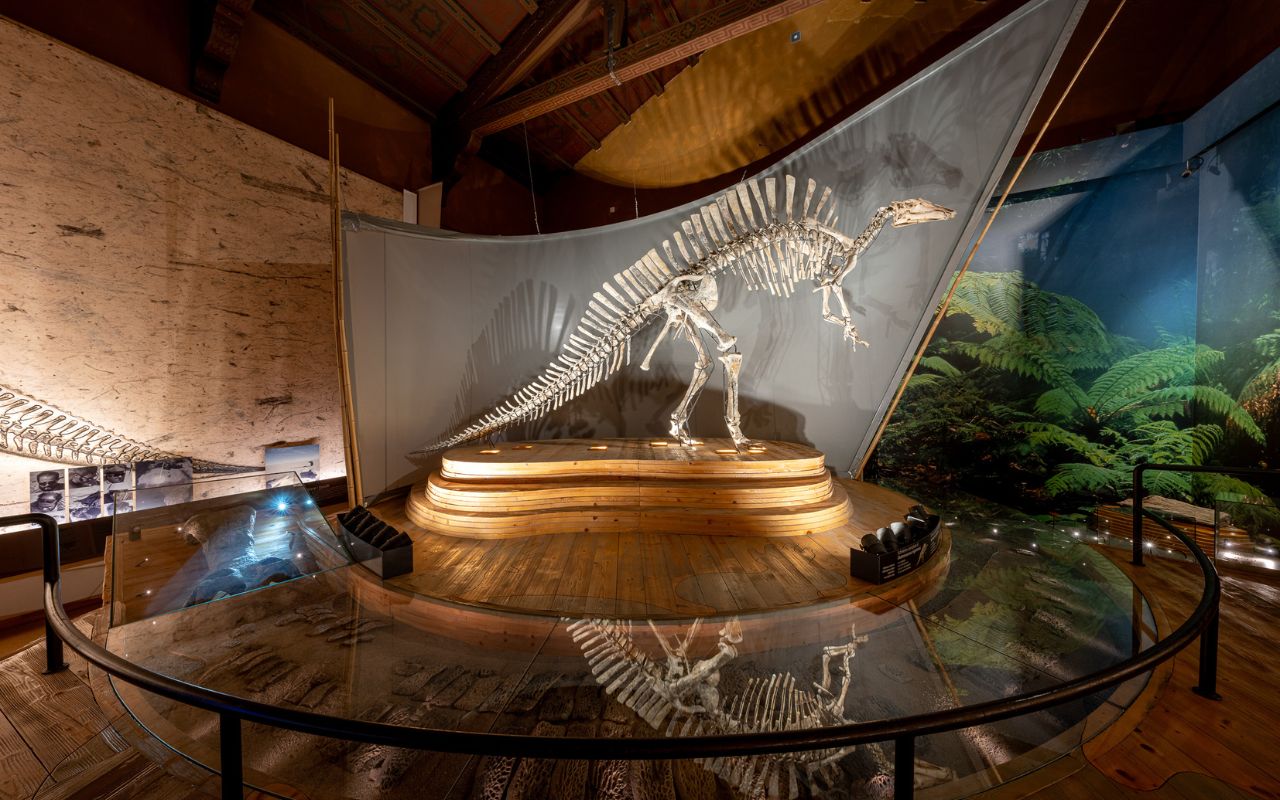
In the Fontego dei Turchi, giant whale skeletons are displayed in the ground floor gallery, dinosaur fossils and artifacts from Venetian explorers on the second floor. The section On the Traces of Life tells the story of evolution through fossils millions of years old, Collecting to Amaze displays natural history collections from the 18th and 19th centuries, The Strategies of Life exhibits stuffed animals showing species adaptations.
On the ground floor there is also a tactile section on the palace, with multisensory explorations of the building’s history.
Open 9 AM-5 PM, closed Mondays.
During the holidays also open Monday, December 29 and January 5. On December 25 and January 1 the museum opens at 10 AM.
All details and updated schedules: www.visitmuve.it
Article by Lucia Pecoraro. Photos courtesy of MUVE.

