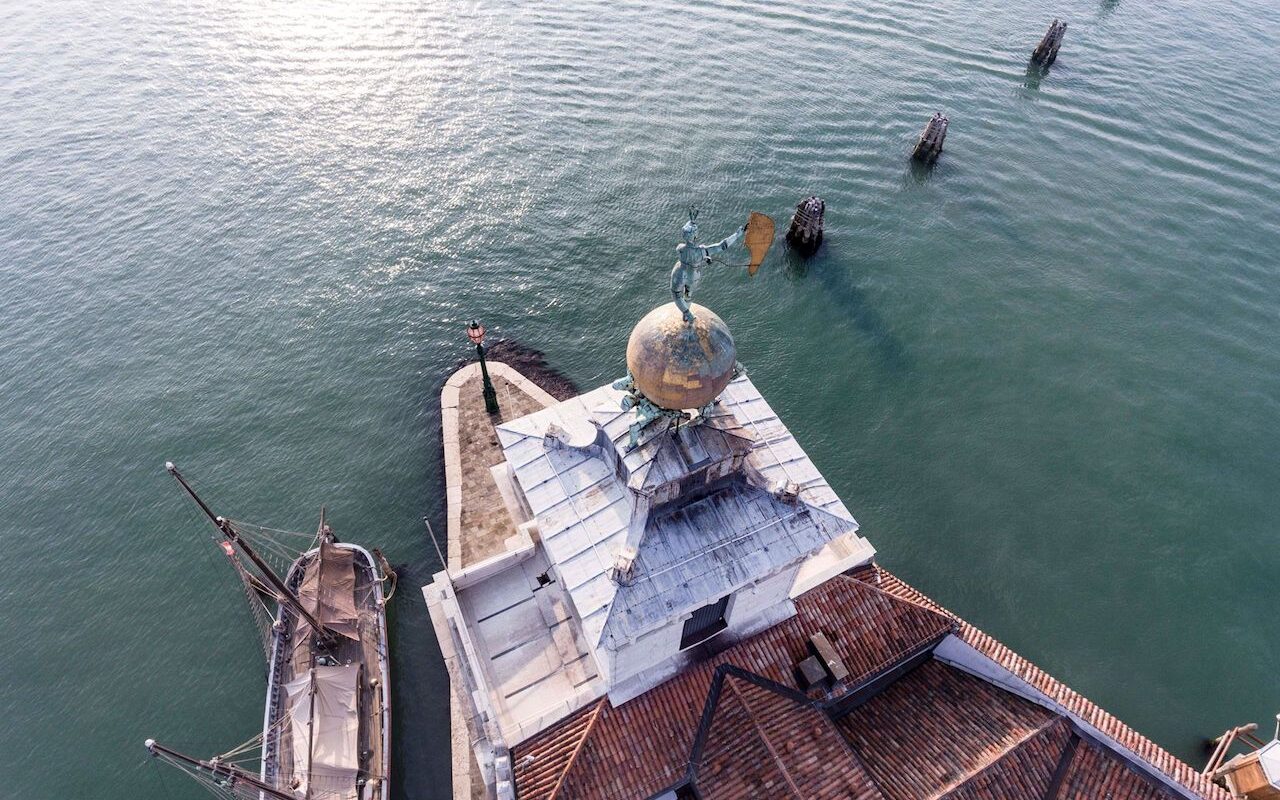
The art season in Venice is about to begin, when the most important exhibitions will open: Marina Abramović, archaeological discoveries and great female collectors
The artistic spring in Venice, featuring the major exhibitions of 2026, begins early with Horst P. Horst. The Geometry of Elegance at Le Stanze della Fotografia on the island of San Giorgio Maggiore, from February 21 to July 5, which offers an original and transversal interpretation of the work of the great Vogue photographer, conveying its complexity beyond the fashion photography that made him famous.
Before the highlight of the Venice Biennale, the highly anticipated appointment is with Venice Galleries View, the circuit of independent Venetian art galleries which at the end of March presents the Venice Gallery Weekend, a weekend of openings and events.
Discover the exhibitions we have selected
- Etruscans and Veneti. Waters, Cults, and Sanctuaries
From March 6 to September 29
Doge’s Palace, Doge’s Apartment, St. Mark’s Square
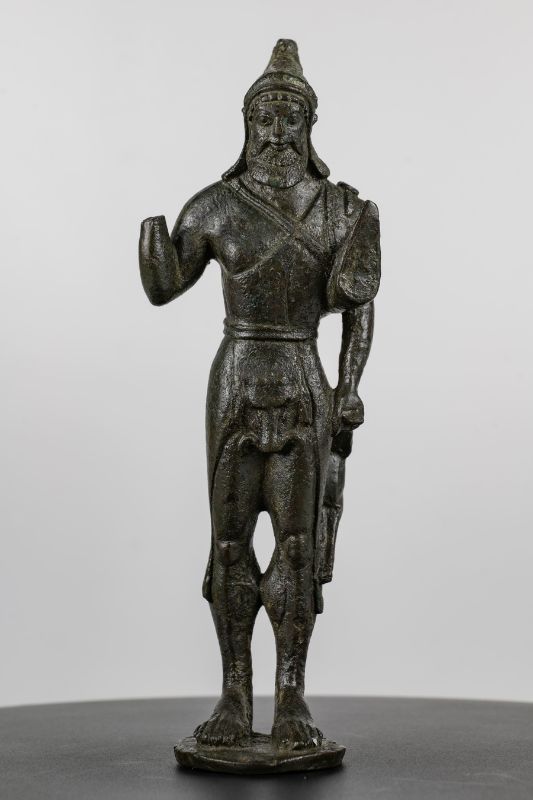
Seas, rivers, springs, and thermal complexes are places where contact with the divine is possible. Eleven rooms, unpublished artifacts, water as a medium: in pre-Roman Italy, Etruscans and Veneti left offerings in thermal springs, rivers, and ports. Bronzes, statues, and votive offerings were deposited where hot water emerged from the earth, as a gesture to invoke care for the body and the hearing of prayers.
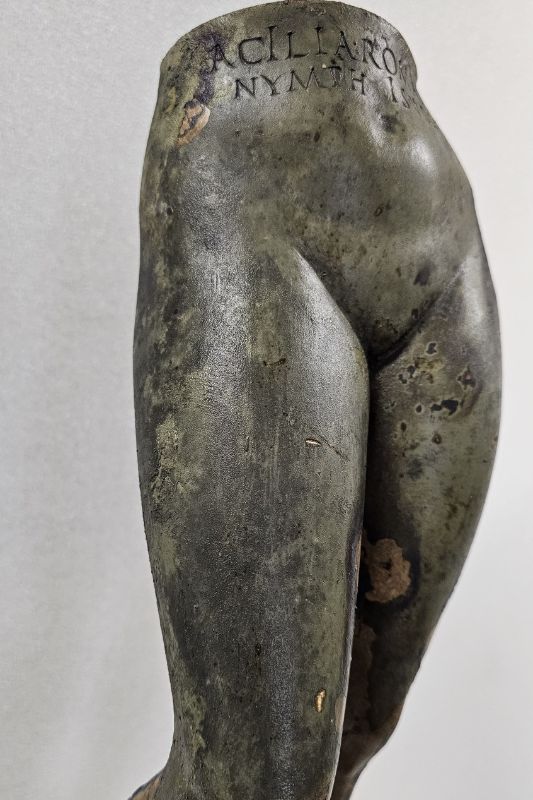
The Etruscan world is represented by the Head of Leucothea from Pyrgi, a symbol of protection for sailors. The San Casciano dei Bagni bronzes, exhibited to the public for the first time, are the largest deposit of Etruscan and Roman era bronze statues discovered in Italy, the most important find since the Riace Bronzes. They rewrite the history of ancient statuary because only terracottas were known from that period, and the bilingual inscriptions engraved on them, in Etruscan and Latin, testify to the peaceful coexistence between the two peoples.
- We are bodies of water
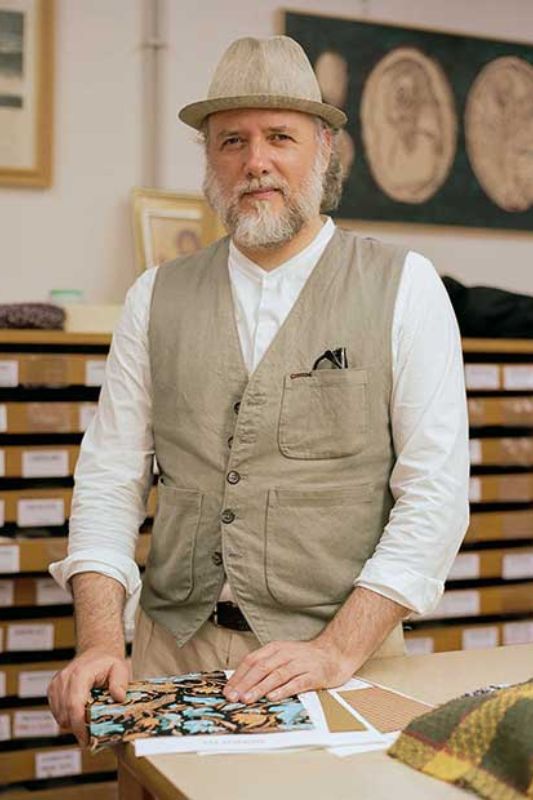
Part of the exhibition at the Doge’s Palace is the large installation We are bodies of water, created from the vision of Giovanni Bonotto of the Bonotto Foundation: a monumental tapestry woven with yarns made from recycled plastic from industrial waste, featuring digital and sound interventions born from research on the Venetian lagoon ecosystem.
Based on a design by Florentina Isac and Marco Bianchini, the weave tells the story of the lagoon’s flora and fauna; a luminous component in fiber optics (Dreamlux, Tommaso Galbersanini) makes words appear on the surface. The sound track alternates the names of species with scientific data on the Venetian lagoon ecosystem.
The work is part of the A-Collection project, an initiative conceived by Giovanni Bonotto and Chiara Casarin that combines excellence in textile manufacturing with the creativity of contemporary artists to transform artistic concepts into large tapestries using sustainable technologies.
We are bodies of water features the scientific contribution of Luca Mizzan from the Natural History Museum of Venice and sound and poetry by Giovanni Fontana.
New exhibitions at the Pinault Collection spaces in Venice
Two venues and four parallel solo exhibitions are the proposal for the 2026 exhibitions at the Pinault Collection spaces in Venice. At Palazzo Grassi, the painting of Michael Armitage coexists with the film-installations of Amar Kanwar; at Punta della Dogana, the research of Lorna Simpson across painting, collage, and film meets the “on the move” work of Paulo Nazareth.
Palazzo Grassi
From March 29, 2026, to January 10, 2027
- Michael Armitage. The Promise of Change
Curated by Jean-Marie Gallais, curator, Pinault Collection, in collaboration with Hans-Ulrich Obrist, art director, Serpentine Galleries, for the catalog, and Caroline Bourgeois, advisor, Pinault Collection, and Michelle Mlati, art historian
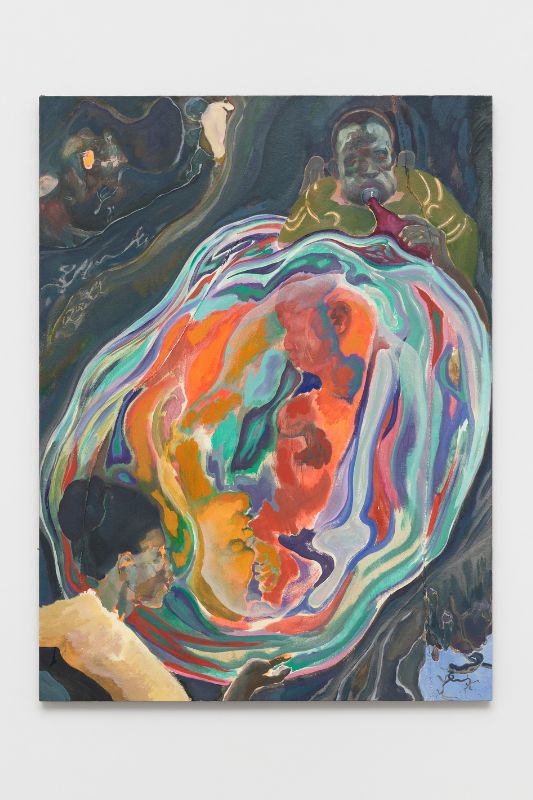
Over 150 works recount the painting of Michael Armitage. His mark begins on a specific support: lubugo (bark cloth), a fabric made from tree bark used in Uganda. The surface remains irregular, with folds, pores, and natural marks: Armitage leaves them visible and uses them as part of the painting, as they change the light, color, and contours of the figures.
The images look toward East Africa with Kenya as a constant reference. In some works, precise links to the present also appear, such as the 2017 presidential elections in Kenya and the lockdown period: recognizable events that become symbolic scenes of current themes: political violence, corruption, migration, and abuse of power.
One room is dedicated to drawings and preparatory studies that show the artist’s working method.
- Amar Kanwar. Co-travellers
Curated by Jean-Marie Gallais, curator, Pinault Collection
Twenty years separate two works by Amar Kanwar on propaganda and repression: Palazzo Grassi places them side by side to understand how a gesture against censorship becomes, today, a broader narrative about power.
The Torn First Pages (2004–2008) originates from a gesture against the regime’s propaganda in Burma, now Myanmar: bookseller Ko Than Htay tore out the first page of books, which was mandatory because it listed the political goals of the military dictatorship. Kanwar builds the work from there and transforms those pages into visual matter: printed paper and videos projected onto sheets, where the page remains a document and also becomes a screen.
The Peacock’s Graveyard (2023) is a video installation with seven synchronized looping screens, lasting 28 minutes and 16 seconds, with appearing and disappearing images and texts, five short stories written by the artist that scroll by, and a soundtrack based on a raga (melodic structure of Indian classical music) performed on the piano by Utsav Lal.
In this second work, Kanwar moves away from a specific political fact and uses images and texts to show how violence and authority enter daily life and leave consequences over time: bodies, memory, land, and water become part of the story, along with the question of what rights remain when power decides what can be said and seen.
Punta della Dogana
From March 29, 2026, to November 22
- Lorna Simpson. Third Person
Curated by Emma Lavigne, general director and general curator, Pinault Collection
Exhibition organized in partnership with the Metropolitan Museum of Art in New York
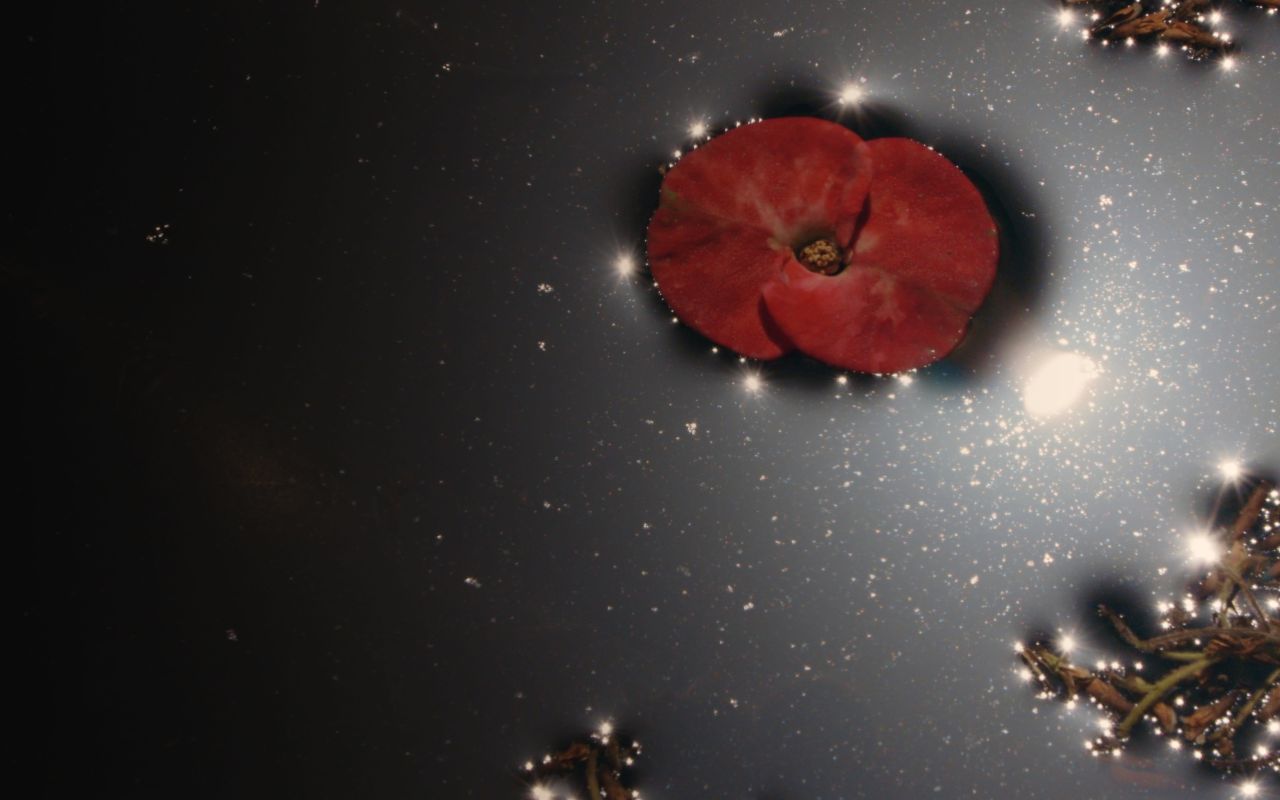
Fifty works, a film, forty collages: Third Person shows how Lorna Simpson constructs an image from collected and reassembled materials. The collages function as study notes, clippings, and combinations of sources, which then reappear in the paintings using the same method of layering and montage.
The first in Europe on this scale, the exhibition is built in partnership with the Metropolitan Museum of Art. The exhibition path primarily presents her painting from the last decade: from works with figures and image fragments to the Arctic landscapes of Ice and works looking at the sky and cosmic matter in Earth and Sky, passing through Special Characters. Also on display are works presented at the 2015 Venice Biennale and some new works designed specifically for the spaces of Punta della Dogana.
- Paulo Nazareth. Algebra
Curated by Fernanda Brenner, independent curator
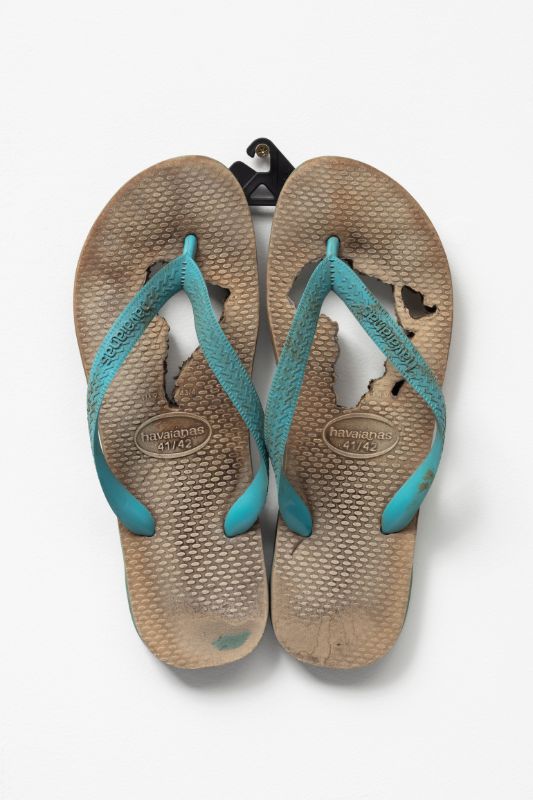
Ten thousand kilometers on foot from Brazil to New York. Paulo Nazareth crosses fifteen Latin American countries by walking, accumulating on his worn-out flip-flops the earth of every border, every road, every frontier. Only at the end, having arrived in New York (in 2011), does he dip his feet in the Hudson River: a ritual that closes the circle, symbolically stitching the Americas back together through the body.
This extreme journey is Notícias de América, the central work of the exhibition Algebra, located on the second floor of Punta della Dogana. Photographs, notes written during the journey, and the worn-out Havaianas that document the direct experience of migration transform movement into a document: checkpoints, gazes, reactions to dark skin, identities clashing with the borders drawn by colonial geography.
The title Algebra comes from the Arabic al-jabr, which means to reset broken bones. For Nazareth, a Brazilian artist of Afro-indigenous origin, walking barefoot is a gesture of resistance: treading the same ground as enslaved ancestors, whose footwear was removed as a symbol of submission. The body becomes a tool for measuring the violence that has shaped contemporary borders.
A thick line of salt crosses the rooms of Punta della Dogana, slowly revealing the shape of a tumbeiro, the ship used for the Atlantic slave trade of Africans. Salt heals, corrodes, preserves. It is the physical trace of a submerged memory.
The exhibition brings together twenty years of nomadic practice: walks across the Americas, the Caribbean, and Africa. Unpublished works are presented alongside projects already part of the Pinault Collection, as stages of a continuous performance between art and life.

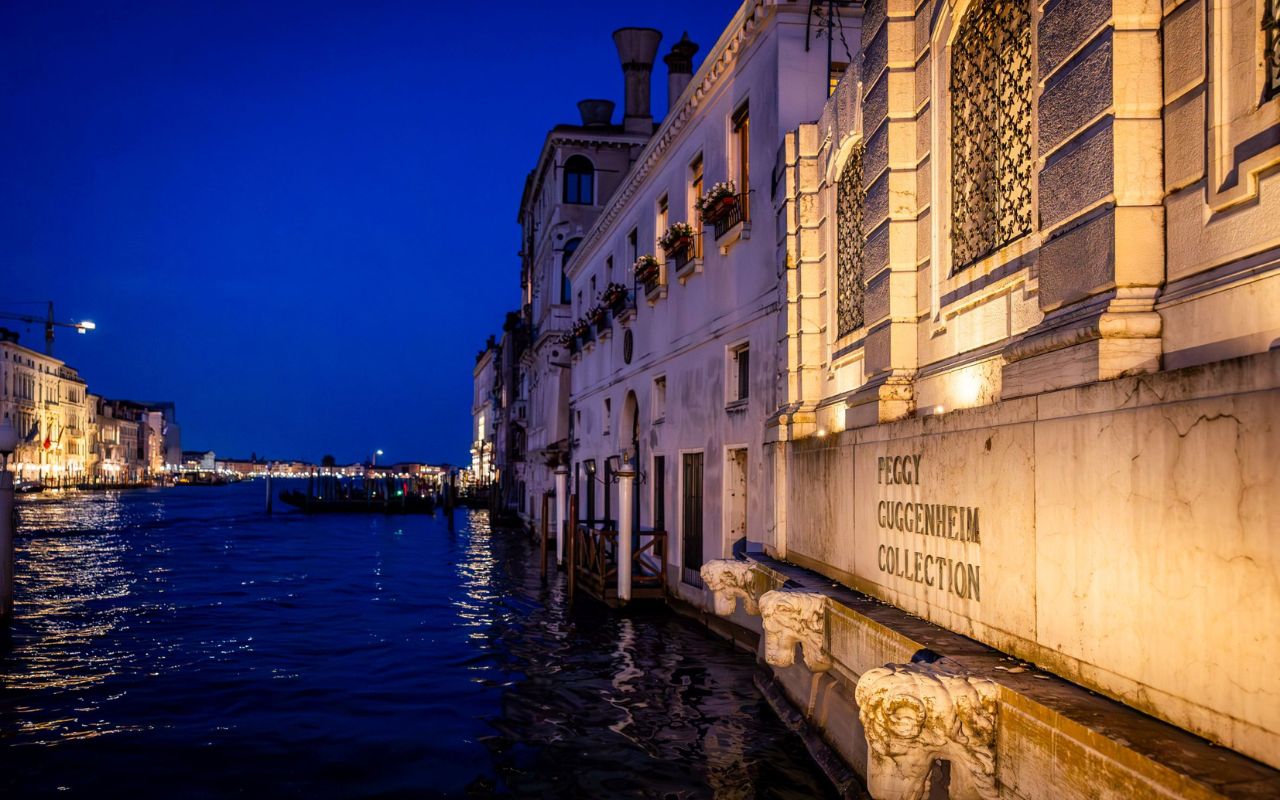
- Peggy Guggenheim in London. Birth of a Collector
Peggy Guggenheim Collection, Dorsoduro 701
From April 25 to October 19
Curated by Gražina Subelytė and Simon Grant
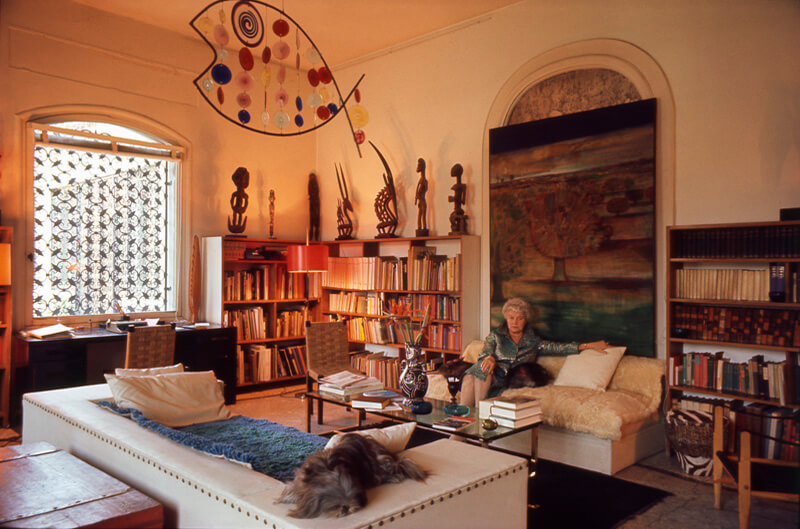
How does one become the most important female collector of the twentieth century? The Peggy Guggenheim Collection answers with the first major exhibition on the period that transformed an American heiress into a reference point for the avant-garde: 100 works by Kandinsky, Dalí, Mondrian, Brancusi, Hepworth, and Moore from international museums, reunited for the first time since Peggy exhibited them in her London gallery in 1938, plus similar works from the same period and archival materials.
The exhibition path recounts the 18 months that changed art history: in January 1938, Peggy opened her first art gallery on Cork Street. Raised among opera boxes and ancient art, she decided to explore contemporary art: Marcel Duchamp taught her the difference between abstraction and surrealism, Samuel Beckett convinced her to look at living artists, and Mary Reynolds introduced her to avant-garde circles.
In those months, she presented over 20 exhibitions—a new one every four weeks—featuring artists that the British establishment considered scandalous: the first solo show by Kandinsky, a monographic exhibition by Cocteau, and the first UK group show dedicated to collage. When she intended to exhibit Brancusi’s sculptures, customs blocked them, declaring them industrial goods rather than art. Peggy took the case to Parliament and won: from that moment, modern art held the same legal value as Titian or Raphael. She closed the gallery with the idea of opening a museum, which the Second World War would prevent.
The collection, which began by purchasing a work from every exhibition to encourage artists, became one of the most important of the twentieth century. It found a home only after the experience of the XXIV Venice Biennale, where Peggy brought Jackson Pollock and American Abstract Expressionism to Europe for the first time. She decided to stay at Palazzo Venier dei Leoni, an unfinished palace on the Grand Canal with a garden, perfect for her sculptures.
“I dedicated myself to my collection; I made it my life’s work. I am not a collector. I am a museum.”
- Marina Abramović. Transforming Energy
Gallerie dell’Accademia, Dorsoduro, Calle della Carità 1050
From May 6 to October 19
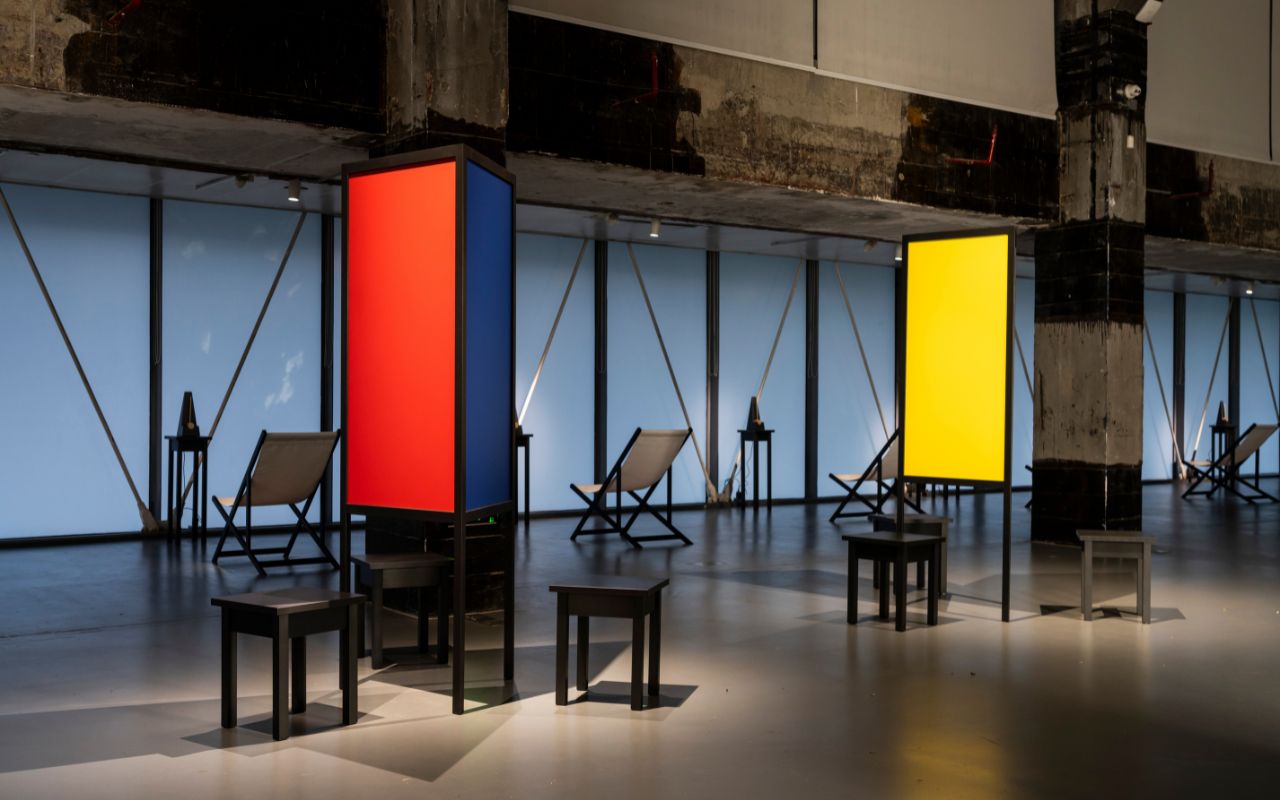
The first exhibition at the Gallerie dell’Accademia dedicated to a female artist: Marina Abramović brings performance into the most important collection of Venetian painting in the world, with a project included in the 2026 Biennale Arte calendar and in the year of her eightieth birthday.
Abramović’s 1983 Pietà stands alongside Titian’s Pietà. The photograph of the performance—Marina dressed in red holding the body of Ulay dressed in white for three hours—is placed next to the Venetian master’s last painting (1575-76), unfinished and completed by Palma il Giovane. The same gesture 450 years apart: one body supports another body, pain and redemption in the same pose.
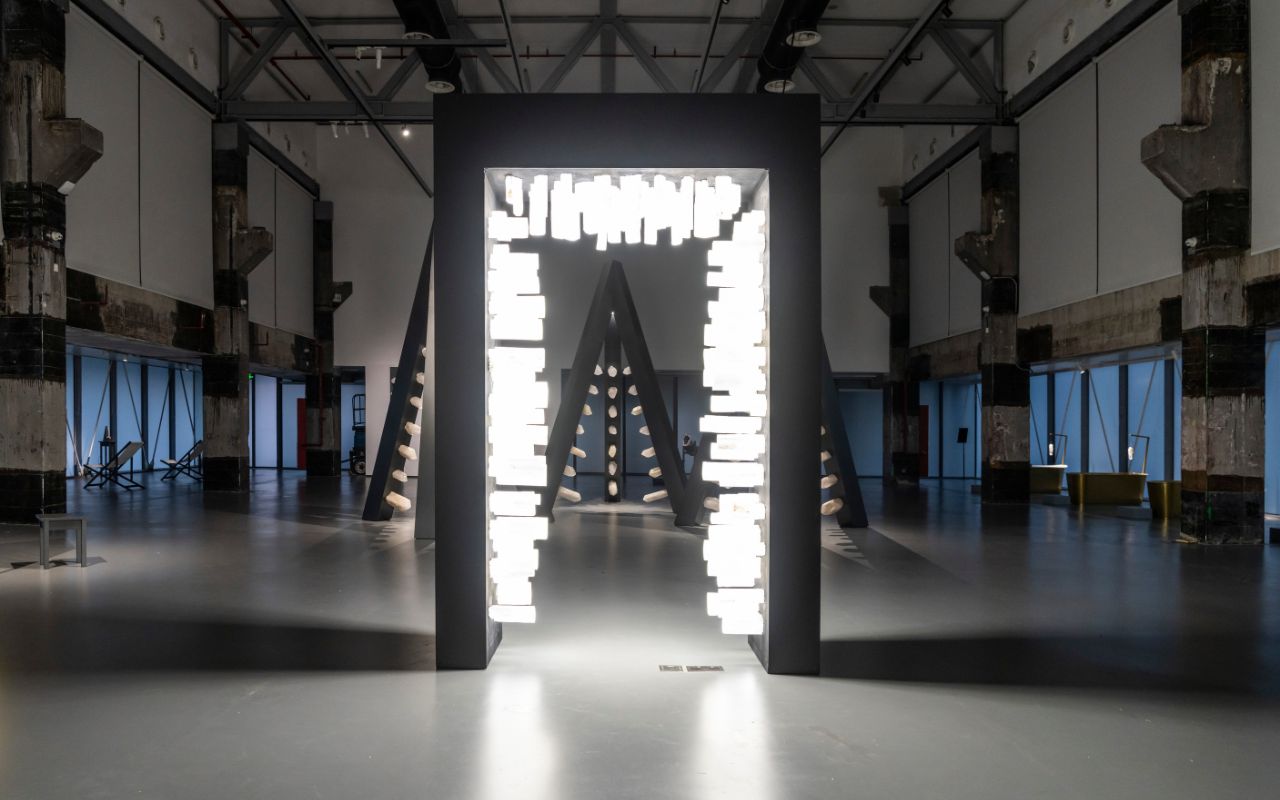
Stone beds embedded with quartz and amethyst are distributed throughout the exhibition path: they are the Transitory Objects, sculptures on which to lie down, sit, or lean. Contact with the crystals activates a “transmission of energy” according to the artist: “Hematite really increases blood pressure; rose quartz works on the heart; clear quartz works on the mind; tourmaline on the liver. All these things actually also have medical properties, scientific properties, and energetic properties,” she said. “It is up to the public to discover them.”
“After walking the Great Wall of China—The Great Wall Walk (or The Lovers) of 1988—I realized that for the first time I had done a performance where the audience was not physically present. To convey this experience to them, I built a series of transitory objects with the idea that the audience could take an active part.” Abramović explains on her website.
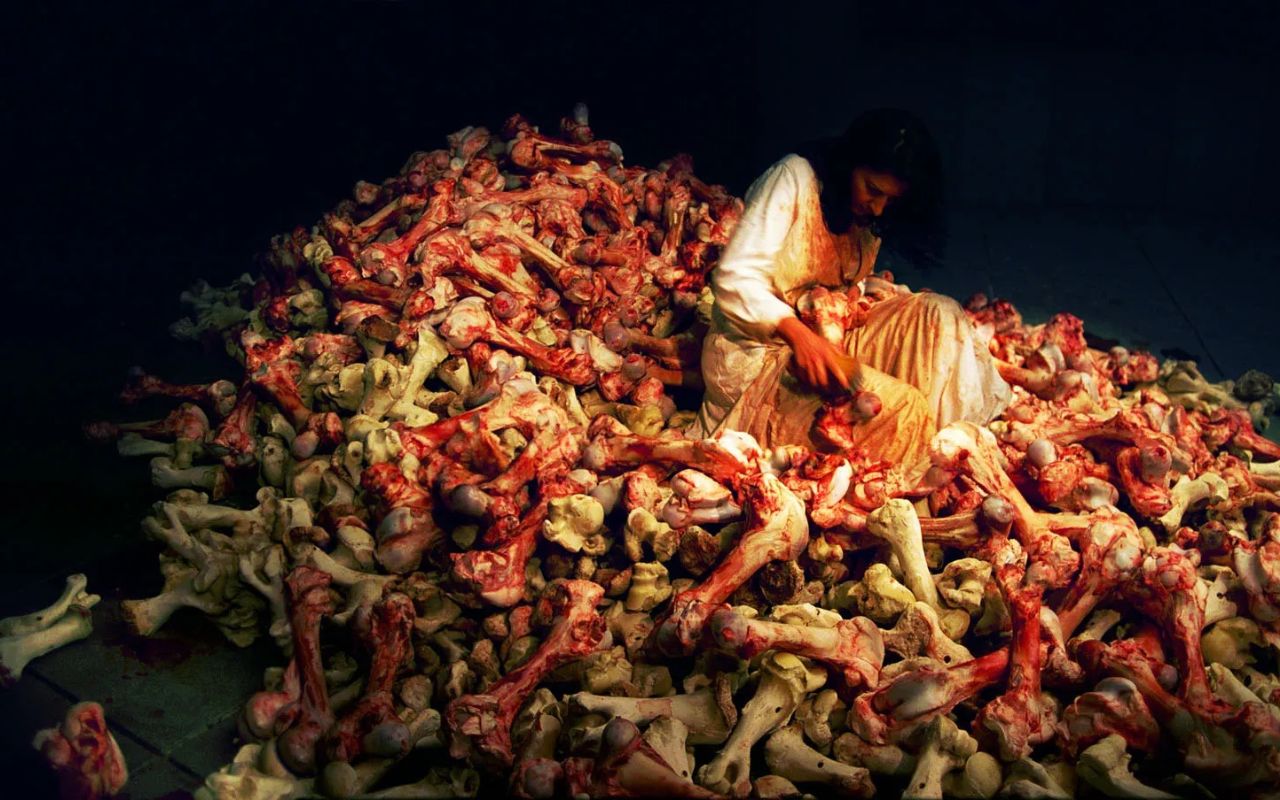
Photographs and videos document the performances that made her a pioneer of body art: Rhythm 0 (Naples 1974)—six hours motionless while the public used 72 objects on her (rose, scissors, loaded gun); someone pointed the weapon at her temple before the gallery owner intervened. Imponderabilia (Bologna 1977) with Ulay: naked at the museum entrance, visitors had to pass by brushing against their bodies, choosing whom to face. Balkan Baroque (1997): four days washing 1,500 freshly slaughtered cow bones while singing Balkan songs, a response to the war in Bosnia that was devastating the Balkans at the time—a performance so powerful it earned her the Golden Lion at the Biennale. Marina was the first female artist to win the Golden Lion in the history of the award.
The path is completed with unpublished works created specifically for the Gallerie dell’Accademia.

Article by Lucia Pecoraro.
Cover photo: Marco Sabadin in Sguardi di Pietra – Punta della Dogana.
Images have been provided by the respective press offices.

