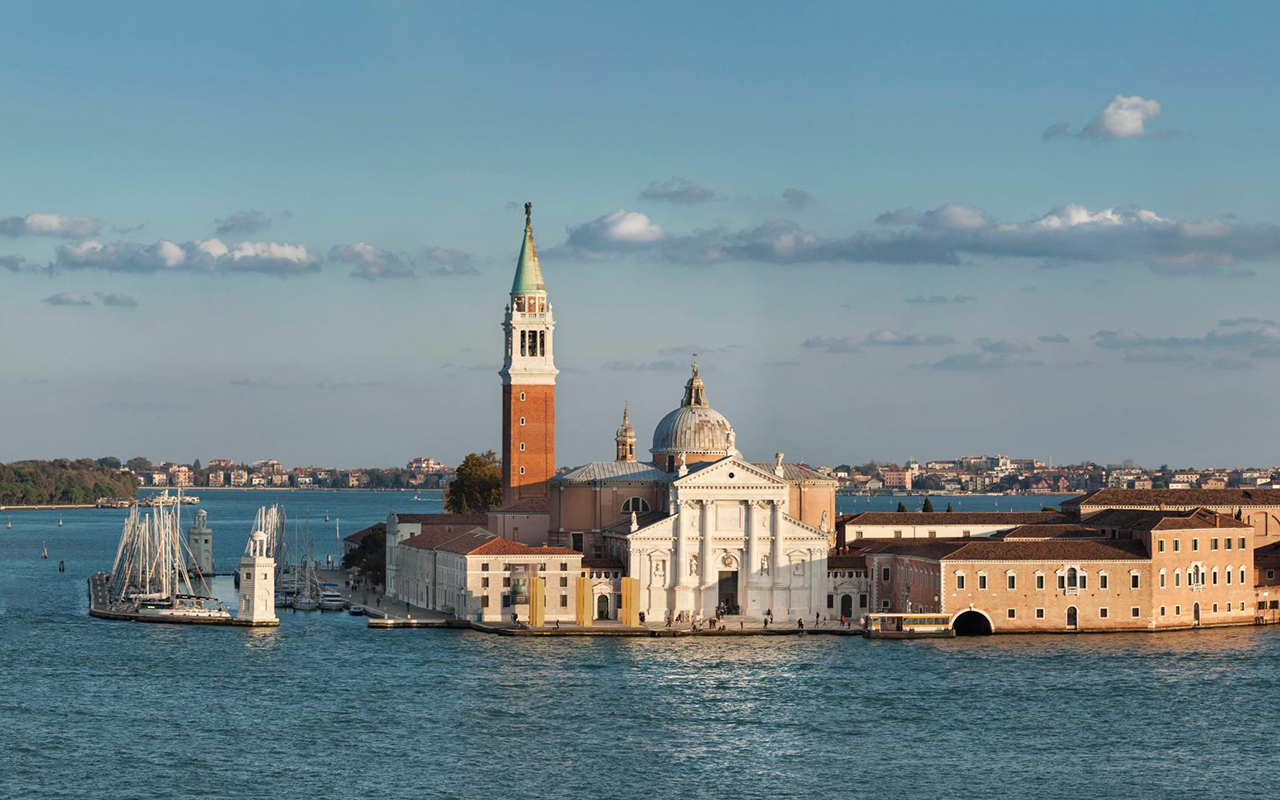
From April 10 to May 1, Homo Faber returns to Venice. This major cultural event on the island of San Giorgio is dedicated to artisanal excellence and artistic professions, featuring Japan as the guest of honor and many initiatives to discover artisanal workshops and the AtelierAperti of Venice
From April 10 to May 1, 2022, Homo Faber returns. It is one of the most anticipated events of the Venetian Spring, dedicated to international fine craftsmanship, métiers d’art, and Japan.
This year’s appointment marks a reference point, especially for young people, regarding innovation and future creativity. It is an opportunity to discover the virtuosity of handmade work across traditions and cultures from all over the world, exploring the 4,000 square meters of the Giorgio Cini Foundation and its splendid spaces. Some have been restored for the occasion and are open to the public for the first time, such as the former Nautical School and the Sala Messina, while we eagerly await the reopening of a Venetian icon: the Teatro Verde on the island of San Giorgio.
A chorus of ideas, works, and excellence across 15 exhibitions curated by 22 international designers and curators, featuring over 400 unique works created by more than 350 designers and artisans from over 30 nations, and 100 young ambassadors from all over the world and Ca’ Foscari University, protagonists of a human and educational narrative of the Homo Faber experience in Venice.
Homo Faber is an ambitious project of immersion into the universe of fine craftsmanship organized by the Michelangelo Foundation for Creativity and Craftsmanship, a non-profit organization founded in Geneva by South African entrepreneur Johann Rupert and Franco Cologni of the Cologni Foundation for the Artistic Professions, in support of precious artisanal know-how, dialogue with creatives, and the promotion and creation of new job opportunities.
Partners for April also include the Japan Foundation with its “living national treasures” and the Fondation Bettencourt Schueller, which encourages artistic professions in France through the Prix Liliane Bettencourt pour l’intelligence de la main: a prestigious recognition of excellence, innovation, and collaboration in the sphere of artistic craftsmanship.
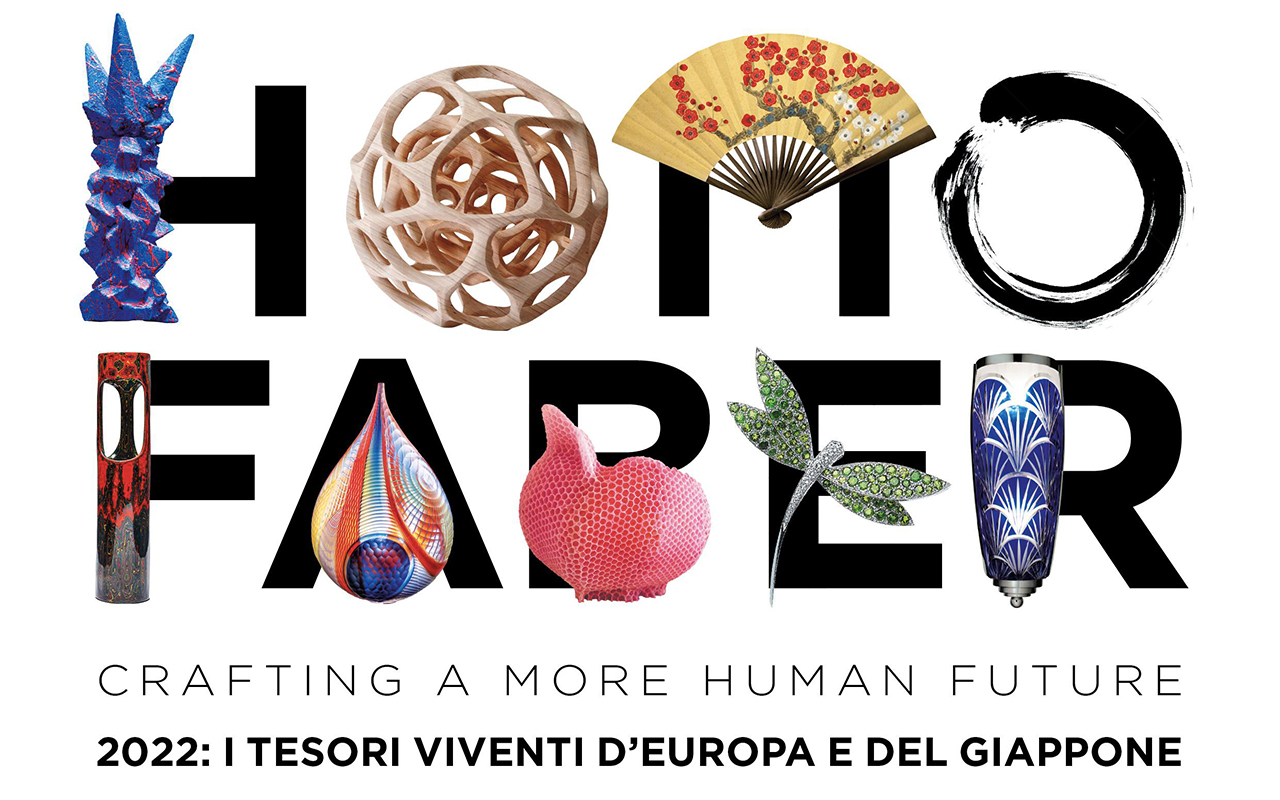
Homo Faber 2022 – spaces and exhibitions
During the press conference presenting Homo Faber 2022 (the full conference is available in the Venezia da Vivere video on Instagram), Renata Codello, Secretary General of the Giorgio Cini Foundation, highlighted the Foundation’s commitment to making 4,000 square meters of space accessible. This includes the former Nautical School, the Sala Messina, and the Teatro Verde, which had been inaccessible for some time and have now been restored for the occasion, thanks to the support of the Water Authority of Venice.
Alberto Cavalli, Director of the Cologni Foundation for the Artistic Professions, illustrated the initiatives and exhibitions in the program during his speech:
The exhibition we begin with is on the first floor, in the wonderful Longhena Library with David Caméo and Frédéric Bodet for The Virtuosos of Porcelain, where porcelain in contemporary artistic craftsmanship serves as a perfect link to the East.
Also on the first floor of the Giorgio Cini Foundation, in the Sala Barbantini, German designer Sebastian Herkner presents The Pattern of Crafts in interior decoration: an interpretation through technique and various uses of materials by 18 European artisans, who have transformed the geometric motif of the churchyard of the Basilica of San Giorgio into patterns across 18 panels.
Opposite the Sala Barbantini, there will be Tracing Venice, a site-specific metal installation inspired by the floors of St. Mark’s Basilica by the duo Zanellato and Bortotto together with the Treviso-based artisanal company De Castelli.
At the Palladian Cenacolo, the guest of honor, Japan, presents the Garden of 12 Stones, a sort of Zen garden displaying unassuming objects: the living treasures of 12 categories of Japanese cultural heritage, narrated by the brilliant designer and architect Naoto Fukasawa together with the director of the MOA Museum of Art, Tokugo Uchida.
The Ateliers of Wonders by award-winning photographer Rinko Kawauchi, in the Renaissance Cypress Cloister, is a sequence of original photographs capturing the ancient gestures of 12 Eastern masters at work.
In Masterly Gestures, curated by the Michelangelo Foundation in the Vestibule of the Cenacolo, talented French and British artisans chosen by the Institut National des Métiers d’Art, the Fondation Bettencourt Schueller, and the Queen Elizabeth Scholarship Trust will be present.
In the Cypress Cloister Room, Italy and Japan: Marvellous Relations is a tribute to the cultural exchanges between our country and Japan. It features a collection of 18 precious handmade objects by Italian master artisans inspired by Japanese culture, such as the Compagnia Carlo Colla e Figli, a historic Italian puppet theater company that has reconstructed a small theater with a scene from the Japanese fairy tale The Sun’s Bride, where all the puppets wear clothes made with Japanese fabrics purchased in Milan during the 1906 Expo.
A step toward mechanical craftsmanship is found in the Room of Photographs with Prodigious Mechanics, curated by Nicolas Le Moigne in collaboration with the Englishman Simon Kidston: 5 interactive installations of automata designed by MAS students of Design for Luxury & Craftsmanship, based on the various local traditions of the Swiss town of Sainte-Croix, recently recognized by UNESCO.
Poetic immersions into the world of paper are found in the exhibitions Magnae Chartae by Michele De Lucchi with his studio AMDL CIRCLE and the artisans of Montblanc as they create the nib of the historic fountain pen in the Sala Messina, open to the public for the first time and decorated with wallpaper designed by De Lucchi and produced by the San Patrignano Community.
The former Nautical School also opens to the public for the first time, hosting Details: Genealogies of Ornament by curator and London College of Fashion professor Judith Clark: a grand atelier of wonders featuring 15 luxury Maisons from Alaïa, Buccellati, and Hermès to Van Cleef & Arpels, to name a few, providing an in-depth reading of the evolution of the concept of ornament.
The White Room with Blossoming Beauty hosts the immersive project by Frenchman Sylvain Roca, inspired by the four elements of the earth, and the brand-new collection of Venini vases designed by ten of the most important international flower designers.
The winning partnership of Jean Blanchaert and Stefano Boeri returns to Homo Faber in the Tapestry Room: from Past of Europe (2018) to Next of Europe, an exhibition of 150 works and 6 European artisans. The latter will change every four days and will teach their savoir-faire to young apprentices.
Waiting in the Shadowy Quiet is the exhibition at the Gandini Swimming Pool curated by American Robert Wilson, dedicated to artistic professions in the world of theater and opera. Artistic craftsmanship meets the muses of performance in the costumes of Frida Parmeggiani and the video portraits of choreographer Suzushi Hanayagi.
The Artisan: A Crafted Tea Room at the Capriate Pavilion is a tea room furnished with iconic pieces by artisans, designers, and artists from all over the world, including some creations by the Venetians Lunardelli. Here, you can relax with a cup of tea, read, or play at the billiard table and with board games, stroll in the internal garden, and finally set off reinvigorated to visit the exhibitions.


Homo Faber In the City
20 ateliers, 30 independent artisans, 15 events, 20 exhibitions in museums and galleries and 21 days to discover them all: Homo Faber In the City is an intense journey into the universe of Venice’s fine craftsmanship.
Venezia Da Vivere is present within the multiplicity of Homo Faber with three appointments:
the Spring edition of Venice Fashion Week, which from March 23 to 26, 2022, celebrates the fashion and craftsmanship of Venice.
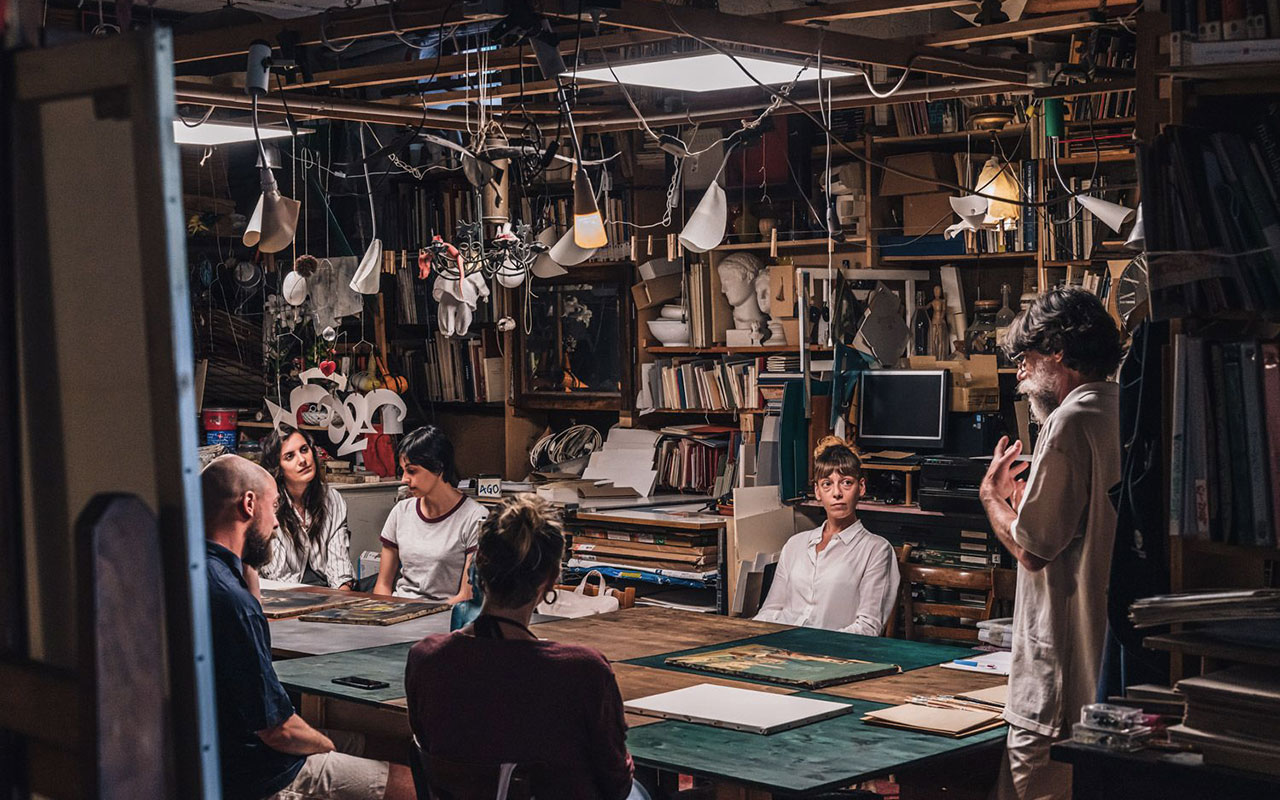
From April 12 to 30, Atelier Aperti is a journey through events and cocktails in workshops and laboratories to meet artisans at work and personally get to know the creative minds and hands of Venice.
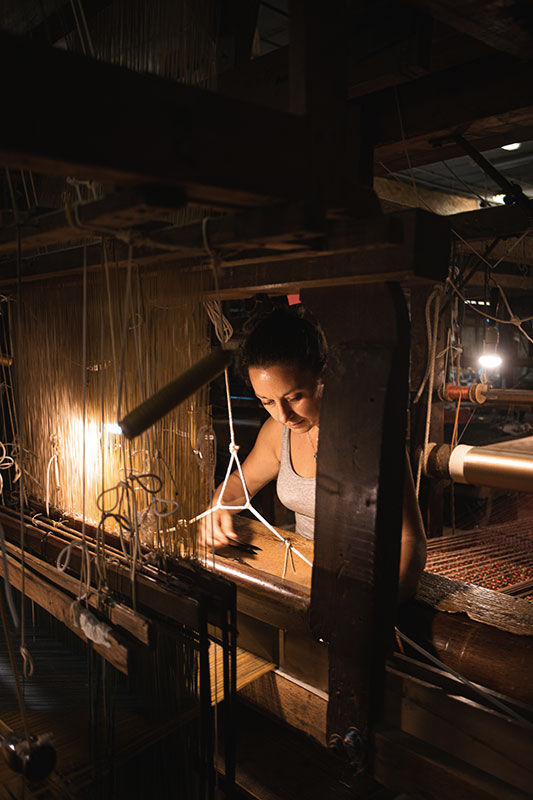
From April 11 to 29, among original 18th-century Jacquard looms and machinery, Venezia da Vivere and Tessitura Luigi Bevilacqua present A Dress for Venice, an exhibition project created with Tiziano Guardini, the eco-designer and winner of the first Green Carpet Fashion Award, who represents sustainable fashion in Italy.
To preserve and develop the precious knowledge of weaving, Venice’s millennial heritage of artisanal excellence, and to tell a story of craftsmanship, sustainability, and haute couture, the exhibition presents six kimonos and a dress created by Guardini using Bevilacqua fabrics and illustrations by artist Luigi R. Ciuffreda—numbered works of art to be worn, carrying value for the present and the future.
Admission to the exhibition is on Tuesdays and Wednesdays at 3:30 PM and 4:30 PM (by free reservation by writing to bevilacqua@luigi-bevilacqua.com or directly on the Homo Faber In the City website).


Homo Faber and La Biennale
For the 59th International Art Exhibition, which opens in the midst of Homo Faber (from April 23 with pre-opening on April 20, 21, and 22), there will be two contemporary art exhibitions held at San Giorgio (from April 22 to July 24): the group exhibition On Fire! curated by Bruno Corà on the theme of fire as a tool of artistic creation for great 20th-century artists such as Alberto Burri, Yves Klein, Arman, Pier Paolo Calzolari, Jannis Kounellis, and Claudio Parmiggiani; and the solo exhibition of American artist Kehinde Wiley, curated by Christophe Leribault.
The messengers of Homo Faber
The Young Ambassadors are students selected from the best schools of applied arts and design across Europe and from Ca’ Foscari University of Venice. Their task will be to narrate and guide visitors through the exploration of the exhibition spaces and the artisanal world, with the aim of bringing the Homo Faber and Venice experience to life through the experimental lens of sustainable tourism.
Digital Homo Faber
Homo Faber Guide is the guide to craftsmanship worldwide that allows visitors to design their own tour and experience cities in a completely new way. With information and addresses of artisans, manufacturers, museums, art galleries, and experiences related to fine craftsmanship, it leads to the discovery of excellence promoted by Ambassadors—expert insiders in design, art, and craft. Among them are the founders of Veneziadavivere, Laura Scarpa and Lorenzo Cinotti, City Ambassadors for Venice.
Collectible Gadgets
In the Homo Faber Shop, you can take home the most precious craftsmanship: bags made with Rubelli fabrics, aprons made by the youth of San Patrignano, and books will be for sale. These include the beautiful guide Venezia su Misura, a small art book on the 50 best Venetian workshops produced by the Cologni Foundation and Gruppo Editoriale, and Venetian Way, the precious photographic project by Susanna Pozzoli, who observed and lived in 21 workshops and artisanal businesses of excellence in Venice and the Veneto region—21 stories of professional and human experiences, the almost Zen-like practice of artisans, in a book commissioned by the Michelangelo Foundation and published by Marsilio.


Homo Faber Event 2022
April 10 – May 1, 2022
Island of San Giorgio, Venice
Discover Venice #HomoFaberWay with the official hashtags of @HomoFaber: #HomoFaber #HomoFaber2022 #Craft #Design
Book your ticket on the Homo Faber website.
Atelier Aperti
April 12 – 30, 2022 | various locations in the city
Participation in Atelier Aperti is free, with mandatory registration by writing to hello@veneziadavivere.com.
A Dress for Venice
April 11 – 29, 2022 | Tessitura Luigi Bevilacqua, Santa Croce 1320, Venice
Visiting days: Tuesday and Wednesday (3:30 PM or 4:30 PM). Reservations are free and can be made by writing to bevilacqua@luigi-bevilacqua.com or on the Homo Faber website in the “In the City” section.
The article is by Lucia Pecoraro.
On the cover: panoramic view of the island of San Giorgio Maggiore. Following: Palladian Cloister, Cenacolo, and Buora Cloister ph. Matteo De Fina and photo of the Longhena Library courtesy of the Giorgio Cini Foundation. Visual Homo Faber 2022 Robilant © Michelangelo Foundation. Homo Faber 2022 Curators ph Laila Pozzo © Michelangelo Foundation. Bevilacqua-Guardini photo by Marta Formentello, Tintoretto Typography by Settimo Cannatella for Venezia da Vivere, Mario Berta Battiloro Workshop. The photos of Venetian Way are by Susanna Pozzoli.

