
Alfredo Bianchini, President of the Fondazione Vedova, for #RewritingTheFuture envisions a demographic and social reconstruction for Venice that will repopulate the city with genuine relationships.
How do you envision Venice in the future?
The urbis form of Venice certainly does not allow for normal changes, such as structural conversions dependent on new development models. Venice has always had this problem, and as the world moves forward, Venice falls behind because it remains fixed in its own configuration. What can truly grow in Venice is thought: it is the idea of Venice that must be reshaped. What we must take from this situation is the opportunity to reflect and rethink Venice.
What can politics and citizens do for a rebirth of Venice?
The rebirth begins with having ideas for a multifaceted reconstruction of the city. Venice must return to expressing pluralism. Unfortunately, the phenomenon of continuous demolition that since the postwar period has transformed Venice into a city emptied of its inhabitants, without entire social categories, in favor of tourism guests, has impoverished it.
It is necessary to create centers of activity that lead to effective and concrete residential possibilities. Centers of scientific and cultural production must be created, not simple tourist attractions or showcases: certain paradigms must be overturned, which view culture only as exhibition or science only as a simple conference. Cultural thought must be produced, scientific thought must be produced. Only by doing so can we work toward a demographic and social reconstruction that repopulates the city with genuine relationships.
Propose a specific idea in at least one of these areas: environment, housing, work, culture, safety, tourism?
Residential situations accessible to young families must be created, in relation to specific jobs: artisan schools, specialized centers, activation of certain highly technical short degree programs, centers for the treatment of infectious diseases, for example. All studies and forms that could be very important in the future and would bring to Venice, but also to the metropolitan area, a demographic and social reconstruction of a certain type.
This can be done, even from an architectural point of view. I think of the magnificent book by Egle Renata Trincanato, “Venezia minore,” which analyzes serial residential typologies and hospital complexes later transformed into dwellings. The study has the merit of analyzing and highlighting the modernity of the structure of such buildings and the aesthetic and social exceptionality of that architecture. One could draw inspiration from there for a new form of urban housing.
Moreover, the Municipality could be provided with special funds for the repurchase of properties, and configure a new public residential housing strategy, aimed at renewing the city’s demographic growth, also to the benefit of young couples.
Alfredo Bianchini, Esq., President of the Emilio and Annabianca Vedova Foundation
For the #RewritingTheFuture of Venice project, Venezia da Vivere and Associazione Piazza San Marco interviewed entrepreneurs, curators, directors of cultural institutions, university rectors and professors, hoteliers, event organizers, and citizens who live and work in Venice. An open debate with the citizenry to give birth to an idea of a city in balance with the environment, work, and its civitas.
Read all the interviews
The photos are by Settimo Cannatella, @seventhsoul, for Venezia da Vivere.
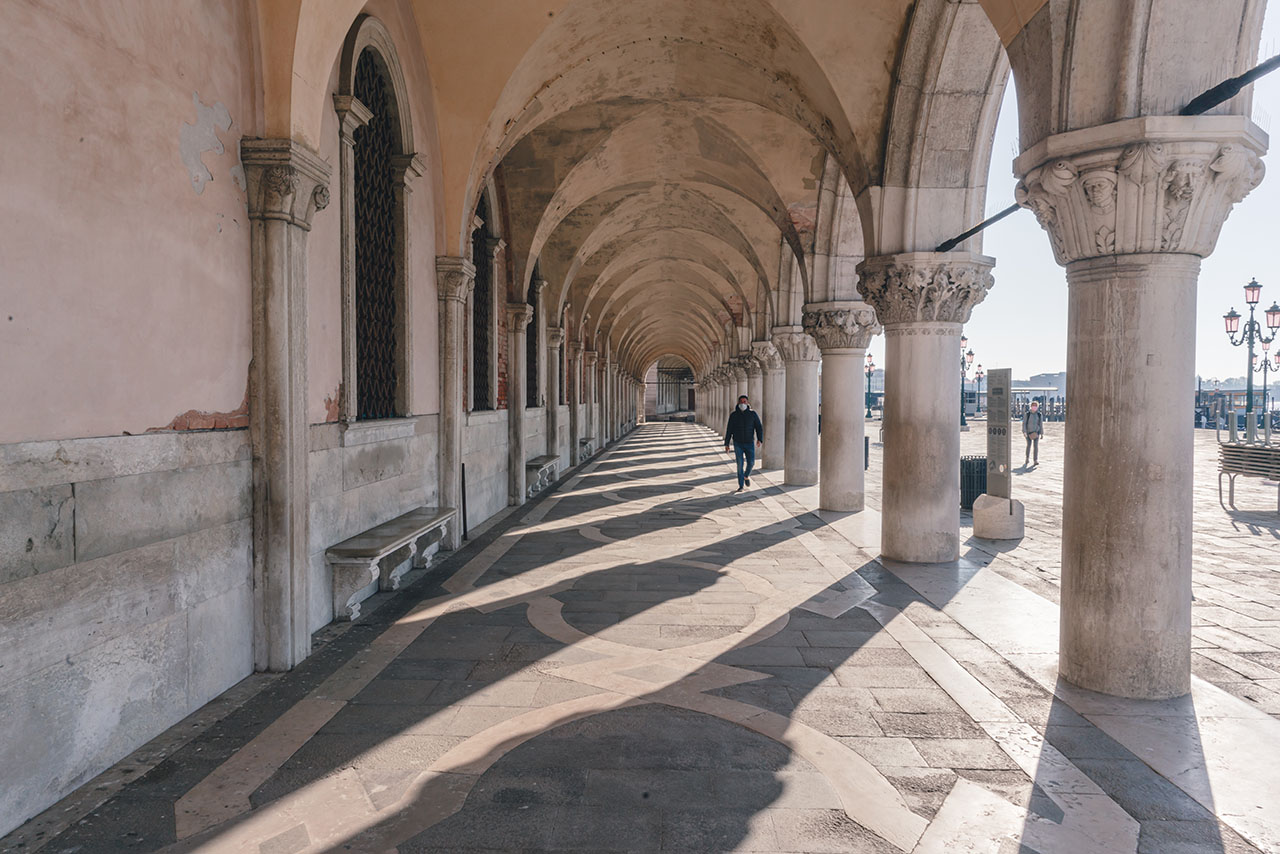

How do you envision Venice in the future?
Read all the interviews at:
www.veneziadavivere.com
www.associazionepiazzasanmarco.it
Facebook @sanmarcopiazza
Facebook @veneziadavivereofficial
Instagram @veneziadavivere
Instagram @sanmarcopiazza

