April is art month in Venice, with the opening of major exhibitions spanning diverse languages between history and the contemporary.
Every year in April, Venice presents major art exhibitions and welcomes international guests including collectors, curators, art lovers, and artists. One month before the Architecture Biennale, and following Venice Galleries View—the art gallery festival at the end of March—Venice reminds the world of its leading role in the international cultural landscape with two weeks of inaugurations, talks, meetings, and extraordinary openings. Discover the exhibitions at the Gallerie dell’Accademia, Palazzo Grassi, Peggy Guggenheim Collection, the Stanze della Fotografia, the Stanze del Vetro, and at the major Berggruen and AMA foundations.
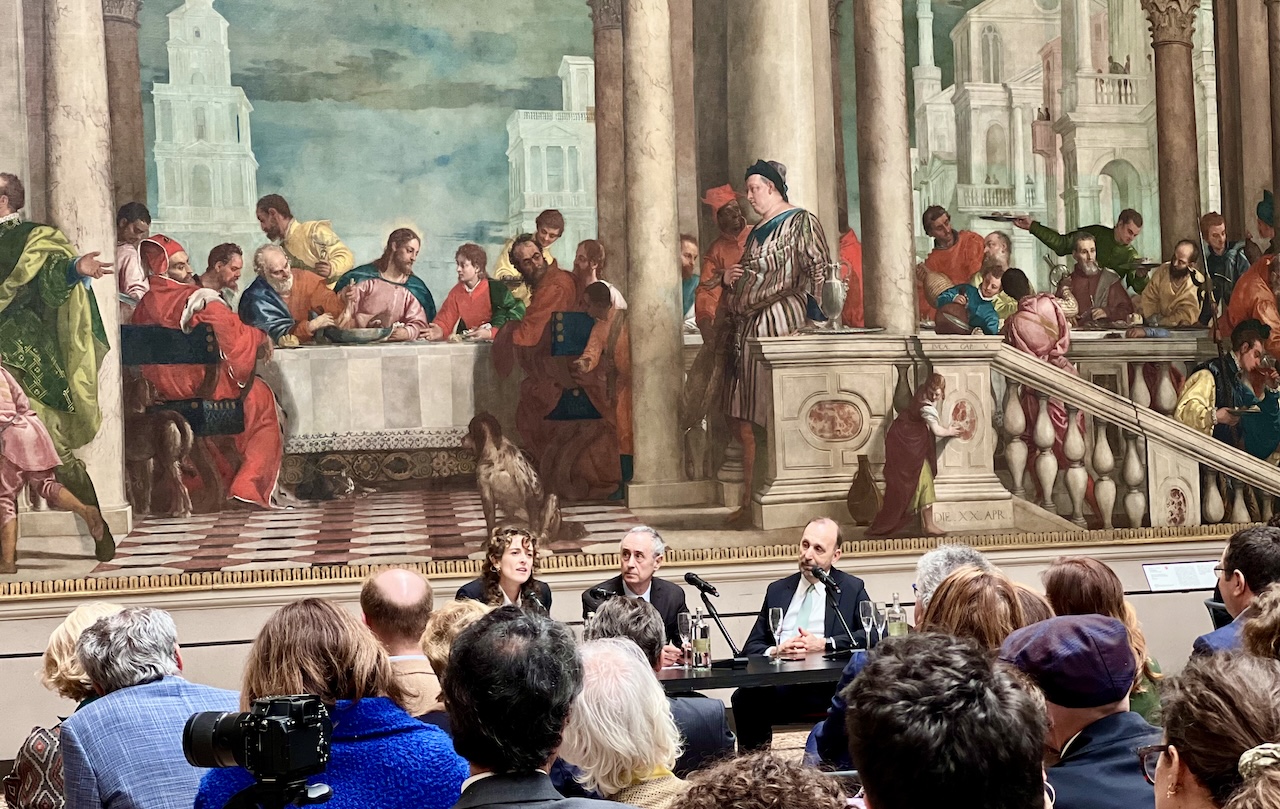
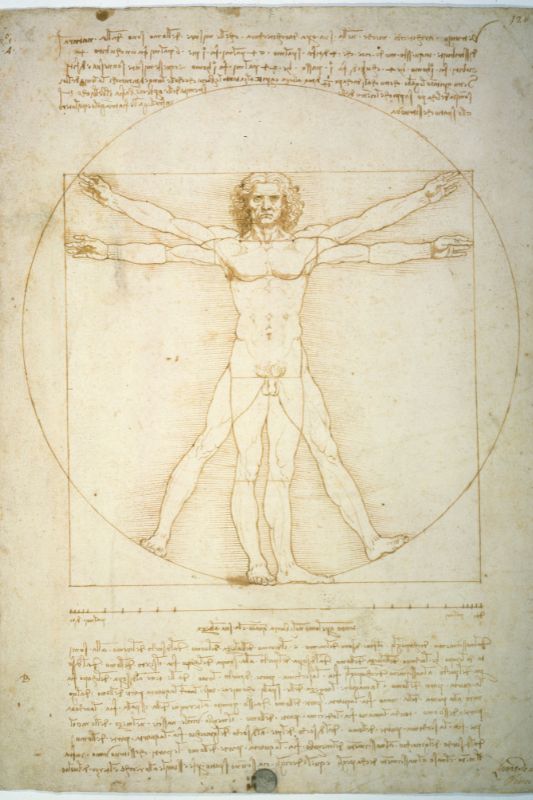
Modern Bodies. The construction of the body in Renaissance Venice. Leonardo, Michelangelo, Dürer, Giorgione
Gallerie dell’Accademia, Dorsoduro 1050
From April 4 to July 27, 2025
Ninety works including drawings, paintings, and sculptures explore anatomy, desire, and identity in Renaissance Venice. Modern Bodies presents the Renaissance as an experimental laboratory dedicated to knowledge through measurement and the rediscovery of ancient statuary, showing how the representation of the body transformed profoundly compared to the Middle Ages.
The exhibition, divided into three different rooms, leads from anatomical research to desire, revealing the different ways of representing men and women: female figures are often portrayed horizontally, symbolically offered, while male figures emerge in vertical poses, recalling the classical ideal of victory and power.
At the center of the exhibition is the intense sixteenth-century Venetian erotic imaginary, evidenced by provocative works such as Titian’s Venus and Adonis and Aretino’s Sonnets of Lust, which accompanied the emergence of early erotic publishing. Alongside these themes, the exhibition explores the radical social and cultural change following the Council of Trent, particularly in the understanding of marriage and the representation of sexuality, expressed also through bridal portraits with exposed breasts—symbols of a legitimate sexuality functional to procreation.
Objects such as makeup boxes, “solane” for hair, corsets, and Venetian treatises on plastic surgery highlight how the body, once a divine gift, became a cultural construction shaped by clothing, cosmetics, and social practices. The exhibition concludes with an evocative dialogue between Giorgione’s Portrait of an Old Woman and a portrait of a young man, inviting reflection on time and one’s own identity in front of a mirror.
Berggruen Arts & Culture inaugurates the art season in Venice with three exhibitions and installations across its two Venetian venues, Palazzo Diedo and the Casa dei Tre Oci, as a preview of the May exhibition The Next Earth. Computation, Crisis, Cosmology, curated by Benjamin Bratton, Nicholas de Monchaux, and Ana Miljacki at Palazzo Diedo from May 10 to November 23, 2025.
Matthias Schaller: CONTROFACCIATA
Casa dei Tre Oci, Fondamenta Zitelle 43, Giudecca
From April 5 to November 23
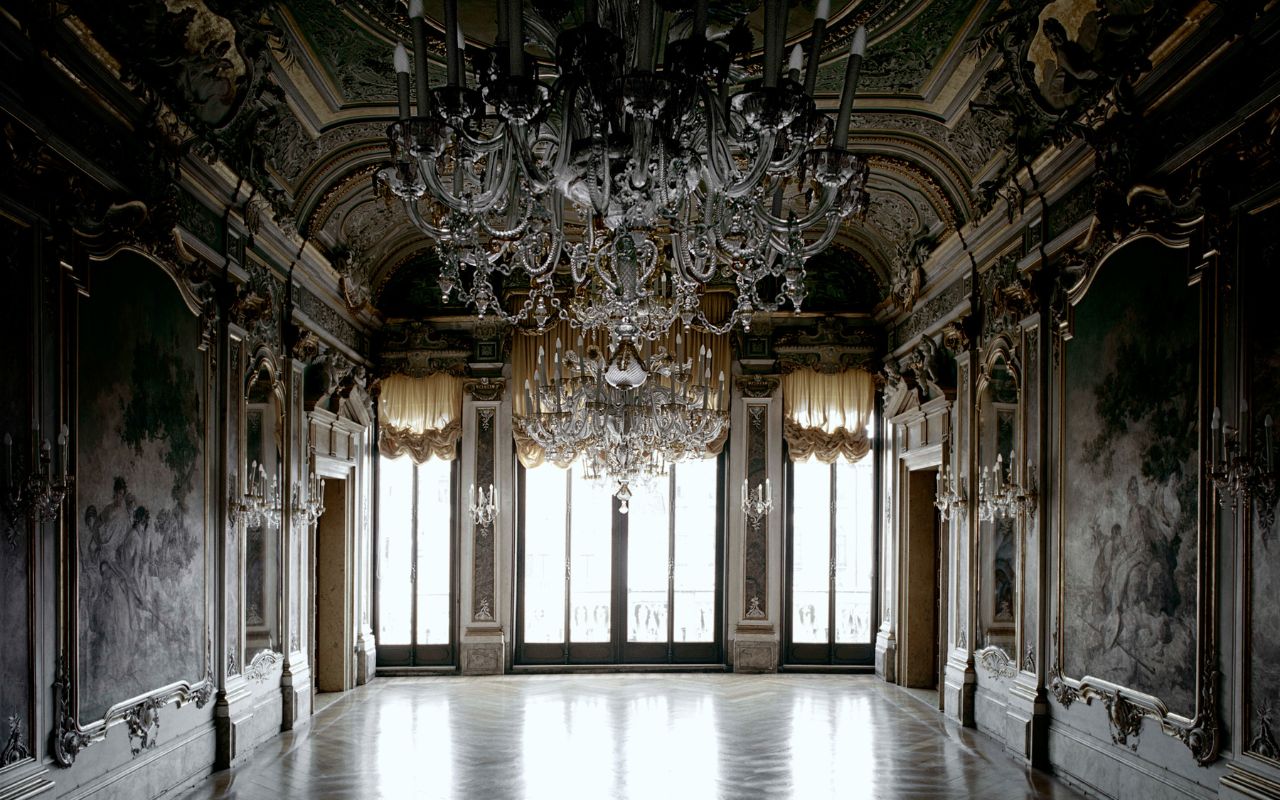
Twenty-eight previously unseen photographs of Venice reveal the architectural anomaly of the counter-façade: the central space of the noble floors lacking external views, a blind spot of the building where light, entering from the side, softens colors and dissolves outlines, creating a suspended atmosphere.
Matthias Schaller has been working on these environments since 2004, through a process that begins with analog, moves to digital, and concludes with a reworking of the image to accentuate chromatic desaturation and formal essentiality.
The counter-façade is a place of transit, a threshold between splendor and decay. A subtle fragility runs through the dwellings once inhabited by noble families, today exposed to salt water and the erosion of time. Schaller constructs an “indirect portrait” of the city, relating architecture and atmosphere, and aligns his research with the photographic tradition of Carlo Naya and Carlo Ponti, with contemporary echoes reminiscent of Hiroshi Sugimoto. The exhibition, curated by Mario Codognato, is hosted at the Casa dei Tre Oci, headquarters of the Berggruen Institute Europe.
Piero Golia: Untitled (floor)
Palazzo Diedo – Berggruen Arts & Culture, Fondamenta Trapolin 2386
Preview Saturday, April 5, from 1:00 PM to 3:30 PM
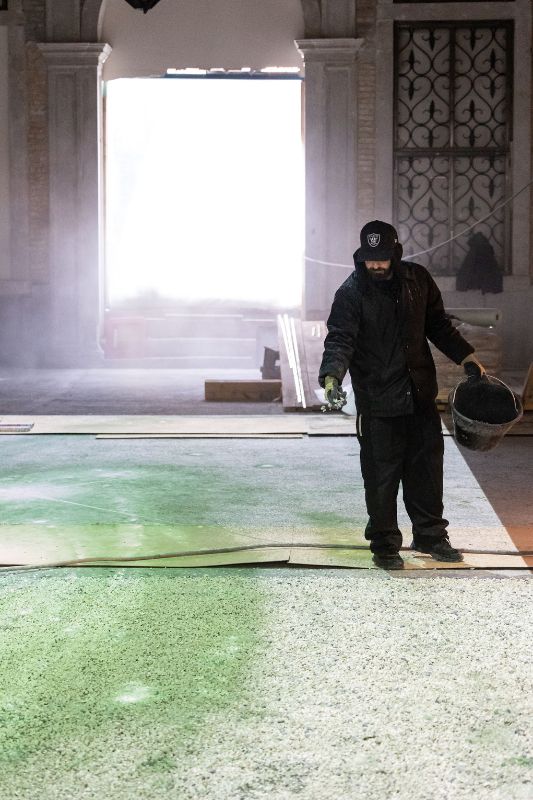
On the ground floor of Palazzo Diedo, Untitled (floor) by Piero Golia blends with the flooring: a site-specific installation in Venetian terrazzo that, invisible in daylight, reveals itself only in the dark.
Golia, a Neapolitan artist based in Los Angeles, moves his work between sculpture, gesture, and discovery. In this installation, he asks the viewer to wait, to observe, to believe. The work plays with trust and desire, alternating silence and presence, stimulating a gaze that activates out of time.
The preview of Untitled (floor) coincides with the inauguration of another site-specific work:
Marcantonio Brandolini d’Adda: Untitled
Palazzo Diedo – Berggruen Arts & Culture, Fondamenta Trapolin 2386
Preview Saturday, April 5, from 1:00 PM to 3:30 PM
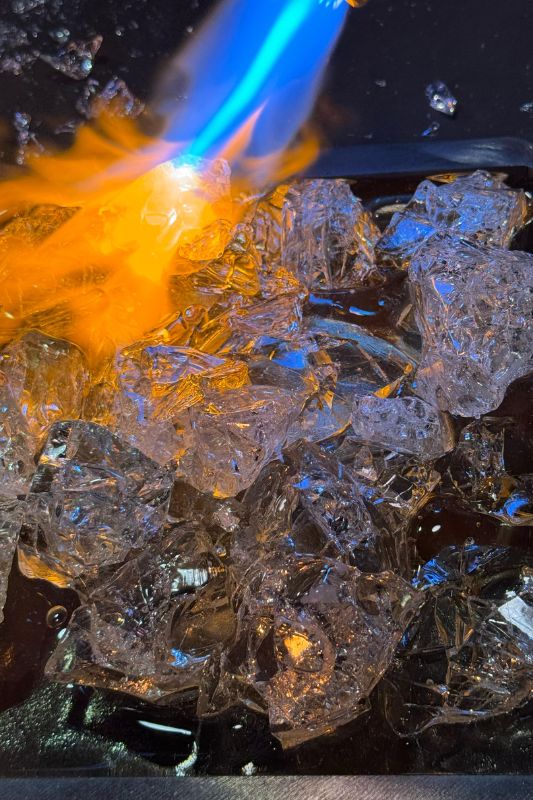
The Venetian artist born in 1991 directs the Laguna~B project and works with glass as a sculptural material. For Palazzo Diedo, he reinterprets the fireplace of Palazzo Diedo with a permanent glass installation. The fireplace is clad with an installation composed of cotisso tiles—the raw, irregular fragments of glass discarded during the glassblowing process.
Untitled echoes the eleven permanent interventions created by international artists in dialogue with the architecture and spaces of the palace between 2023 and 2025. Marcantonio Brandolini recreates the warmth that once animated the room, projecting the memory of the lit fireplace into the present through light refracting on the irregular glass surfaces with shifting reflections from orange to blue.
Tatiana Trouvé. The Great Life of Things
Palazzo Grassi, Campo San Samuele 3231
From April 6 to January 4, 2026
A visual and mental labyrinth spans the three floors of Palazzo Grassi in the first Italian retrospective dedicated to the French-Italian artist Tatiana Trouvé. The exhibition, curated by Caroline Bourgeois and James Lingwood in close collaboration with the artist, presents sculptures, drawings, and site-specific installations, many created specifically for the palace spaces.
The exhibition is divided into four distinct moments: the atrium begins with a project in asphalt ground that links Venice to other cities in the world as a cosmological map. The first floor is dedicated to sculpture, where the space itself becomes an integral part of the works through an approach between original and reproduction. Ascending to the second floor, large and extraordinary pencil and mixed-media drawings expand into the exhibition space, thanks to a fabric installation that visually extends their effect.
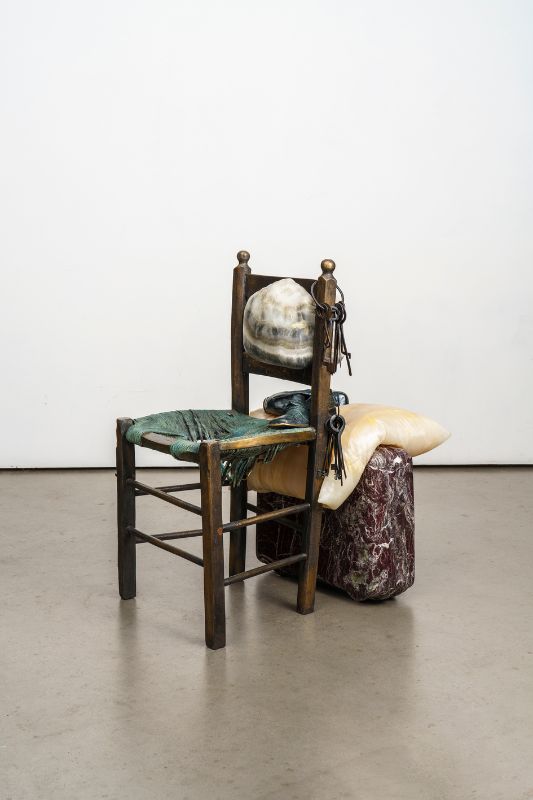
The final section displays the artist’s personal inventory, inviting the visitor into the intimacy of the artist’s creative process: objects carefully crafted in bronze, marble, and other materials suggest a constant shift between matter and memory.
Warren Ellis
Sunday, April 6 at 11:00 AM, in the atrium of Palazzo Grassi
Musician and composer—known for his work with Nick Cave and for numerous film soundtracks—Warren Ellis welcomes the first visitors to Palazzo Grassi with a solo violin performance. No program, no stage, no curtain: only improvisation, presence, and sound.
Thomas Schütte. Genealogies
Punta della Dogana, Dorsoduro 2
From April 6 to November 23
A wax bust with pursed lips. A crumpled figure balanced on a pedestal that is too narrow. The face is human, but something is not right. Thomas Schütte works on forms as if they were doubts: he observes them, moves them, distorts them. Every work is an investigation.
Sculptures, architectural models, drawings, engravings, watercolors: his practice knows no hierarchies or genre boundaries. Fifty sculptures from the Pinault Collection are presented alongside a hundred works on paper, many never before exhibited.
Clay, glass, steel, bronze: every material revolves around the figure, which remains the focus of his research. At times caricatural, at others restrained, always permeated by a sense of tension.
AMA Collection
AMA, Fondamenta de Ca’ Vendramin 2395
From April 9 to June 29, 2025
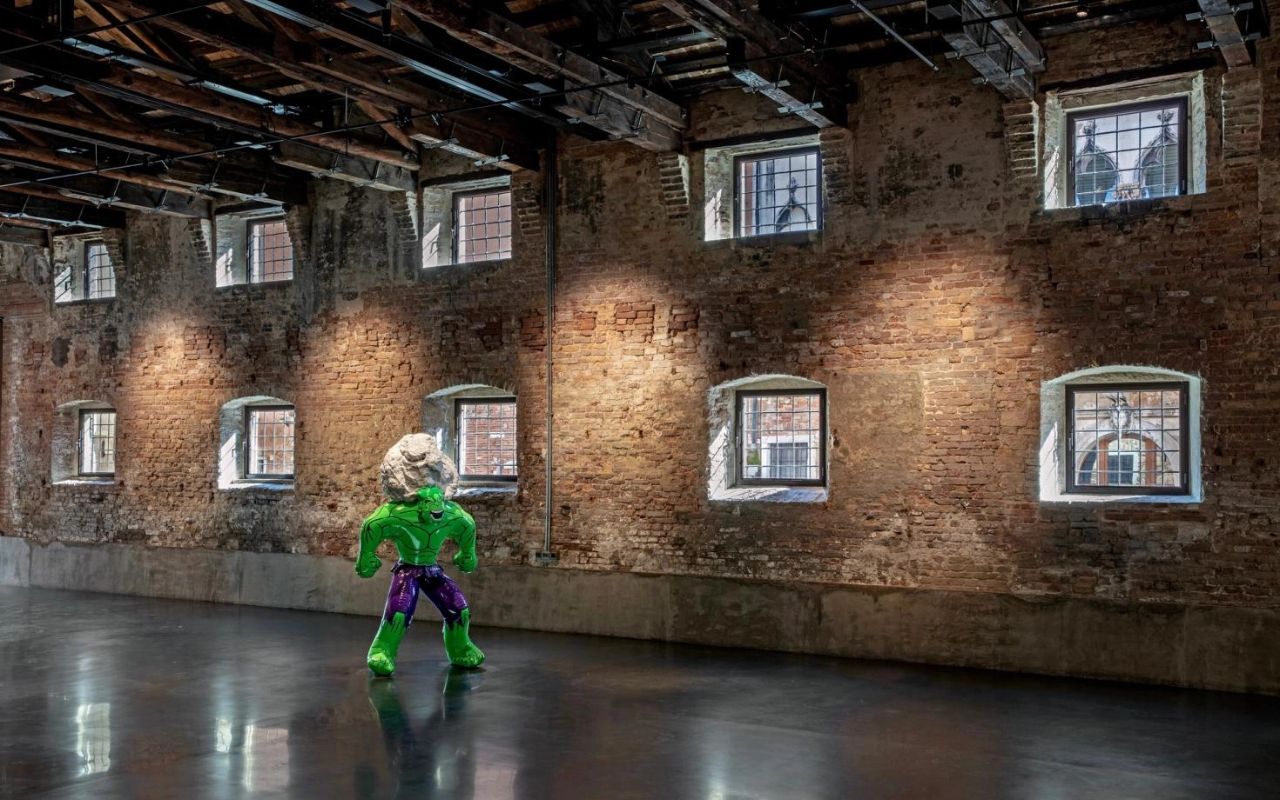
AMA is a new exhibition space that chooses Venice as a place for dialogue, following the path of those collectors who have transformed a private passion into a public platform. The goal of entrepreneur and collector Laurent Asscher is to take root in the city’s cultural fabric, alongside institutions such as Prada, Guggenheim, and Pinault.
A former soap factory in Cannaregio of over one thousand square meters, restored by the studio TA Torsello Architettura, has been transformed into a space for contemporary art. AMA is the acronym for Andrea, Matteo, Alessandro—the names of Laurent Asscher’s children—but it is also a verb, marking gesture and vision.
With a flexible format of one group exhibition per year, loans, residencies, and new commissions, the center opens on Wednesday, April 9, with an exhibition built entirely from Asscher’s collection.
AMA Collection is the inaugural exhibition, curated by Nancy Spector, former Deputy Director and Chief Curator of the Solomon R. Guggenheim Museum in New York, which explores the tension between gesture and reproduction, between manual painting and mechanical technique. On display, among others, are Avery Singer, Brice Marden, David Hammons, Elizabeth Peyton, Florian Krewer, Jacqueline Humphries, Jeff Koons, Jordan Wolfson, Lauren Halsey, Mohammed Sami, Refik Anadol, Rudolf Stingel, Salman Toor, and Wade Guyton.
Robert Mapplethorpe. The forms of the classic
Le Stanze della Fotografia, Isola di San Giorgio Maggiore
From April 10 to January 6, 2026
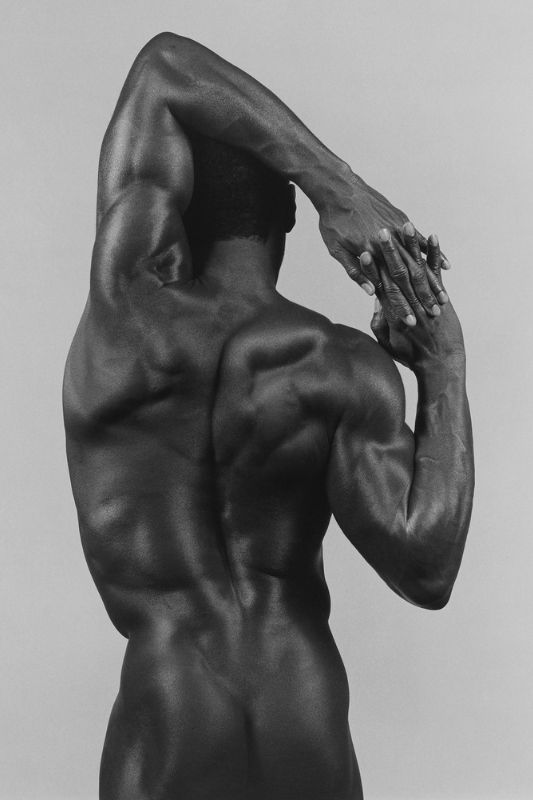
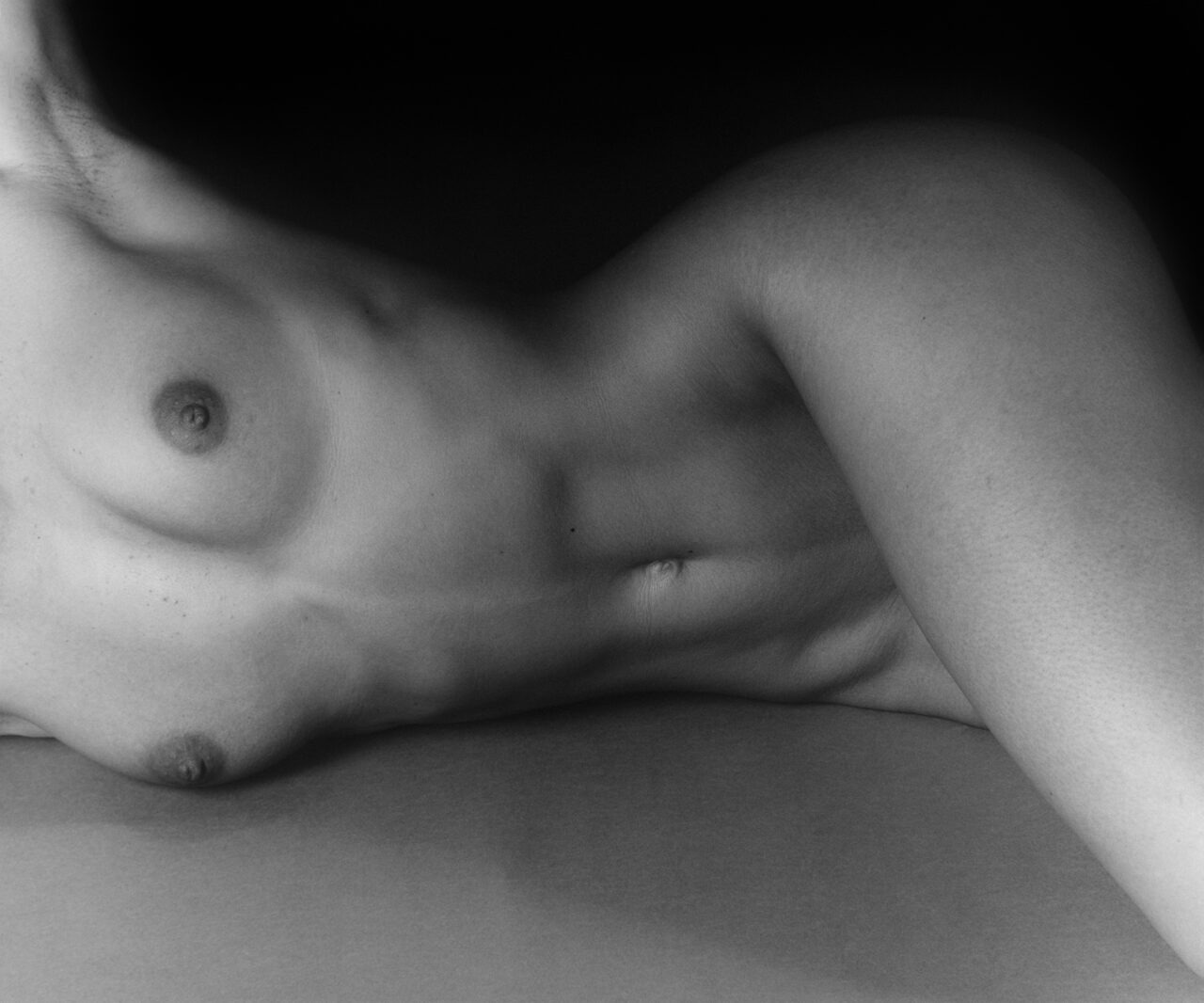
Over two hundred photographs, some never before exhibited in Italy, tell the story of the great photographer Robert Mapplethorpe. The retrospective spans his entire career, from the experimental beginnings of collages and ready-mades to the sculptural power of nudes and portraits.
Male and female nudes, portraits, and flowers: every subject is treated with the same rigor. Mapplethorpe works on form, symmetry, and surface. Light models bodies as if they were sculptures. Photography becomes a tool for measuring beauty, for restoring balance and precision.
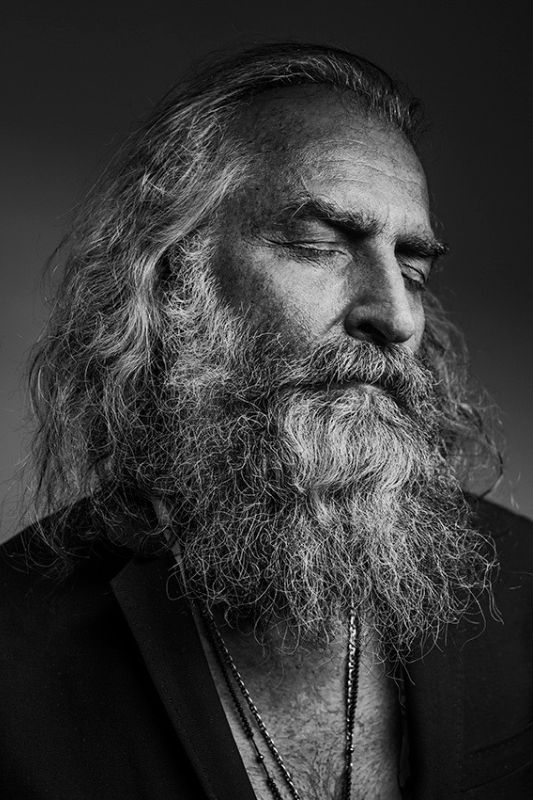
The portrait series features Patti Smith, Truman Capote, Isabella Rossellini, Keith Haring, Andy Warhol, among others. And in his self-portraits, Mapplethorpe uses his own body to question identity. He disguises himself, exposes himself, changes face. Each image suggests a different possibility, never definitive.
In parallel with the exhibition, an open call invites photographers under 30: three themes—classic, desire, beauty—link the selected works to Mapplethorpe’s visual vocabulary. The chosen works will be presented at the MIA Photo Fair in Milan and on display in Venice. The project, curated by Denis Curti, was created in collaboration with the Robert Mapplethorpe Foundation in New York and ideally continues the path opened in 2005 by Germano Celant. The exhibition is the first chapter of a trilogy, with Milan and Rome to follow.
Maurizio Galimberti between Polaroid/Ready Made and Italo Calvino’s Six Memos for the Next Millennium
Le Stanze della Fotografia, Isola di San Giorgio Maggiore
From April 10 to August 10
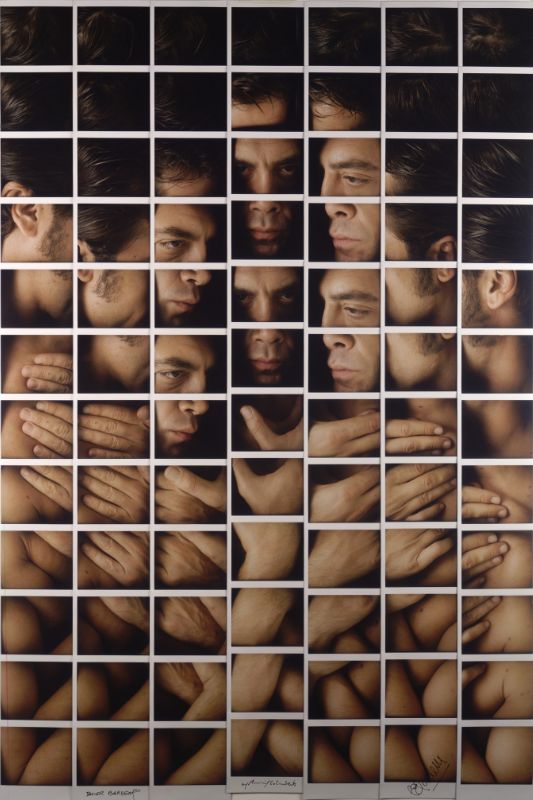
The exhibition is divided into six sections: Last Supper, History, Sport, Portraits, Taylor Swift, Places, where Maurizio Galimberti works through decomposition. His images do not tell reality, they reconstruct it, and the subject is multiplied, rewritten through the Polaroid.
Famous faces—Johnny Depp, Barbara Bouchet, Anjelica Huston—are transformed into fractal mosaics in which every fragment reflects the whole, every detail opens to new possibilities of interpretation. The method looks to the photographic collages of David Hockney and engages with the art of Boccioni and Duchamp.
Maria Helena Vieira da Silva. Anatomy of a space
Peggy Guggenheim Collection, Dorsoduro 701
From April 12 to September 15
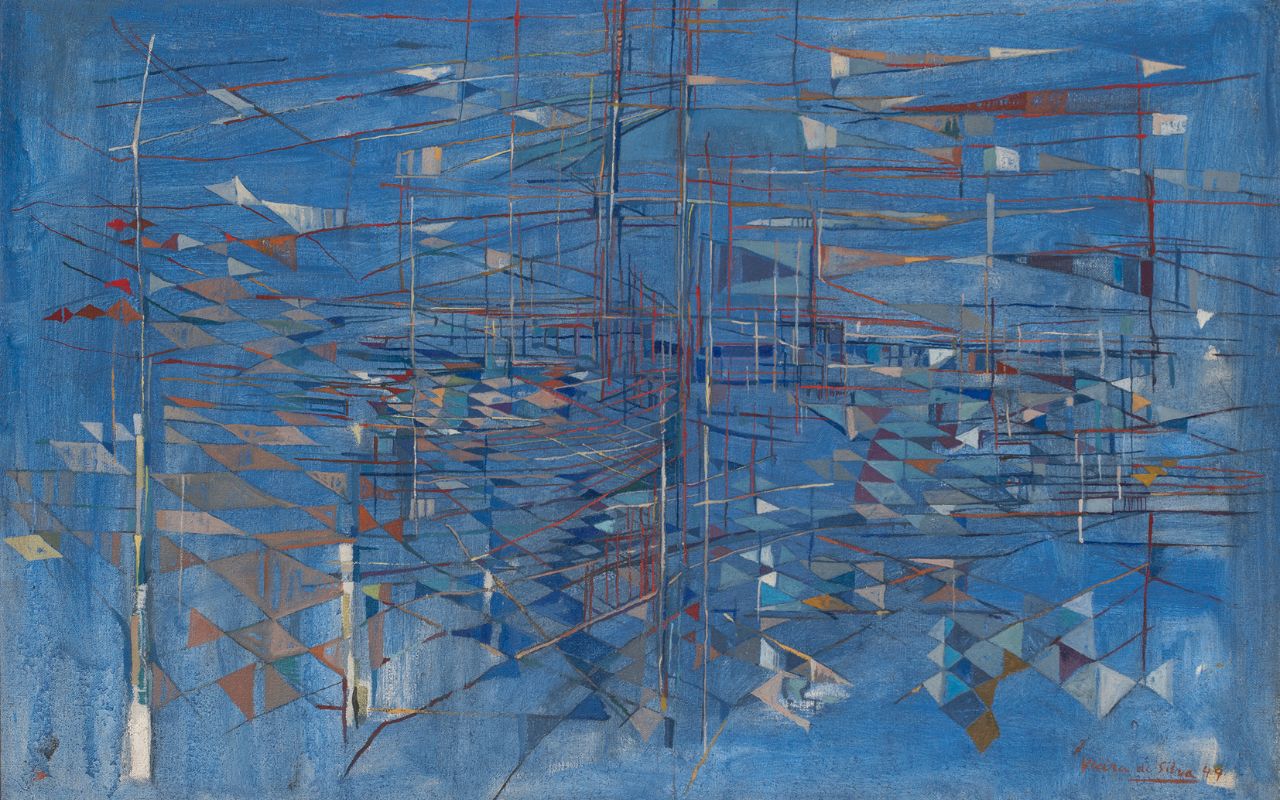
Seventy years of pictorial research gathered in seventy works. The exhibition dedicated to Maria Helena Vieira da Silva is an immersion into her visual language; from Portugal to Paris, and through her exile in Brazil during the war, her paintings construct intricate spaces full of lines, perspectives, abstract grids, and optical illusions.
The artist transforms the surface of the canvas into mental architecture: an environment where the boundaries between figuration and abstraction become uncertain, with a constant tension between the real and the imagined.
On display are loans from institutions such as the Centre Pompidou, MoMA, Tate, and the Guggenheim Collection in New York, ahead of the exhibition’s move to the Guggenheim Museum Bilbao in Autumn 2025. Several events are planned in connection with the exhibition:
- Preview guided tours
Two preview guided tours will be held on Thursday, April 10, at 5:30 PM.
Participation is by reservation and is reserved for Membership Card holders. - Meet the curator
Saturday, April 12, at 2:30 PM.
Flavia Frigeri will accompany the public on a discovery of the exhibition. The event is included in the admission ticket. - Double Meaning dedicated to Pablo Picasso will be held on Saturday, April 5, at 2:30 PM.
Event not related to the Vieira da Silva exhibition.
1932-1942 Murano Glass and the Venice Biennale
Le Stanze del Vetro, Isola di San Giorgio Maggiore 8
From April 13 to November 23, 2025
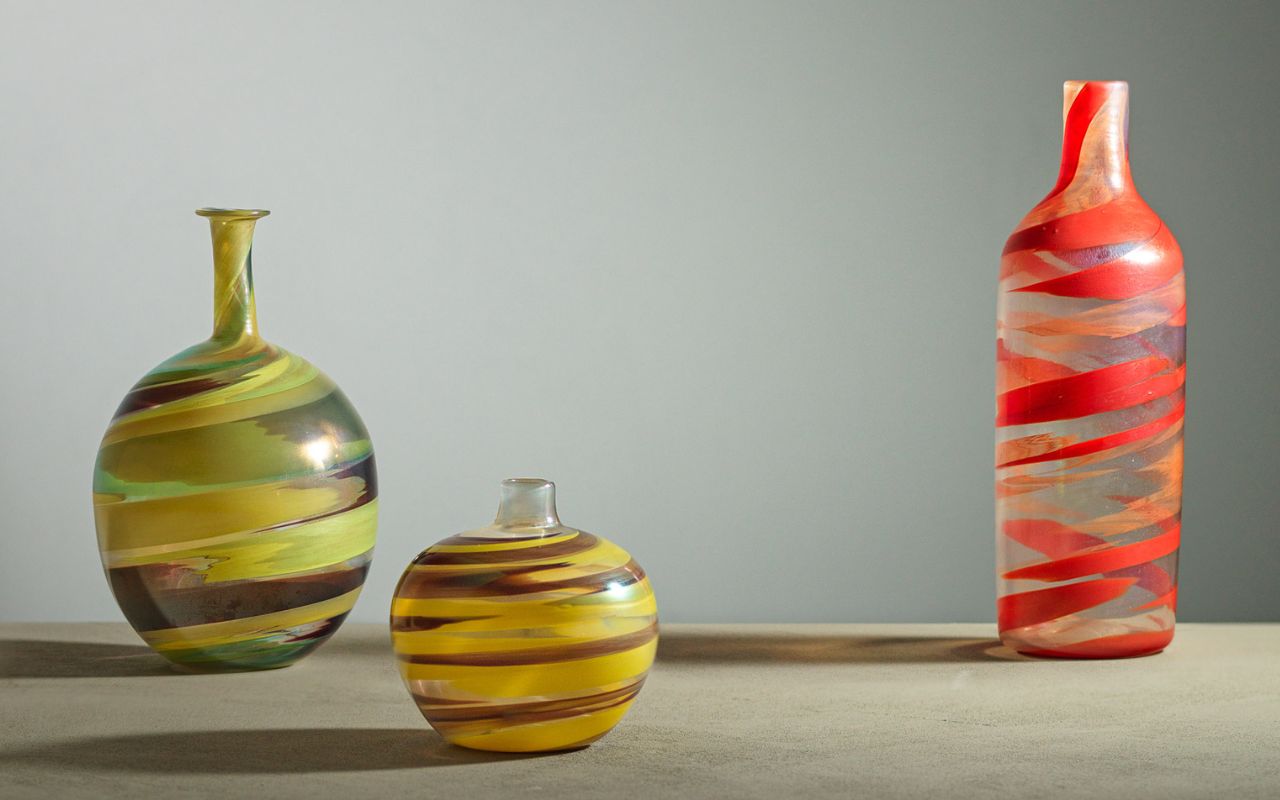
An exhibition explores the decade between 1932 and 1942, when Murano glass entered the Venice Biennale for the first time, within the Venice Pavilion. It was in that exhibition space, designed for decorative arts, that artistic glass gained public attention, institutional recognition, and a direct dialogue with the international language of art.
The exhibition, curated by Marino Barovier, presents period documents and Venini objects created with Carlo Scarpa, Barovier Seguso Ferro with Flavio Poli, Dino Martens first with Salviati and Successori Rioda, then with Aureliano Toso. And also AVEM, Barovier, Cirillo Maschio, Ulderico Moretti, S.A.I.A.R. Ferro Toso, Fratelli Toso, VAMSA, S.A.L.I.R.
PAINTED GOLD. El Greco and painting between Crete and Venice
Doge’s Palace – Doge’s Apartment
From April 30 to September 29, 2025 Venice
Over 150 works tell the story of four centuries of exchange between East and West, along the axis that unites Crete to Venice. The exhibition, curated by Chiara Squarcina, Katerina Dellaporta, and Andrea Bellieni, investigates Veneto-Cretan painting as an autonomous artistic phenomenon, born from the contact between the Byzantine tradition and the Western figurative language.
Dominikos Theotokopoulos, later El Greco, is the central figure of this narrative: raised in Candia and trained among the Venetian masters of the late sixteenth century, he embodies the highest and most original synthesis between two worlds.
Seven chronological sections, a technical focus on the icon, two interactive installations, and loans from international collections trace a path that touches on artists such as Angelos, Ritzos, Damaskinos, Klontzas, Poulakis. Candia, Corfu, Zakynthos, and finally Venice become hubs of an artistic migration that shapes a common visual identity.
“Cretan painting has long been interpreted as an expression of transition. With this exhibition, we reveal its autonomy, duration, and capacity for innovation,” states Anastasia Drandaki, scientific curator of the exhibition.
Diagrams
Fondazione Prada, Ca’ Corner della Regina
From May 10 to November 24
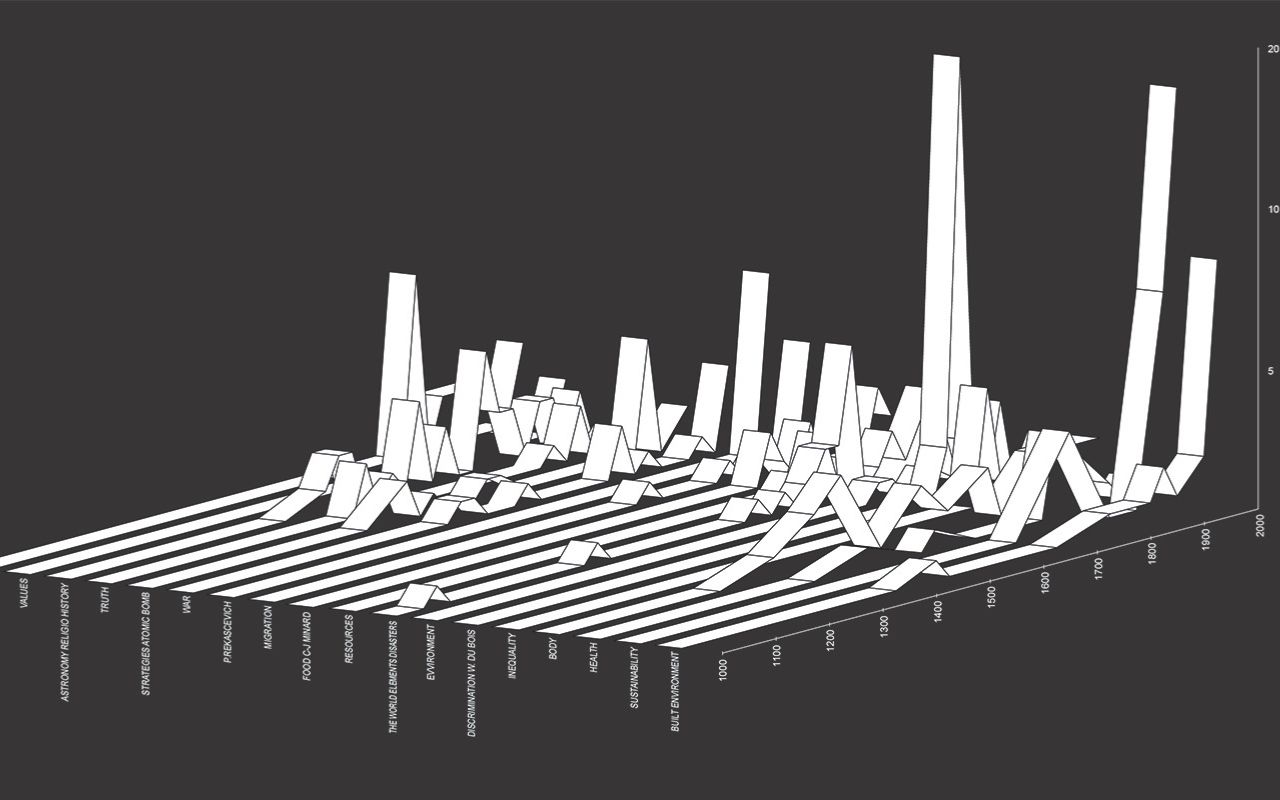
Over 300 objects—including documents, publications, images, and videos from the 12th century to today—to investigate the diagram as a form of knowledge that is transversal, continuous, and independent of language. Diagrams, a project conceived by AMO/OMA for Fondazione Prada, occupies two floors of Ca’ Corner della Regina and builds a thematic path around nine critical axes of the present: built environment, health, inequality, migration, natural environment, resources, war, truth, value.
The exhibition questions the function of the diagram in the history of representation, between explanation and persuasion, archiving centuries of information graphics across different cultural and geographical contexts. The project is rooted in the curatorial research of Rem Koolhaas, Giulio Margheri, and Sietske Fransen, and involves entities such as Atmos Lab, Transsolar, Theo Deutinger, and SITU Research. Architecture becomes method, tool, and subject, and diagrams illustrate and design.
Article by Lucia Pecoraro.
Cover: Matthias Schaller of Palazzo Papadopoli 2007 – VG Bildkunst Bonn 2025.
All photos have been provided by the respective press offices and institutions.

