The future: environmental tourism based on emotions. We must become visionaries of ambitious ideas to #RewritetheFuture of Venice. Paolo Andrich, curator of Casa Museo Andrich in Torcello
We always think about the future of Venice, forgetting that Venice is also the Lagoon.
In urban planning and territorial planning, the future that is designed today is sometimes realized in the following thirty years, sometimes not. Therefore, it is necessary to be somewhat visionary to design the future of a city, and often it is not real estate development that determines its evolution but ideas.
An example for Venice is the municipal resolution of April 19, 1893 that established the international biennial art exhibition, desired by a group of intellectuals led by the then Mayor Riccardo Selvatico. Today we can say that this resolution set the direction for Venice’s cultural development.
Consider that the Art Biennale alone recorded 600,000 visitors in 2019 + 24,000 during preview days, which allow the press to tell the world why they must visit the most important art exhibition in the world. The Biennale.
We have an international showcase that has evolved from art to cinema, music, theater, architecture, and dance. The possible idea that could be successful for Venice is for the Biennale to also become a place of production again.
The historic city is too beautiful and fragile to compete with the dynamics of tourism that move the masses today. The beauty and uniqueness of Venice are a source of inspiration for all the world’s creative minds, who return to their places of origin to share the emotions they drew from the multiple historical layers of the city and its lagoon. The islands of the Lagoon are ideal environments to be repopulated by the world of creative professionals.
The second idea is that tourism in Venice should undergo an evolution and become an experience through its inhabitants, like the splendid example that RAI produced in Federico Lodoli’s documentary I lagunari, which aired on Easter Day 2020 on Rai5 and is available on Raiplay.
Because 30 million annual visitors to Venice are not sustainable without governance and flow management. The absence of measures in this direction is a declared inability to govern the city. Priority access to vaporetti for residents or flow diversion are not governance measures; they are temporary remedies.
An example of good governance regarding the landing tax, which has had such great difficulty being implemented for Venice, could have become an opportunity for experimentation in a limited area such as the Northern Lagoon, which suffers like Venice from excessive tourism of 6,000,000 visitors driven by 20-euro mini-cruises that, departing from Tronchetto, consume Murano, Burano, and Torcello and the canals of its Lagoon in 4 hours without participants being able to enjoy them.
COVID-19 has made us rediscover the transparency and healthiness of the lagoon without wave motion; we must commit to maintaining this healthiness even at the cost of changing the public transport system.
A propeller, large or small, spinning in water stirs up the seabed and sets the underlying sediment in motion. In 50 years, we will have flying cars that will arrive in a room of our apartments located in skyscrapers.
In Venice, perhaps the port entrances will already be closed because, according to oceanographer Umgiesser, sea level rise and MOSE will not hold, so the lagoon will become a large lake. It is unthinkable that skyscrapers will rise in the historic center and in the lagoon, so the city and its lagoon will need to be connected with cable cars, like the example being built in Mexico City thanks to the Italian company Leitner.
There are two symbolic environmental sites in the Metropolitan City of Venice that wants to become the European environmental capital. The Northern Lagoon and the beach system of Cavallino-Treporti.
The idea is that the Metropolitan City of Venice, which has 6 million visitors on the beaches of Cavallino-Treporti and 6 million visitors in the Northern Lagoon, should use public transport for environmental purposes. By building a 10 km cable car system for transporting people and bicycles that connects Marco Polo Airport to Treporti, with intermediate stops at Cà Noghera, Torcello, Mazzorbetto, Mazzorbo, Burano, San Francesco del Deserto, and Sant’Erasmo. Financed by the landing tax.
The future: environmental tourism based on emotions that from the Lagoon laboratory influences Venice.
Paolo Andrich, curator of Casa Museo Andrich on the island of Torcello, urban planner and territorial planner.
Venezia da Vivere and Associazione Piazza San Marco continue with the #RewritingtheFuture project, interviewing figures from business, art, academia, and many others who live and work in Venice for an open debate.
Read all the interviews
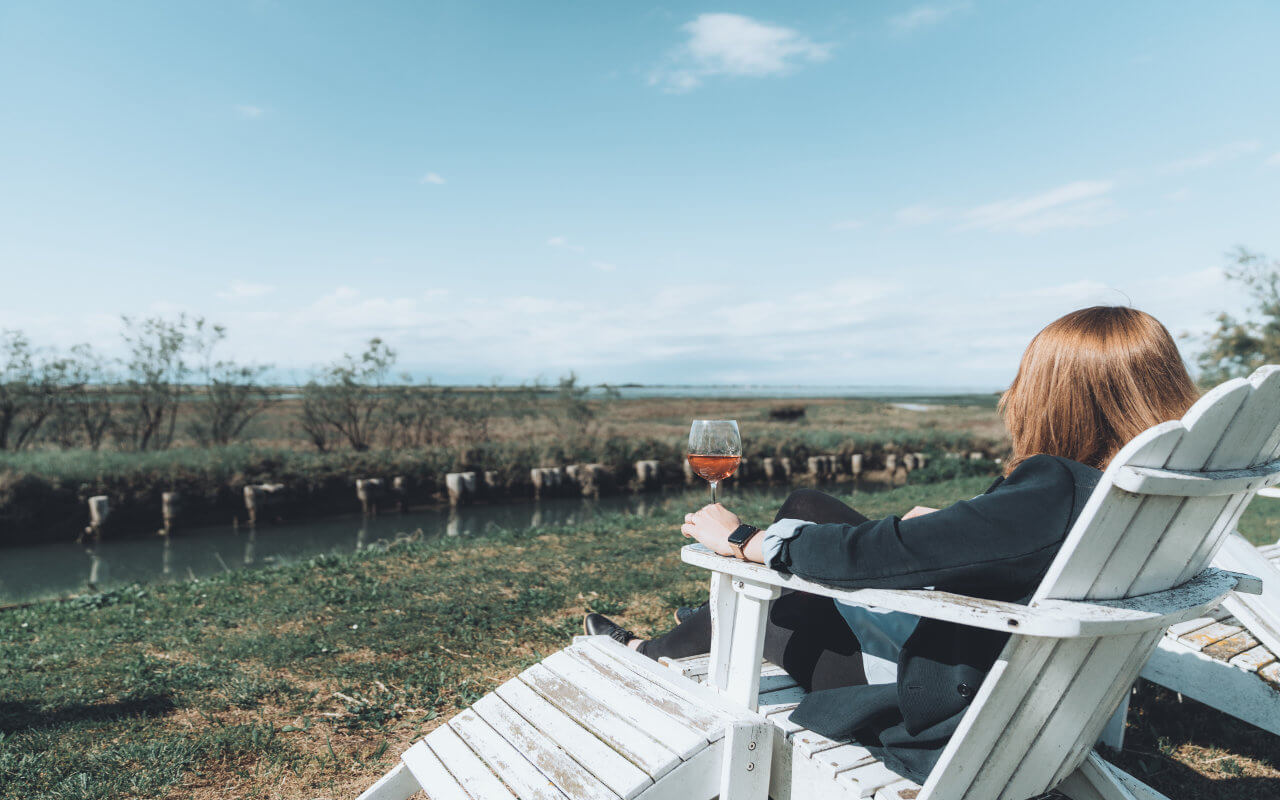
The cover photo is by @Monaris for Venezia da Vivere ArtBiennaleExperience project.


How do you imagine Venice in the future?
Read all the interviews on:
www.veneziadavivere.com
www.associazionepiazzasanmarco.it
Facebook @sanmarcopiazza
Facebook @veneziadavivereofficial
Instagram @veneziadavivere
Instagram @sanmarcopiazza

